Offer ends October 18.
This is some text inside of a div block.
Restart a Heart BLS Sale
RESTART99
Copy code

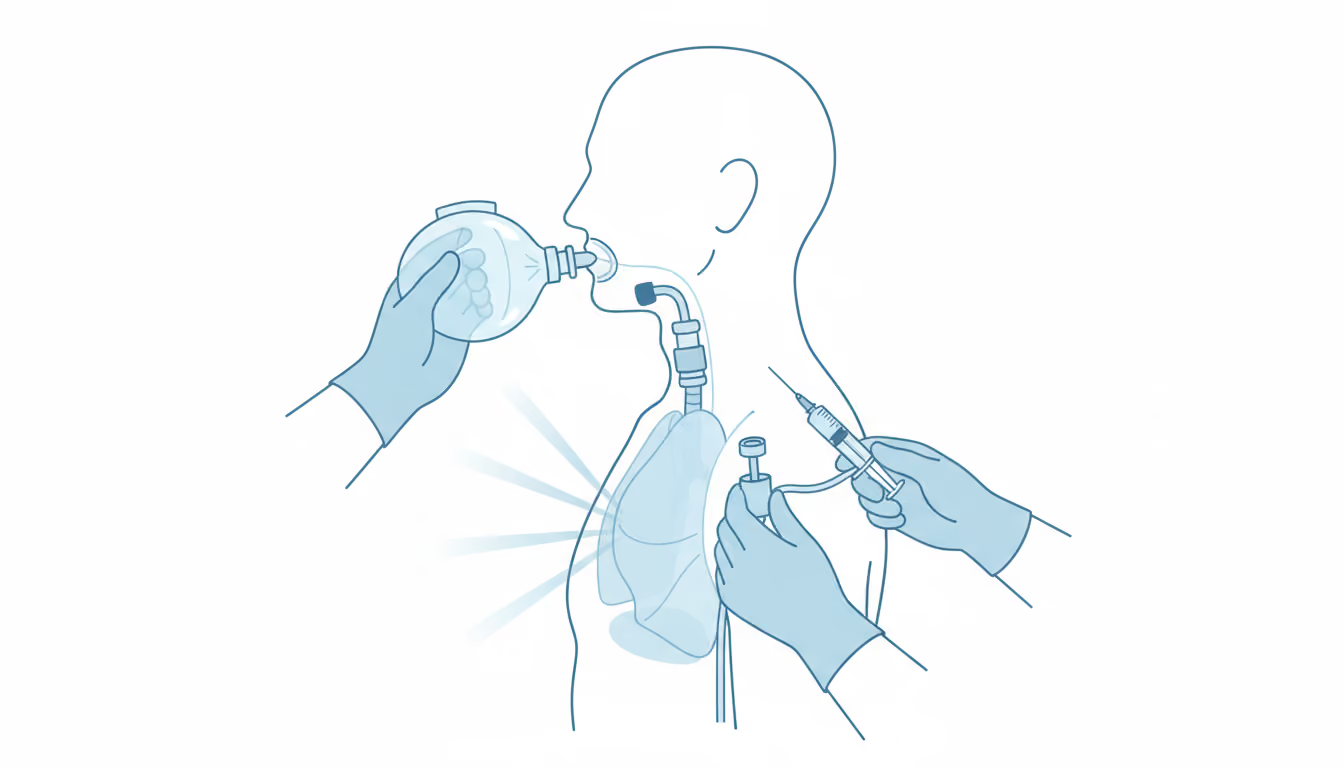
Rescue breathing in the ACLS context refers to the advanced techniques used to support a patient's ventilation and oxygenation during resuscitation, going beyond basic mouth-to-mask breaths. It includes bag-valve-mask ventilation, the use of airway adjuncts, and ventilation through advanced airways such as an endotracheal tube or laryngeal mask airway.
Once an advanced airway is in place during cardiac arrest, providers deliver continuous chest compressions while giving breaths at a steady set rate rather than in 30:2 cycles. Careful attention to rate and volume is essential, since over-ventilation reduces blood return to the heart and lowers the effectiveness of compressions. Capnography is used to monitor ventilation and confirm airway placement.
CPR Certification Labs provides hands-on, American Heart Association–aligned CPR, BLS, ACLS, and PALS certification training to help providers master these life-saving skills.
Our technology delivers immediate, actionable feedback that refines your skills in real time.
Understand how to safely and effectively operate an Automated External Defibrillator (AED) for adults, children, and infants.
Learn how to perform the Heimlich maneuver and clear airway obstructions caused by choking in both adults and infants.
Gain experience working as part of a team when more than one rescuer is available during an emergency.
Receive your AHA CPR Certification E-Card on the same day you complete the class and pass the exam.
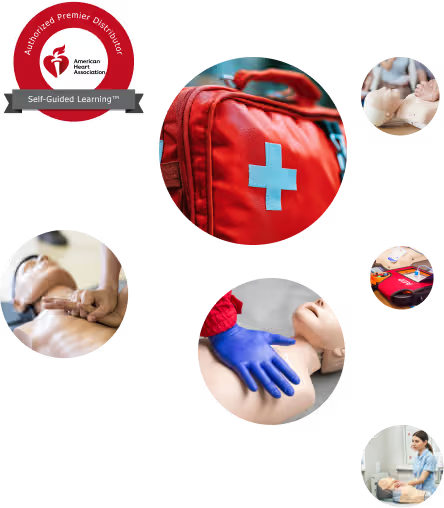

CPR Certification Labs provides professional CPR and emergency training courses based on recognized industry standards.