Carrollton AED installation and why it matters
Carrollton AED installation in park facilities is a practical step toward faster emergency response in places where families, athletes, and visitors gather every day. By placing public defibrillators in recreation areas, the city is helping close the time gap between the first sign of trouble and the arrival of EMS.
That gap matters. In a sudden cardiac arrest, every minute without CPR or defibrillation lowers the chance of survival. Public access AEDs can give bystanders a better chance to act while help is on the way.
Local context: public parks, sports complexes, and splash areas
Carrollton’s parks and recreation spaces see steady foot traffic, especially during games, tournaments, family outings, and warm-weather visits to splash parks. In settings like these, an emergency can happen far from a staffed building or a locked office. Having an AED available outside normal business hours gives the community a more direct path to emergency response.
The city’s approach also reflects a simple reality: public spaces work best when safety tools are easy to reach. A defibrillator stored only inside a staffed room may not help if the room is closed. Moving AEDs into public-facing cabinets makes them available when seconds count.
What an AED does during a cardiac arrest
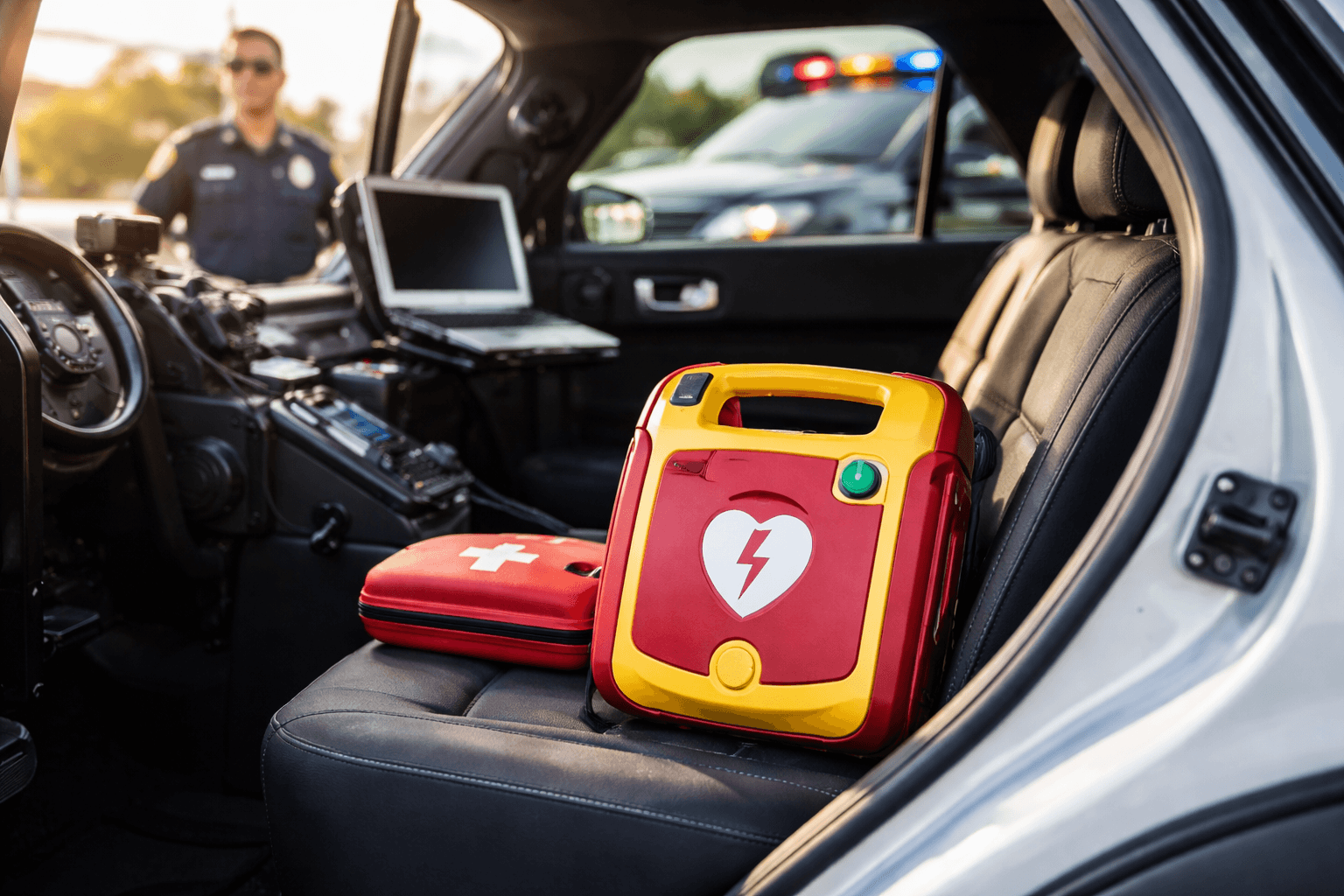
An AED, or automated external defibrillator, is designed to assess the heart rhythm and guide the user with clear instructions. It is used alongside CPR when someone may be in cardiac arrest. The device can help determine whether a shock is needed and directs the rescuer through each step.
For many people, the most important part of AED use is not technical skill but willingness to act. Modern devices are built to be direct and easy to follow. Voice prompts, lights, and visual instructions help guide the responder through the process while emergency crews are on the way.
Why CPR still comes first
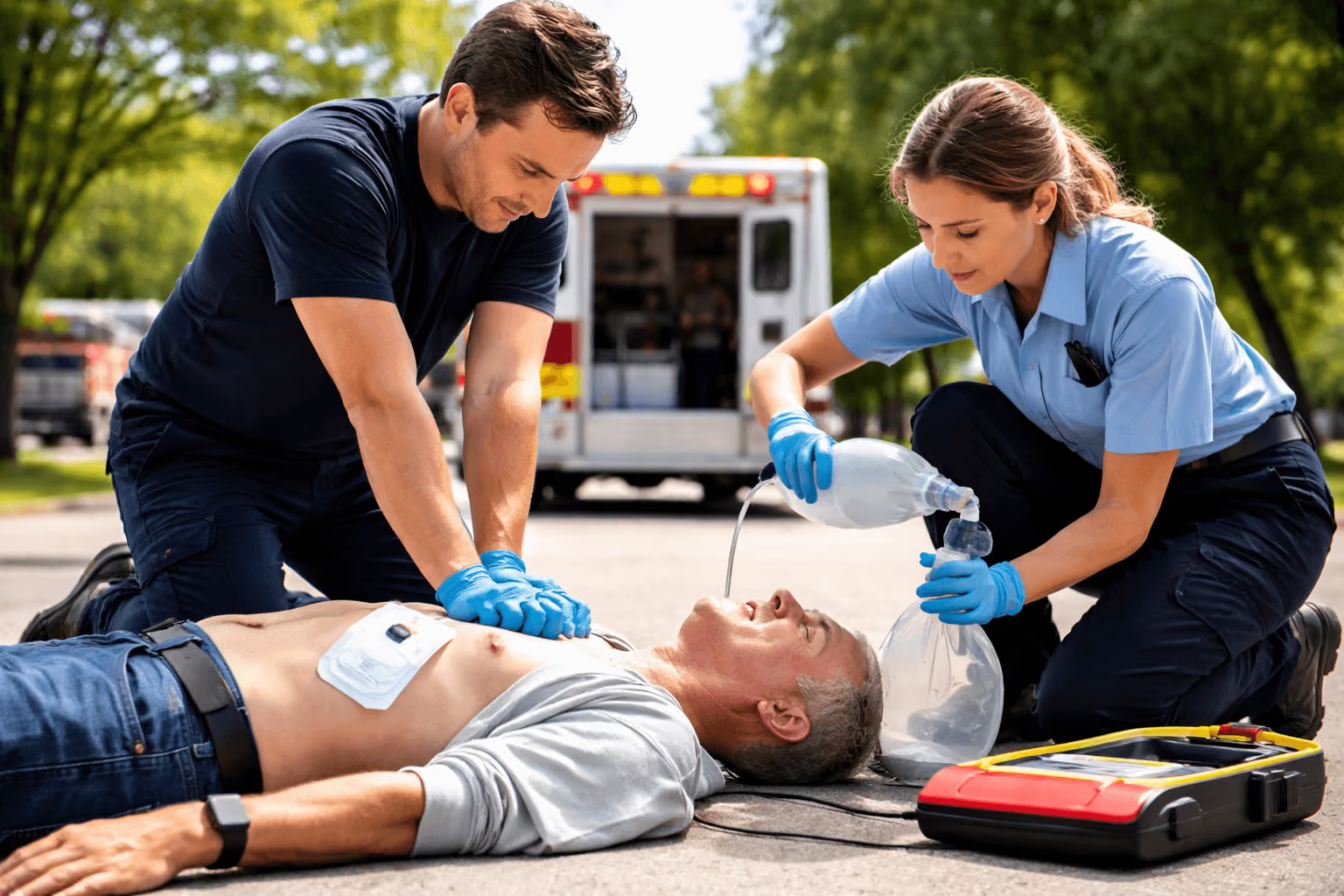
CPR keeps blood moving until a defibrillator or EMS can take over. In a cardiac arrest, CPR and AED access work together. CPR supports circulation, and the AED helps address certain dangerous rhythms that can cause the arrest. In a public setting, that combination can make a real difference.
That is why CPR training remains valuable even when an AED is designed for public use. A person who knows how to start compressions, recognize an emergency, and stay calm can improve the response before professional help arrives.
Who should pay attention to this update
This news matters to parents, coaches, park staff, youth sports volunteers, fitness groups, and anyone who spends time in Carrollton’s recreation spaces. It also matters to healthcare workers and first aid instructors who teach residents how to respond quickly and confidently.
If you work or volunteer in a place where people gather, it helps to know where the nearest AED is located, how to use it, and what to do while waiting for emergency medical services. Familiarity saves time, and time matters in a cardiac arrest.
Benefits of CPR and AED training in Carrollton
Carrollton’s public AED rollout is a reminder that training and equipment should go together. CPR Certification Labs helps community members and healthcare professionals build practical emergency response skills that apply in real life.
- Learn how to recognize signs of cardiac arrest quickly.
- Practice CPR steps with clear, hands-on instruction.
- Understand how to use an AED without hesitation.
- Review first aid basics that support safer public settings.
- Prepare for emergencies in workplaces, parks, and sports environments.
For local learners, CPR Certification Labs offers a Carrollton location that is convenient for residents across North Dallas and nearby communities. You can learn more or get started at Dallas - Carrollton.
Nearby community spaces and local readiness
With AEDs now available in park and recreation settings, nearby community spaces can better support a safer experience for visitors. The key is not just installation, but awareness. People should know where devices are placed, understand how to call for help, and be ready to begin CPR if needed.
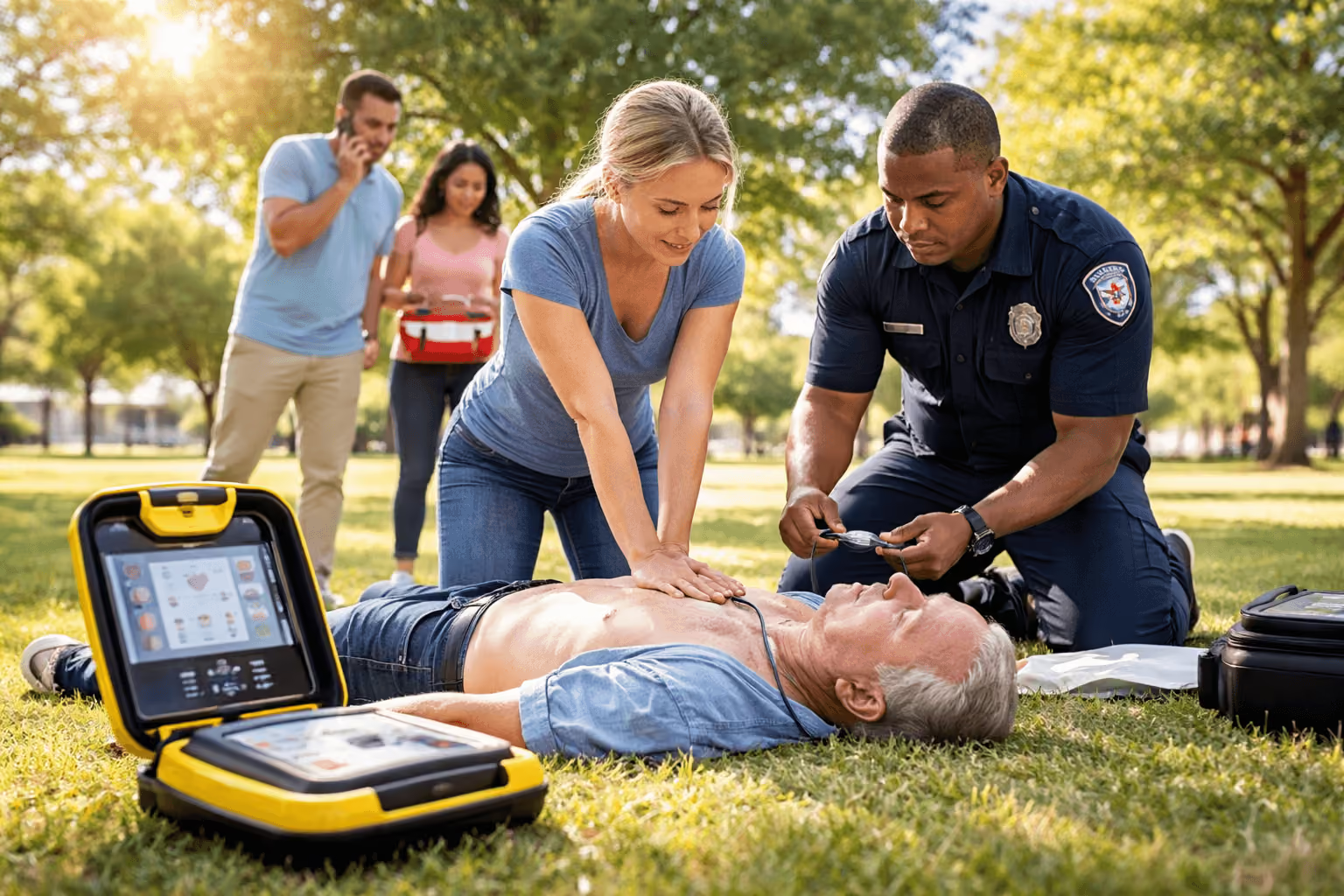
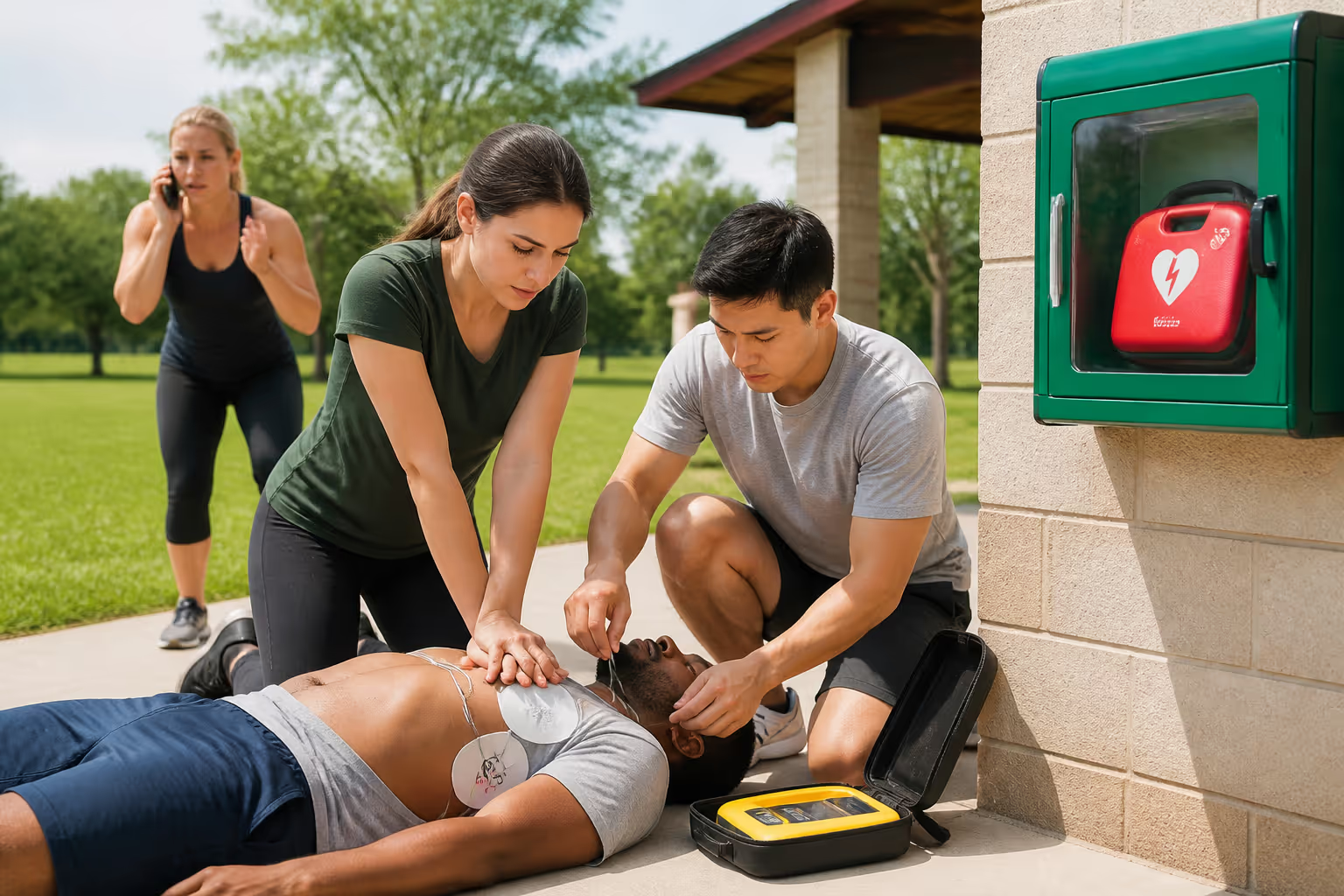
That includes staying calm, asking someone to retrieve the AED, and telling another person to call 911 immediately. In a true emergency, a fast and organized response can reduce delays and help the chain of survival begin sooner.
This article is for general educational purposes only and is not a substitute for professional medical advice, diagnosis, treatment, or certified CPR training. In an emergency, call 911 immediately.
Why public AEDs strengthen emergency response
Public AEDs are most effective when people nearby understand how they fit into an emergency plan. The best outcome often depends on three actions happening at once: starting CPR, retrieving the AED, and calling 911. In a busy park, that teamwork can save valuable time.
Carrollton’s decision shows what a community can do when it prioritizes readiness. For residents, it is also a reminder to refresh CPR and first aid skills before an emergency happens. Training turns a public safety improvement into a practical response plan.
FAQ
Do I need training to use an AED?
Many AEDs are designed with simple prompts and visual instructions, but CPR and AED training can help you respond more confidently during an emergency.
What should I do first in a suspected cardiac arrest?
Check the scene, call 911, start CPR if the person is unresponsive and not breathing normally, and send someone to get the nearest AED.
Why are park AEDs important?
Parks and sports facilities often host large groups of people, so public AED access can shorten the response time before EMS arrives.
About our Dallas - Carrollton office
- Address: 1406 Halsey Way Suite 110
- Phone: (972) 440-0527
- Email: carrollton@cprcertificationlabs.com
- Hours:
Monday – Sunday: 7am - 8pm