CPR Education in Midland and Women’s Heart Health
CPR education in Midland is more than a training topic. In the Permian Basin, it connects directly to women’s heart health, emergency response, and the need for neighbors, families, and coworkers to act quickly when cardiac arrest happens. A local Go Red for Women initiative is highlighting that message at a time when many people are thinking more closely about heart disease prevention and response.
The local effort is also personal. A well-known Odessa-Midland news anchor is helping lead the 2025 Go Red for Women campaign after losing his wife to a heart attack. His story is a reminder that heart disease can affect families with little warning, and that community education matters just as much as public awareness.
Why the Local Go Red for Women Event Matters
The Permian Basin Go Red for Women luncheon is bringing attention to women’s cardiovascular health and to the role of CPR and AED response in emergencies. The event will be held in Odessa, but its message applies across Midland, Odessa, and the surrounding communities where families, workplaces, and public venues all benefit from stronger emergency response planning.
Women often place the needs of others before their own, which can delay attention to warning signs. Local heart health campaigns help reinforce that women should take symptoms seriously, stay informed about risk factors, and encourage the women around them to do the same. That includes knowing what to do if someone suddenly collapses, becomes unresponsive, or is suspected to be in cardiac arrest.
What CPR, AED Use, and First Aid Mean in an Emergency
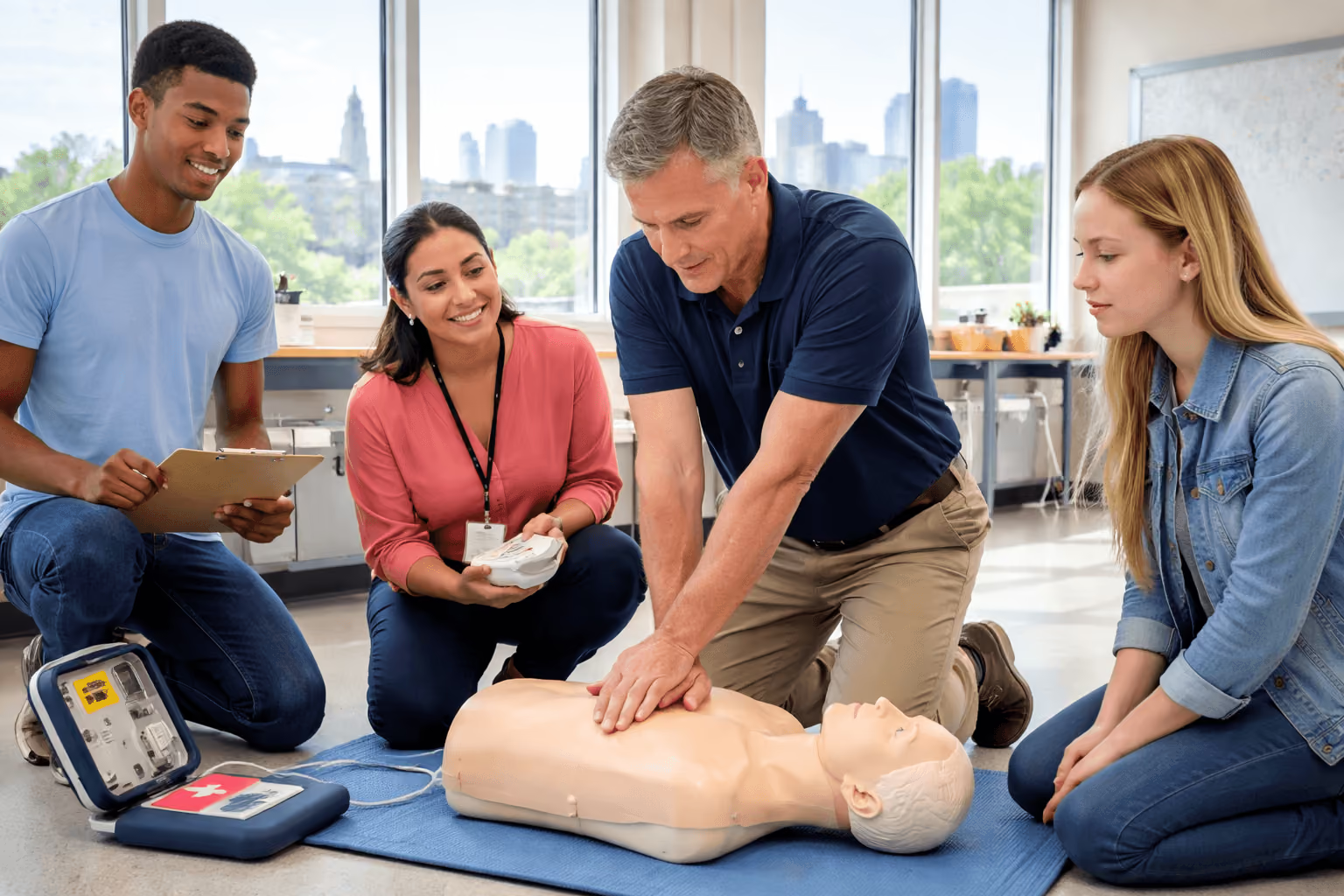
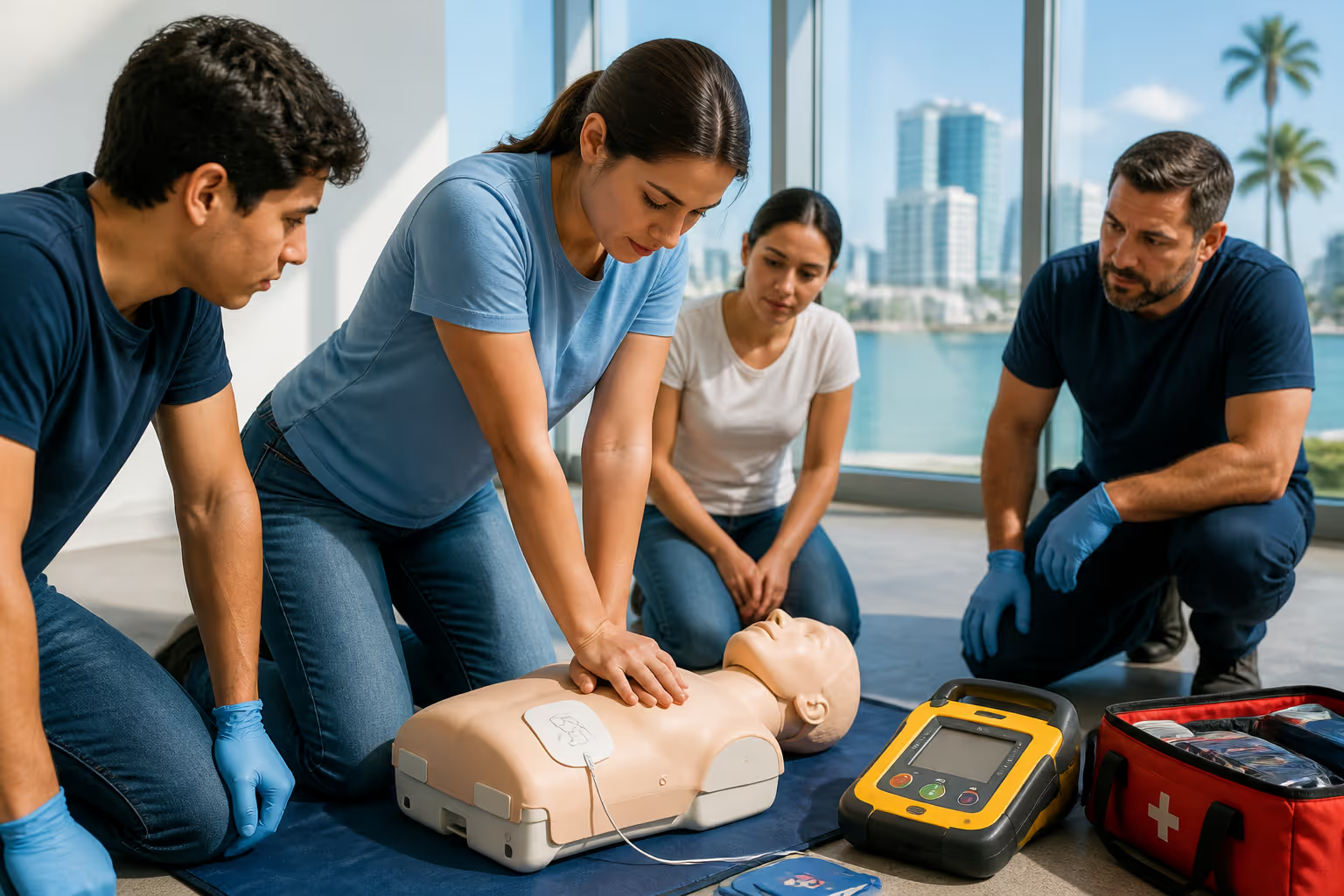
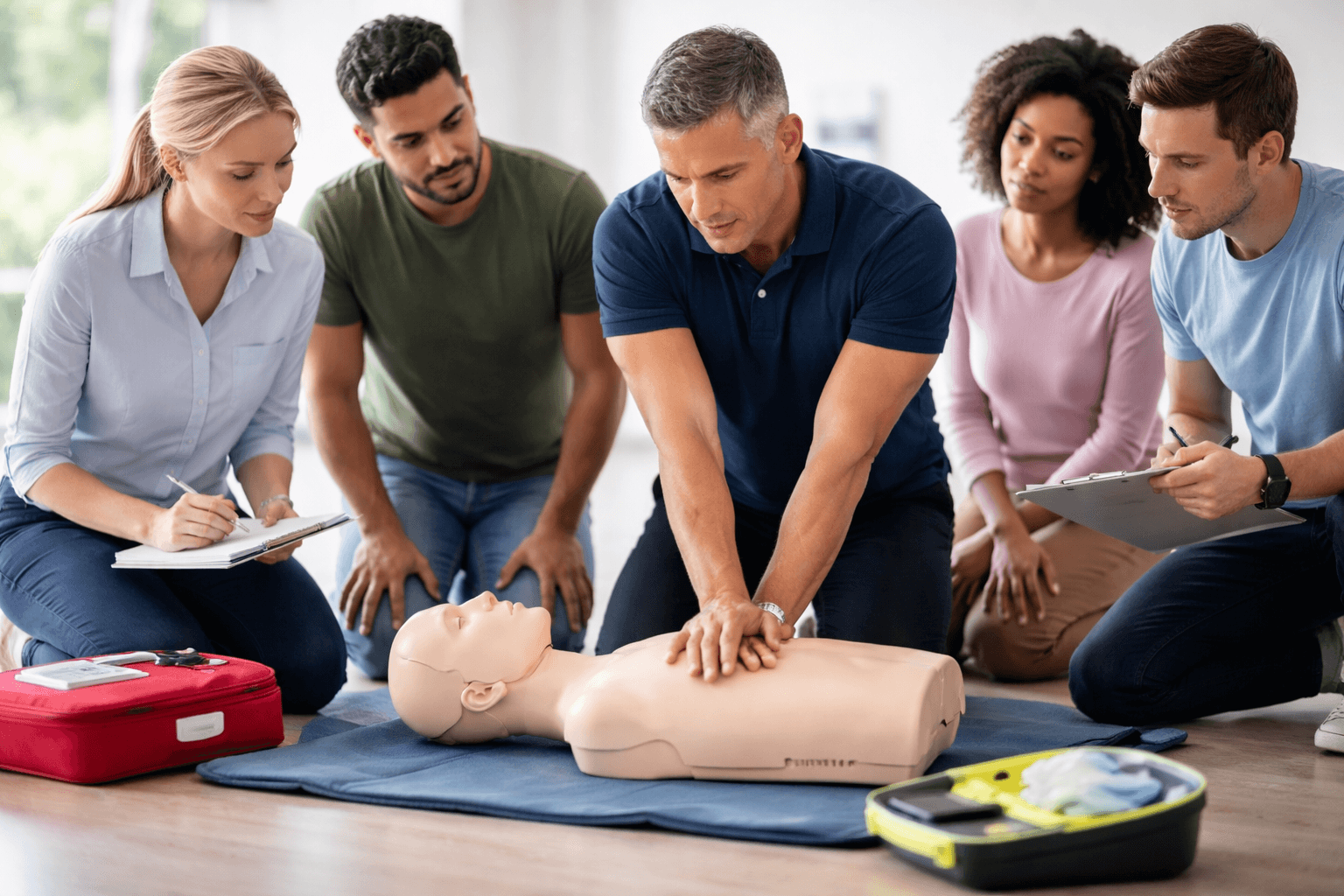
When cardiac arrest occurs, every second matters. CPR helps maintain blood flow until advanced care arrives, and an AED can help restore a normal rhythm when used quickly. Emergency response training teaches people how to recognize a crisis, stay calm, and take action while waiting for EMS.
For community members, first aid awareness is also valuable because emergencies do not always happen in a hospital or clinic. They can happen at home, in a school, on a job site, at church, or at a community event. A trained bystander may be the first person able to respond.
Practical preparedness includes:
- Recognizing when a person is unresponsive and not breathing normally
- Knowing where AED devices are located in common public spaces
- Understanding the importance of immediate chest compressions
- Calling emergency help right away so professionals can take over as soon as possible
If someone appears to be in cardiac arrest, call 911 immediately and begin CPR if you are trained and it is safe to do so. Use an AED as soon as one is available and follow the device prompts.
This article is for general educational purposes only and is not a substitute for professional medical advice, diagnosis, treatment, or certified CPR training. In an emergency, call 911 immediately.
Who Should Consider CPR Training
CPR education in Midland is relevant for healthcare workers, teachers, coaches, office teams, church volunteers, parents, caregivers, and anyone who spends time around the public. It is especially useful for people who may be the first to respond in a home or workplace emergency before paramedics arrive.
Training is also important for those supporting women’s health outreach, because awareness campaigns work best when education includes both prevention and response. A community can raise awareness about heart disease while also making sure more people know how to act if an emergency happens.
Benefits of Choosing CPR Certification Labs
CPR Certification Labs helps learners build practical emergency response skills with a clear, workplace-friendly approach. Courses are designed to be straightforward, useful, and relevant for healthcare professionals and other local residents who want to be better prepared.
People choose CPR Certification Labs for instruction that focuses on real-world response, including CPR, AED use, and first aid basics. In a region like the Permian Basin, where people work in busy clinics, schools, energy offices, and community settings, that kind of preparation can make a difference.
For local learners, the Midland-Odessa office offers convenient access at 4214 Andrews Highway, Suite 202, Midland, TX. The office hours are 8am - 6pm, Monday through Friday, and the team can be reached at (432) 315-0921 or https://www.cprcertificationlabs.com/offices/midland-odessa.
Nearby Community Context in Midland and Odessa
Local heart health awareness efforts resonate across the Permian Basin because families often live and work between Midland and Odessa. Events at venues such as the Odessa Marriott Hotel & Conference Center help bring people together around education, prevention, and emergency readiness.
That local connection matters because preparedness is not limited to one building or one profession. A stronger network of trained bystanders can improve response in offices, restaurants, faith communities, athletic events, and neighborhood gatherings throughout the area.
Why This News Should Prompt Action
The personal story behind the local Go Red for Women initiative gives the campaign urgency, but the broader lesson is simple: heart health education and emergency response skills belong together. Knowing CPR, understanding AEDs, and taking symptoms seriously can help families and communities respond more effectively when seconds count.
If you live or work in the Permian Basin and want to build confidence in emergency response, consider a local training option that covers CPR, AED use, and first aid in a clear, practical way.
Learn more about CPR education in Midland and explore training options through the Midland-Odessa office page linked above.