CPR training Cincinnati and the push for faster emergency response
CPR training Cincinnati has taken on new visibility as Damar Hamlin brings his CPR and AED awareness tour to the city. His stop puts an important public safety message in the spotlight: when cardiac arrest happens, nearby people often make the difference before EMS arrives.
Hamlin’s outreach is especially meaningful in Cincinnati because it connects a national sports story with a local call to be ready for emergencies at home, at work, at school, and at community events. For healthcare workers and everyday bystanders alike, CPR, AED use, and first aid skills are part of practical emergency response.
Why Cincinnati is part of the conversation
Hamlin’s story is well known because he experienced cardiac arrest on the field and was helped by rapid response on site. That experience turned into a broader mission centered on preparedness, training, and access to AEDs. His Cincinnati stop adds to a series of public training events intended to encourage more people to learn what to do in the first critical minutes of an emergency.
According to reporting on the tour, the Cincinnati visit includes a training-focused appearance at the University of Cincinnati and a giveaway of 50 AEDs through his foundation. The message is simple: communities are stronger when more people know how to respond and when life-saving equipment is easier to find.
What CPR, AEDs, and first aid do in an emergency
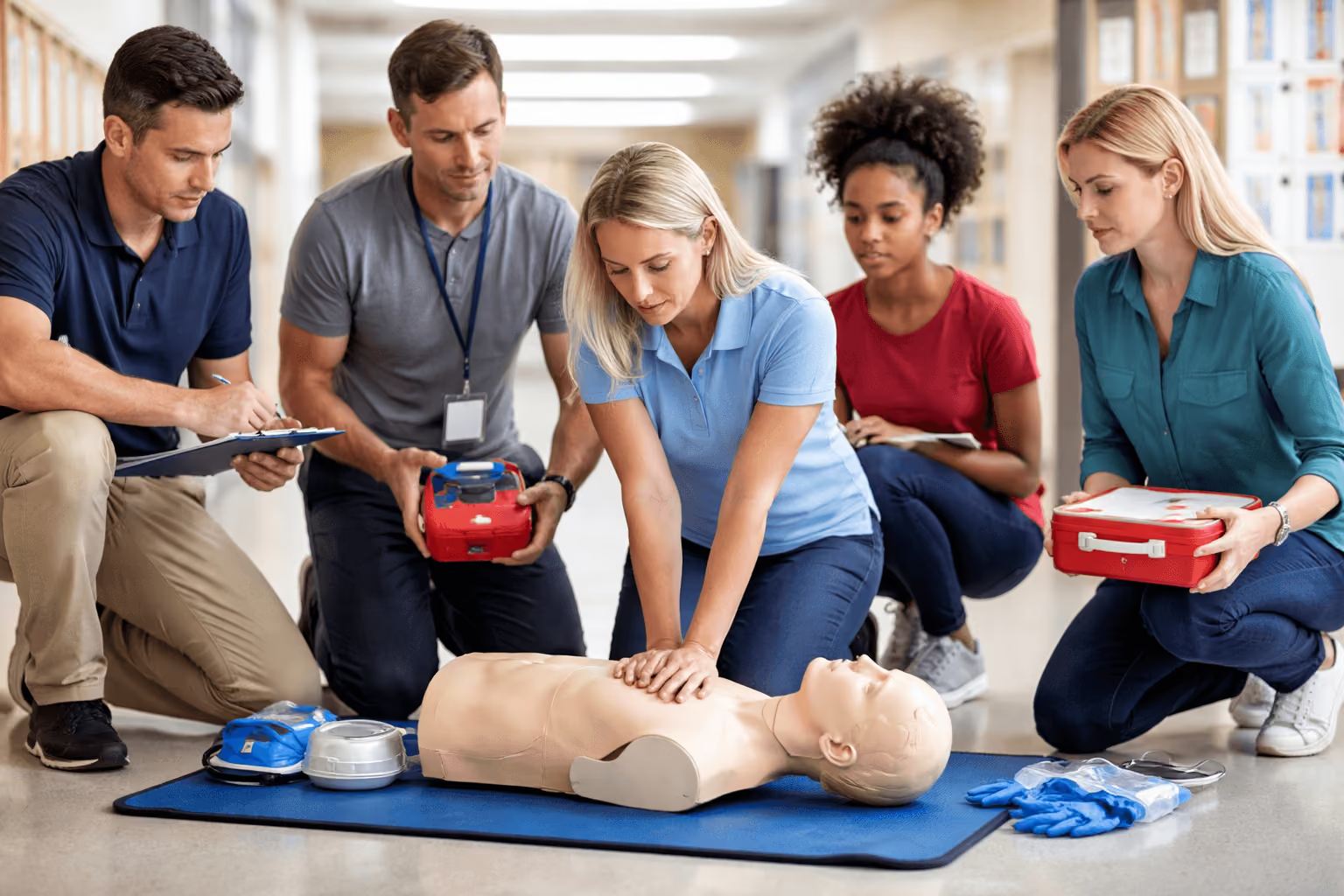
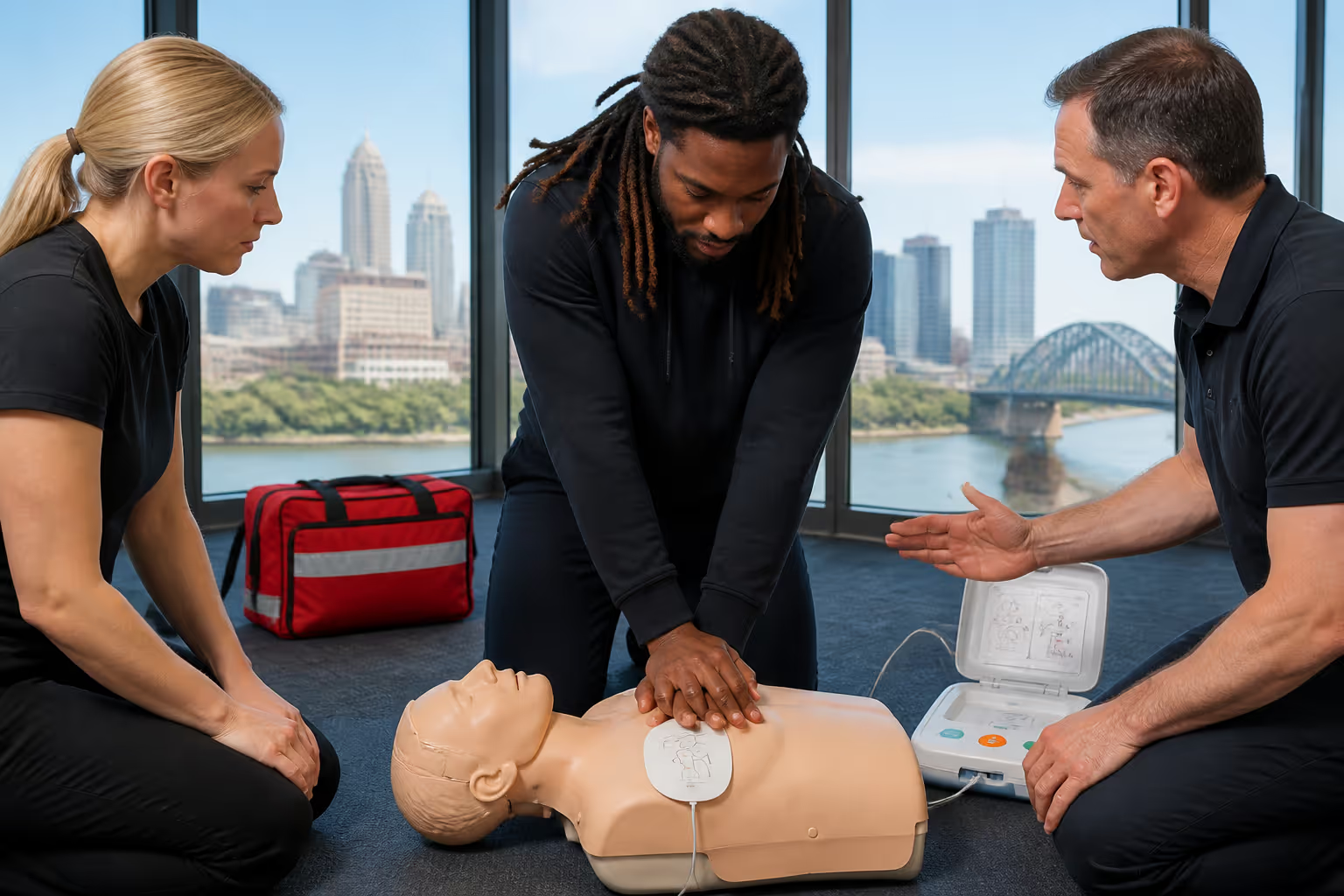
CPR is a hands-on skill used when a person is unresponsive and not breathing normally. AEDs are designed to analyze heart rhythm and provide a shock if needed. First aid and emergency response training also teach people how to stay calm, protect the scene, and get help quickly.
These skills matter because cardiac arrest is time-sensitive. Even before professional responders arrive, a prepared bystander can begin CPR, use an AED if one is available, and help keep the person connected to the chain of survival. That is why CPR training Cincinnati remains relevant for workplaces, gyms, schools, houses of worship, and sports facilities across the region.
This article is for general educational purposes only and is not a substitute for professional medical advice, diagnosis, treatment, or certified CPR training. In an emergency, call 911 immediately.
Who should consider CPR and AED training
This topic is relevant for a wide range of people in and around Cincinnati and Dayton, including:
- Healthcare professionals who need regular skills refreshers
- Teachers, coaches, and youth program leaders
- Fitness center staff and athletic trainers
- Office teams responsible for workplace safety
- Parents, caregivers, and community volunteers
- Anyone who wants to be better prepared for a sudden emergency
Even if a person never expects to use CPR or an AED, training builds confidence and reduces hesitation. In an emergency, knowing what to do can help someone take action sooner while waiting for paramedics.
Benefits of choosing CPR Certification Labs
For people in the greater Dayton and Cincinnati area, CPR Certification Labs provides a practical option for learning CPR, AED use, and first aid fundamentals. The Dayton - Centerville office is convenient for local learners who want a straightforward class experience without unnecessary complexity.
Students can expect training that is built for real-world readiness and presented in a clear, professional way. That matters for healthcare professionals and other working adults who need instruction that is easy to understand and easy to remember later. The office location at 2723 Miamisburg Rd, Suite 130 in Dayton serves the region, and the office is open 6am - 12am - 7 Days a Week!
To learn more or find a class time that fits your schedule, visit the Dayton - Centerville office page.
Nearby facilities and local relevance
Cincinnati’s role in this tour also highlights how important preparedness is around large public venues and academic settings, including the University of Cincinnati. In busy spaces like stadiums, campuses, and event centers, access to an AED and people trained to use it can support a faster emergency response.
For residents in Dayton, Centerville, and the surrounding Miami Valley, the connection is clear: local training helps build readiness across the region. Whether someone works in healthcare, education, athletics, or another field, CPR and AED knowledge can be useful anywhere people gather.
Why this story matters now
Damar Hamlin’s Cincinnati stop is more than a public appearance. It is a reminder that CPR and AED awareness should not wait for a headline. The more people who understand how to respond to cardiac arrest, the stronger a community becomes when minutes matter.
If you are ready to improve your emergency response skills, CPR training Cincinnati is a practical next step for learning CPR, AED use, and first aid in a structured setting.
FAQ
Why is CPR training important after a cardiac arrest story like this?
It shows how quickly a life-threatening emergency can unfold and how valuable trained bystanders can be before professional responders arrive.
Is AED use part of CPR training?
Yes. Many CPR courses include AED instruction so students understand how to recognize the device and use it in a response.
Who in Cincinnati should get trained?
Healthcare workers, teachers, coaches, parents, office staff, and community members can all benefit from learning CPR and emergency response skills.
About our Dayton - Centerville office
- Address: 2723 Miamisburg Rd, Suite 130
- Phone: (937) 550-8765
- Email: dayton@cprcertificationlabs.com
- Hours:
6am - 12am - 7 Days a Week!