Houston AED maintenance after a school emergency
Houston AED maintenance is back in the spotlight after a Marshall Middle School student died following a medical emergency on campus. When a sudden collapse happens at school, staff members may have only minutes to act, and the condition of an AED can matter just as much as the response itself. Events like this remind Houston families, educators, and school health teams that emergency response depends on more than having equipment in the building.
In this case, school staff tried to use a defibrillator after the student lost consciousness, and questions were raised about whether the device was working properly. The district said emergency medical personnel responded quickly and the student was taken to a hospital, where he was later pronounced dead. While the exact cause of death was not public, the incident has led to renewed attention on AED inspection, CPR readiness, and school-based first aid response.
Why AED readiness matters in Houston schools
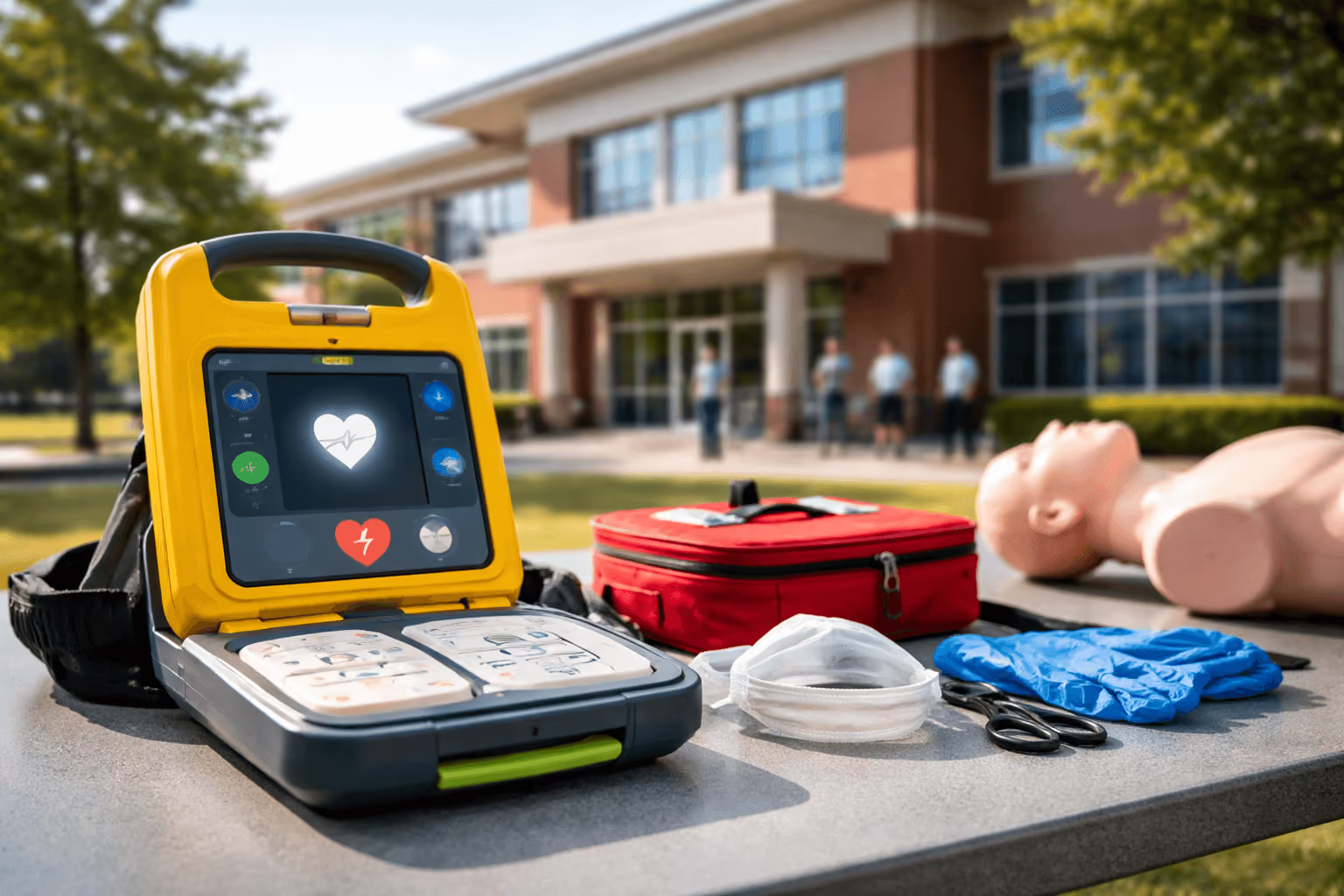
An automated external defibrillator, or AED, is designed to help during sudden cardiac arrest. It checks the heart rhythm and may deliver a shock if the rhythm is one that can be treated that way. If no shock is advised, rescuers should continue CPR until EMS arrives. That makes both device function and staff training essential.
Texas schools are required to keep AEDs available and inspect them regularly. Monthly checks help confirm that batteries, pads, electrodes, and other parts are ready if an emergency happens. Even a device that looks normal on the wall may not be ready if a battery has expired or pads have been used, damaged, or not replaced on time.
What this means for CPR and emergency response
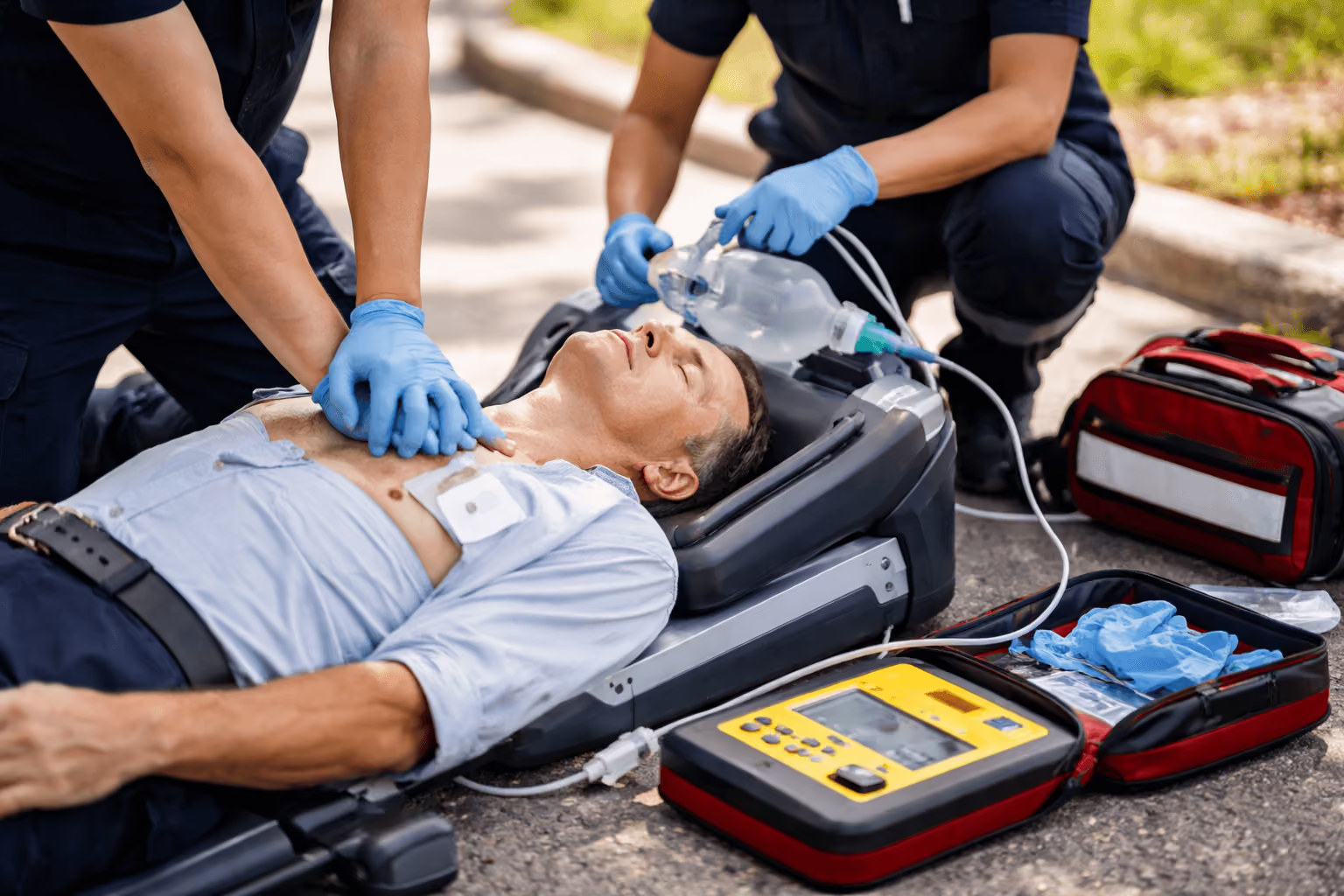
When someone collapses, the response should be immediate and organized. The priority is to assess the scene, activate emergency response, and use CPR if the person is unresponsive and not breathing normally. If an AED is available, it should be brought to the scene quickly and used as directed.
It is also important to remember that an AED may not shock every time it is applied. That does not necessarily mean it failed. It may mean the heart rhythm was not shockable at that moment. In those cases, CPR continues while EMS is on the way. Quick action, clear roles, and practiced response steps can make a major difference in a school setting.
Who should pay attention to Houston AED maintenance
This story is relevant to school nurses, administrators, teachers, coaches, athletic staff, and anyone responsible for student safety. It also matters to parents who want confidence that campus emergency equipment is inspected and ready. In a large district, one overlooked device can become a serious problem if a student or staff member has a cardiac emergency during class, athletics, or a school event.
Healthcare workers and public safety teams also recognize the importance of first aid training in schools. A fast, practiced response can help bridge the time between collapse and the arrival of EMS. That is why AED checks, CPR training, and clear emergency plans should work together, not separately.
Benefits of CPR and AED training for school communities
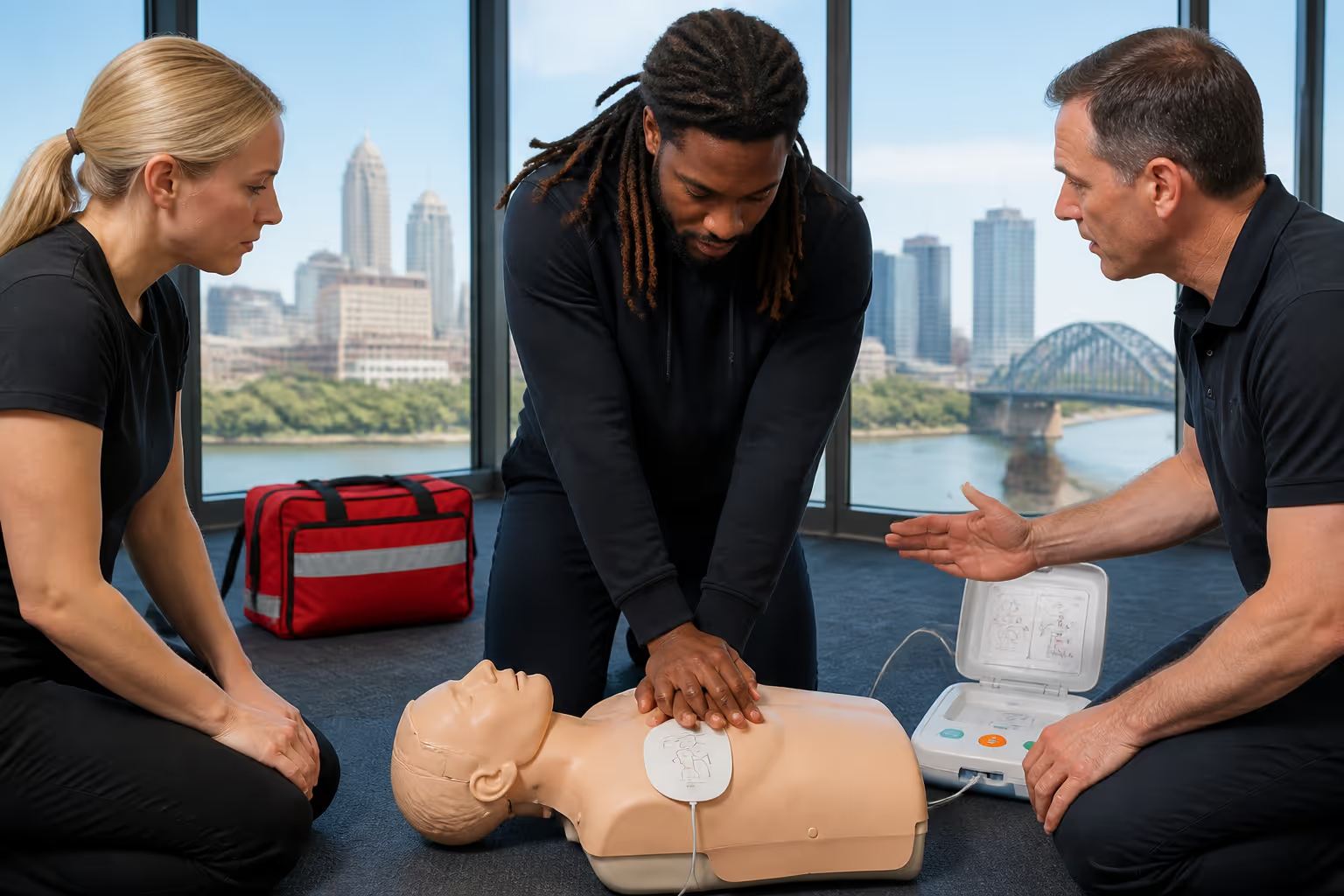
CPR and AED education help staff respond with confidence in stressful moments. Training can reduce hesitation, improve coordination, and support better use of emergency equipment. It also helps school teams understand how to recognize cardiac arrest, when to use an AED, and when to keep performing CPR.
- Helps staff act faster during a medical emergency
- Supports correct AED use and routine equipment checks
- Builds confidence in CPR and first aid response
- Improves teamwork between school staff and EMS
- Reinforces the importance of calling 911 right away
This article is for general educational purposes only and is not a substitute for professional medical advice, diagnosis, treatment, or certified CPR training. In an emergency, call 911 immediately.
Local relevance for Houston families and schools
Houston campuses, from middle schools to high schools and district facilities, depend on emergency readiness every day. That includes functional AEDs, regular equipment checks, and staff who know what to do before paramedics arrive. In neighborhoods across the Northside and greater Houston area, school safety planning should include not just the presence of a device, but the knowledge and maintenance behind it.
For healthcare professionals, educators, and safety leaders looking to strengthen emergency response skills, training in CPR, AED use, and first aid can help prepare teams for real-world situations. Reliable equipment matters, and so does the confidence to use it properly.
CPR Certification Labs in North Houston
CPR Certification Labs serves the North Houston area with training that supports workplace and campus emergency preparedness. If you want to learn more about CPR, AED use, or first aid training, visit our North Houston office page here: North Houston office.
Our North Houston location is at 2930 Cypress Grove Meadows Dr, Houston, TX, and it is open Monday through Sunday from 7am to 8pm. For questions, you can reach the office at (346) 353 2291 or houstonnorth@cprcertificationlabs.com.
FAQ
How often should school AEDs be checked?
Texas schools are required to inspect AEDs at least monthly. Regular checks help confirm that the device, battery, pads, and other components are ready for use.
If an AED does not shock, does that mean it failed?
Not always. An AED only shocks certain heart rhythms. If no shock is advised, rescuers should continue CPR and wait for EMS.
Why is CPR training important if a school already has an AED?
An AED is one part of emergency response. CPR helps maintain circulation while the device analyzes the heart and while EMS is en route.