Houston AED response and why school emergencies demand fast action
The recent news about a Houston middle school student whose death was later ruled undetermined is a painful reminder that every second matters in a sudden cardiac emergency. For families, educators, and healthcare professionals, Houston AED response is not just a policy topic—it is a real-world safety issue that can affect outcomes before paramedics arrive.
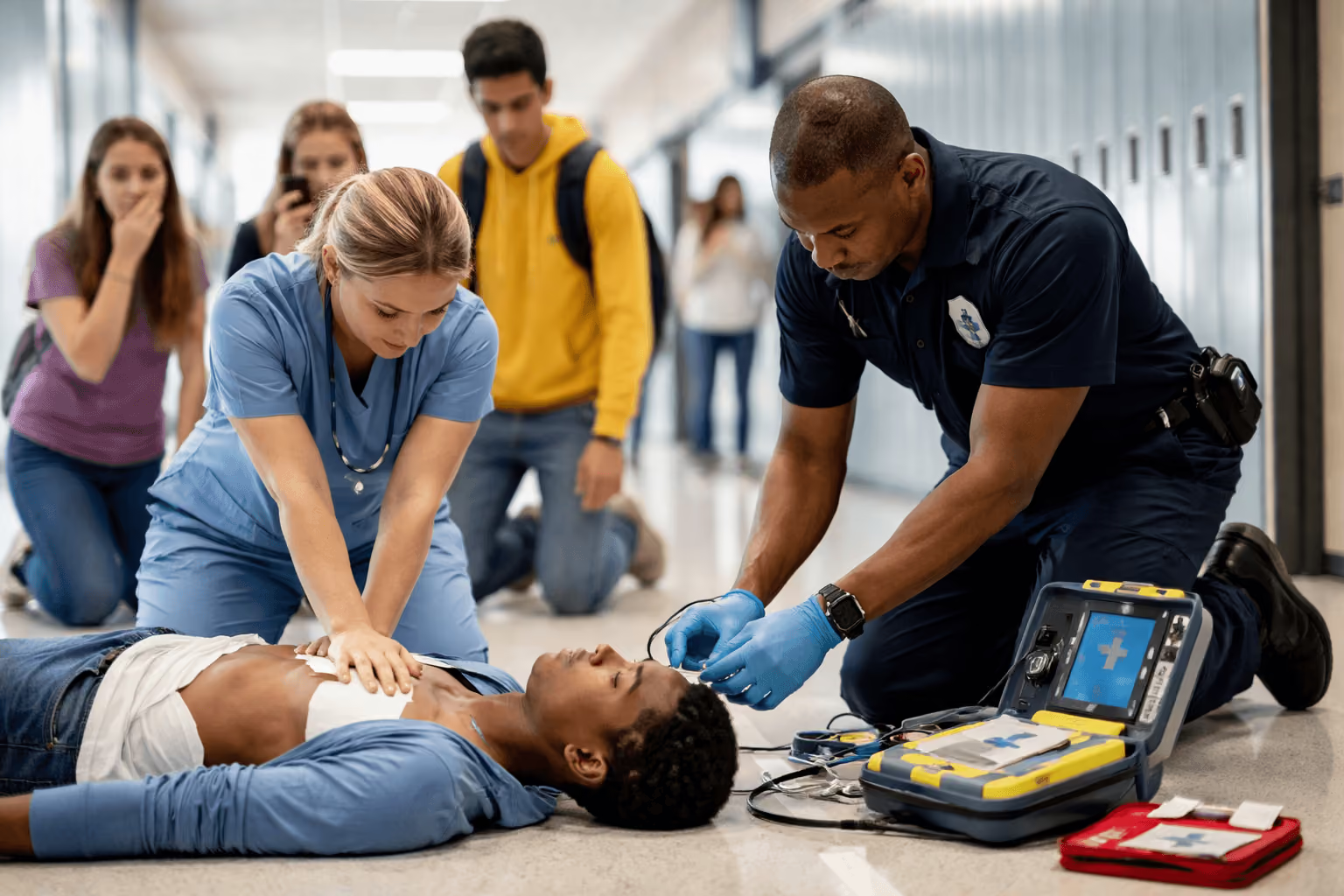
When a student collapses at school, the chain of survival depends on recognition, CPR, an available AED, and a rapid emergency response. If any one of those steps is delayed, the situation can become far harder to manage. This is why school staff, nurses, coaches, and administrators need clear plans and regular training.
What this case highlights about Houston AED response
In this case, the medical examiner’s office did not identify a specific cause or manner of death months after the incident. The public discussion that followed centered on whether the school had working equipment, how quickly help was delivered, and what systems were in place to support a child in distress. Those are the exact questions every campus should be prepared to answer before an emergency happens.
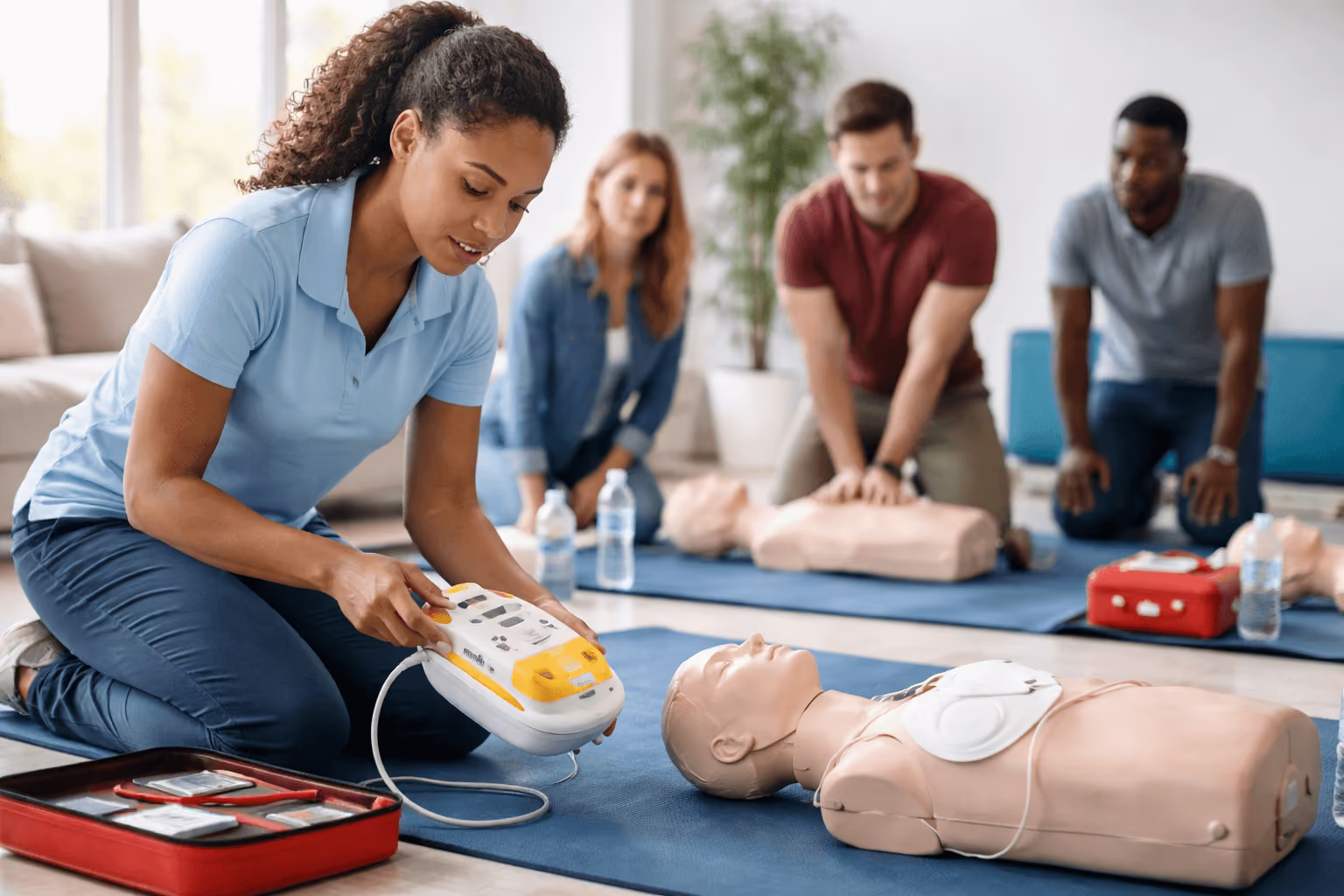
AEDs are designed to support response to certain sudden cardiac arrest events by providing voice prompts and a shock only when the device detects a rhythm that can be treated that way. They are not a replacement for CPR, but they are a critical part of a coordinated emergency response. In a school setting, equipment has to be accessible, maintained, and familiar to the people who may need to use it.
Why CPR, AED access, and first aid training matter
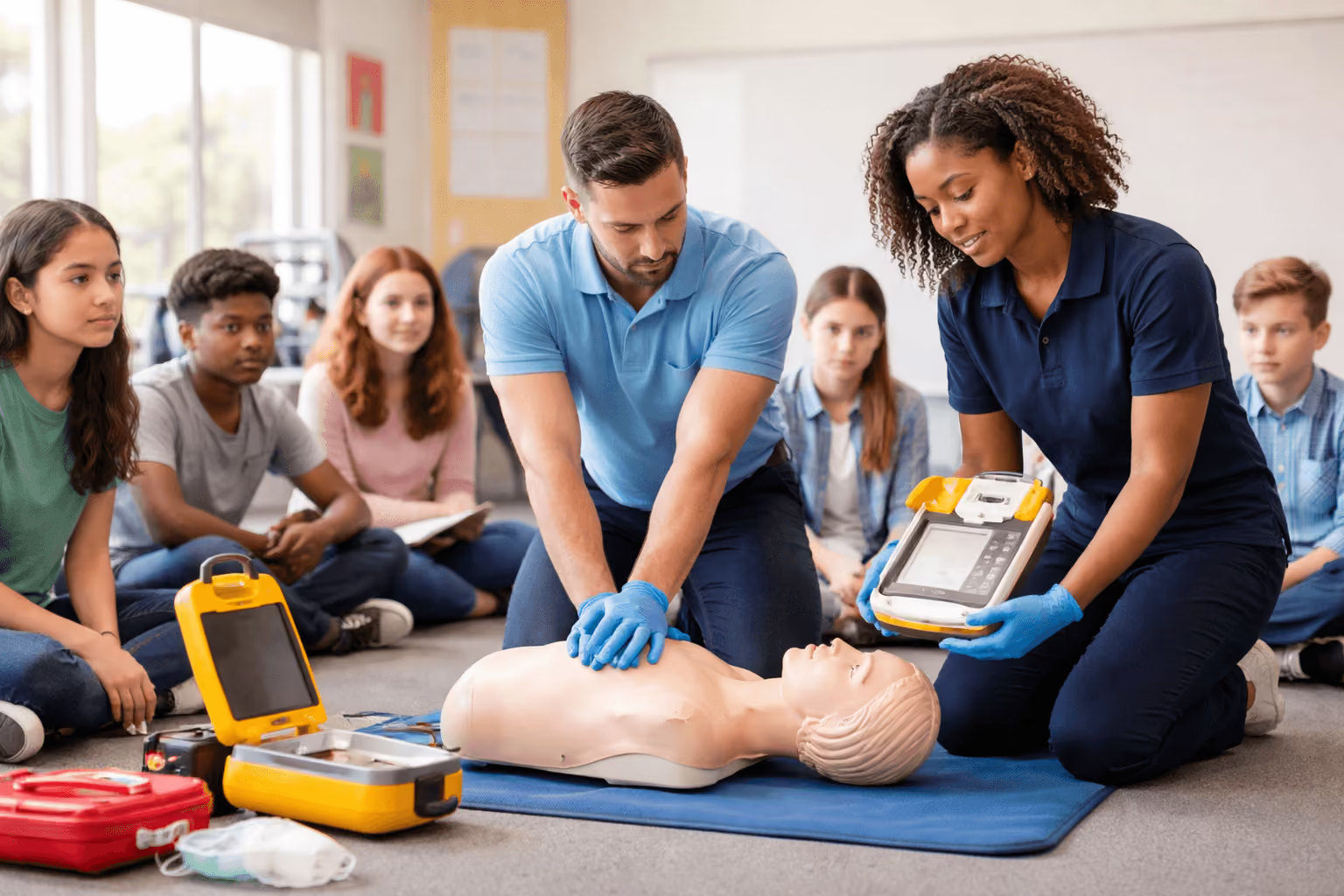
Schools are busy environments. Students may be in the gym, cafeteria, hallway, practice field, or classroom when a medical crisis occurs. A prepared team can make a major difference by recognizing symptoms early and moving quickly through the response steps.
- Start CPR when a person is unresponsive and not breathing normally.
- Send someone to get the AED right away.
- Use the device as instructed while emergency responders are on the way.
- Keep following dispatcher guidance until EMS arrives.
First aid training also helps staff respond to injuries, fainting, allergic reactions, asthma issues, and other urgent events that may happen on campus. Even when a problem is not cardiac in nature, a trained responder can reduce confusion and help keep students safe.
When to call 911 in a school emergency
If a student or adult collapses, is not responding, is having trouble breathing, or is not breathing normally, call 911 immediately. That step should happen as soon as possible, even while another person begins CPR and another retrieves the AED. Emergency response works best when everyone knows their role and does not wait for the situation to worsen.
This article is for general educational purposes only and is not a substitute for professional medical advice, diagnosis, treatment, or certified CPR training. In an emergency, call 911 immediately.
Who should think about CPR and AED training in Houston
This topic matters to teachers, school nurses, coaches, front-office staff, campus security, parents, childcare workers, and healthcare professionals who support youth settings. It also matters to anyone responsible for safety planning in gyms, recreation centers, churches, and community spaces where children gather.
For teams in North Houston, training can help build confidence before an emergency occurs. Learning how to check responsiveness, begin CPR, and use an AED correctly can reduce hesitation during a stressful event. That preparation is especially important in schools, where rapid action may be needed before paramedics can reach the scene.
Benefits of choosing CPR Certification Labs
CPR Certification Labs offers practical instruction focused on real-life response skills. Participants can learn how to assess a scene, support breathing and circulation, and use an AED with confidence. Classes are designed for healthcare professionals and other learners who want straightforward training that is easy to understand and apply.
For Houston-area learners, the North Houston office provides a convenient option for local CPR, BLS, ACLS, first aid, and emergency response education. The office is located at 2930 Cypress Grove Meadows Dr in Houston, TX, with hours Monday through Sunday, 7am - 8pm. You can learn more or register at North Houston.
Nearby Houston context and why readiness matters now
Houston campuses, community centers, and sports facilities all rely on fast, organized response when a medical emergency happens. A working AED, clear staff roles, and regular CPR practice are basic safety tools, not extras. The recent school case is a reminder that every campus should verify equipment status, review emergency procedures, and make sure responders know where devices are stored.
For local families and professionals, the lesson is simple: preparation saves time, and time matters in cardiac emergencies. If your workplace or school has not reviewed its response plan recently, now is the time to do it.
FAQ
What is the role of an AED during a cardiac emergency?
An AED analyzes the heart rhythm and gives voice prompts to guide responders. It is used alongside CPR and emergency medical services, not instead of them.
Why is CPR still needed if an AED is available?
CPR helps maintain blood flow and oxygen delivery while the AED is being prepared and while responders wait for EMS. Both steps work together in emergency response.
Who should learn CPR and AED use?
Teachers, school staff, coaches, parents, and healthcare professionals can all benefit from training, especially in settings where children and teens gather.