Southlake heart attack care and local emergency readiness
Southlake heart attack care is getting more attention as hospitals in Southlake and Grapevine continue to invest in cardiology and emergency response capacity. For people who live, work, travel, or train in this part of North Texas, the message is clear: faster recognition and faster action matter when a cardiac emergency happens.
The local focus on heart care reflects a countywide issue that health systems and EMS teams are trying to address with stronger coordination, quicker response, and better access to treatment. That matters because a person having a heart attack or sudden collapse may first be helped by a family member, coworker, coach, or passerby before a clinician arrives.
What the countywide cardiology investment means
Recent investments in cardiology by Southlake and Grapevine hospitals add capacity to a larger regional effort to improve care for heart-related emergencies. That kind of investment does not replace community preparedness. Instead, it works alongside it. Hospitals can provide advanced care, but the first few minutes of an emergency still depend on someone nearby recognizing the problem and responding quickly.
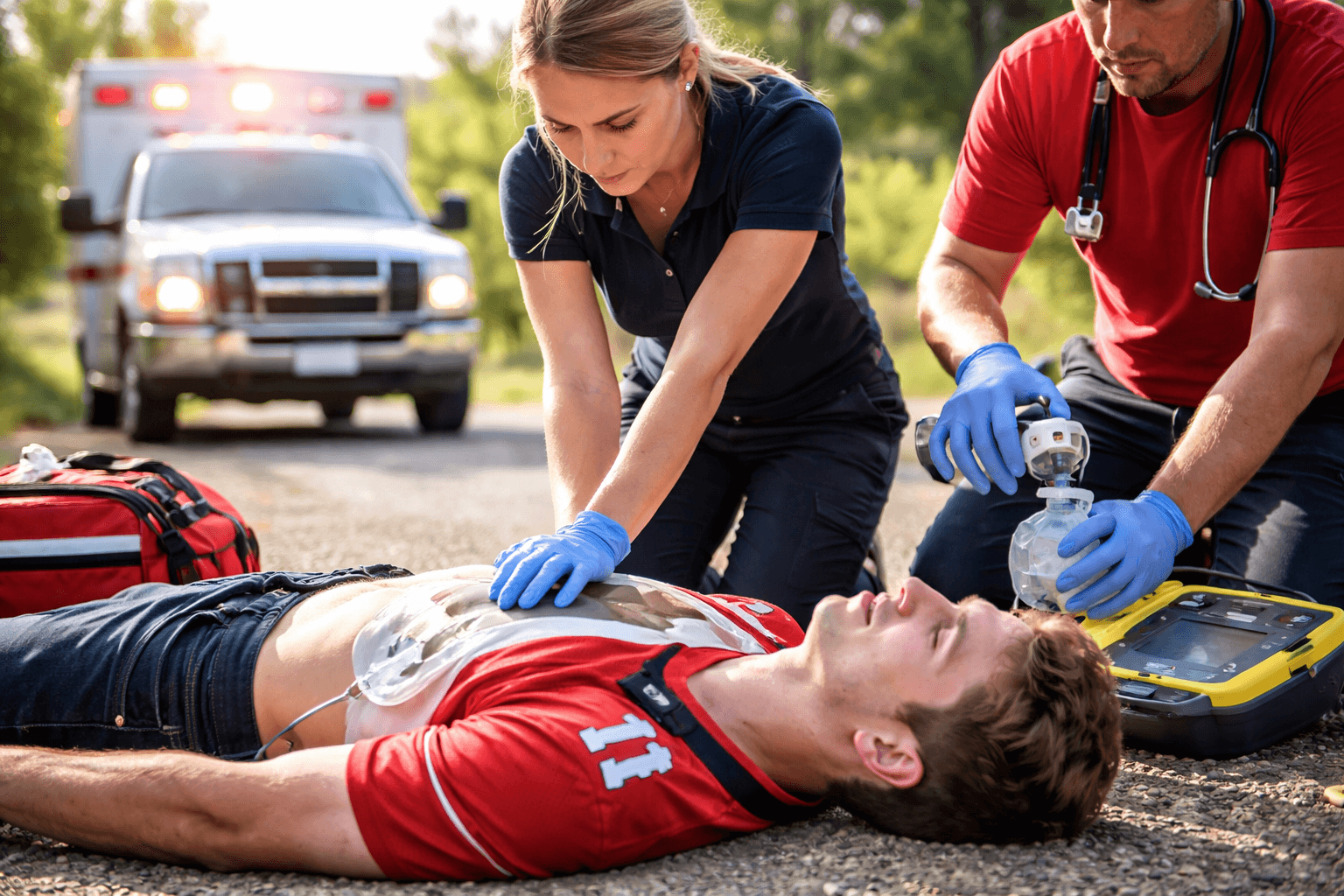
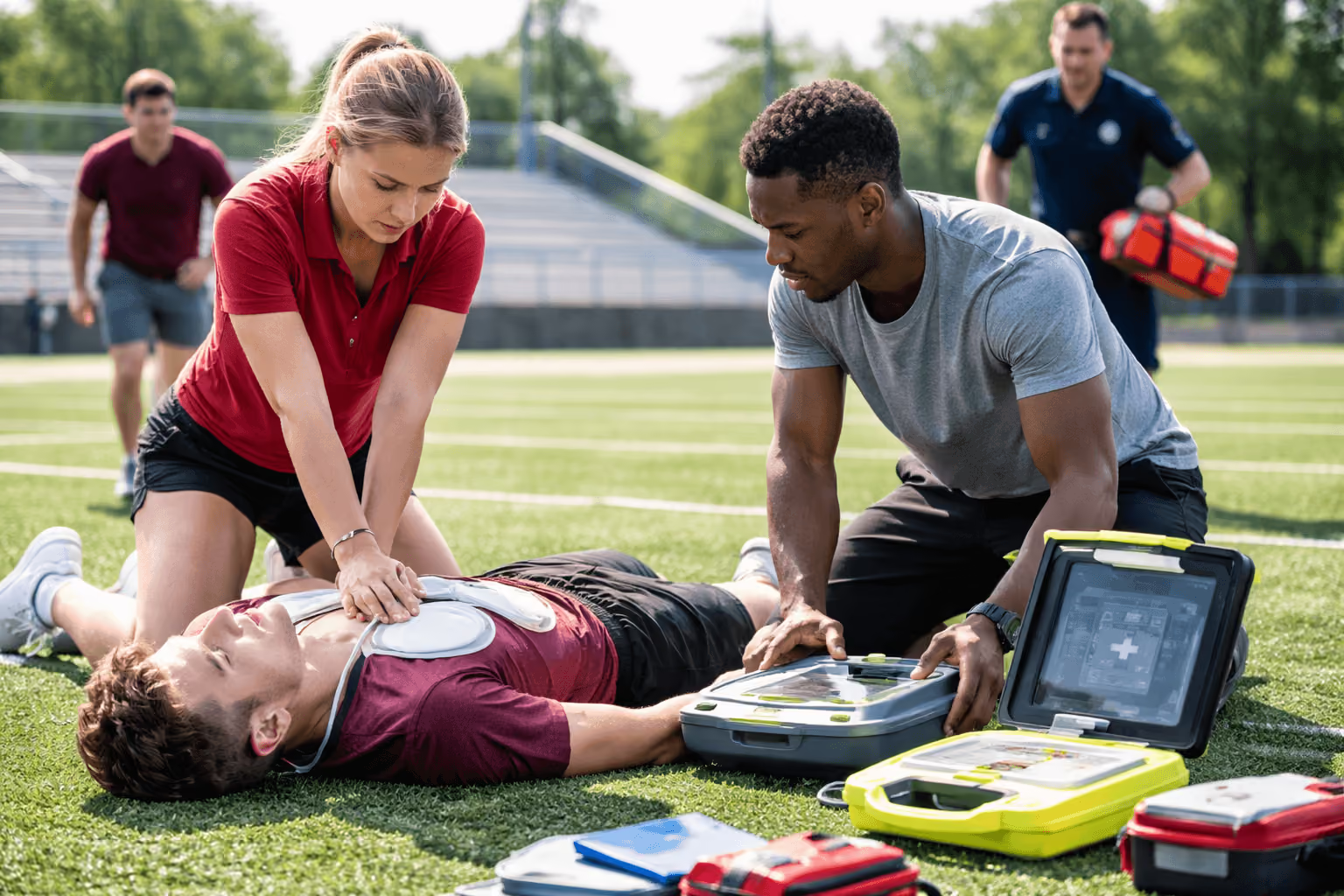
That is where CPR, AED access, and emergency response planning come in. When someone is unresponsive and not breathing normally, bystander action can help bridge the gap until EMS arrives. In a busy suburban corridor, those first actions can matter just as much as the later hospital treatment.
For readers following the local coverage closely, the important detail is not only that hospitals are expanding cardiology resources, but that the broader countywide issue involves time. The shorter the delay before help begins, the better prepared the community may be to respond.
Why Southlake heart attack care depends on CPR and AED readiness
Heart attack care often starts with symptom recognition, but sudden collapse can quickly become a cardiac arrest emergency. A heart attack and cardiac arrest are not the same thing, but one can lead to the other. If a person becomes unresponsive, needs help breathing, or suddenly stops breathing normally, immediate action is critical.
Prepared bystanders should know a simple sequence:
- Check the scene for safety
- Look for responsiveness and normal breathing
- Call 911 right away
- Start CPR if the person is unresponsive and not breathing normally
- Send someone to get an AED
- Follow dispatcher instructions until EMS arrives
These steps are practical, not complicated. First aid knowledge also helps people stay calm, relay clear information to dispatch, and avoid losing precious time while waiting for professional responders.
Who benefits from this local focus on emergency response
This topic is relevant for healthcare professionals, nurses, office staff, teachers, coaches, church volunteers, fitness employees, parents, and anyone who may be first on scene during a medical emergency. It also matters for people who spend time in airports, schools, retail centers, sports facilities, and workplaces where many adults gather at once.
In a community that is growing and moving quickly, it is easy to assume someone else will know what to do. But the first person to act is often the one who makes the biggest difference. That is why CPR and AED training remain important even when hospitals are investing more in cardiology services.
How CPR Certification Labs supports community preparedness
CPR Certification Labs offers local training that focuses on practical skills for real emergencies. The goal is to help participants understand CPR, AED use, and first aid in a clear, professional way that fits busy schedules and the needs of healthcare professionals and workplace teams.
If you are looking for local training in the area, the Southlake office is located at 175 Miron Dr, Southlake, TX, with hours from 6am to 12am, 7 days a week. You can learn more at our Southlake office page.
Related training pages that may also be useful include CPR Certification Labs home and CPR certification options for people comparing course types and scheduling needs.
What makes training especially valuable in this context is not a sales message, but a readiness message. A person who knows how to respond can help during the critical minutes before EMS and hospital care take over.
Nearby facilities and local context in Southlake and Grapevine
Southlake and Grapevine sit in a connected part of the Dallas-Fort Worth metro area where hospitals, EMS crews, and residents all share responsibility for emergency readiness. Local cardiology investment helps strengthen the treatment side of that equation, while public CPR awareness supports the response side.
For many families and professionals, the countywide issue is personal because it affects everyday routines. A medical emergency can happen at a store, in a parking lot, on a field, at a workplace, or at home. AED placement and CPR knowledge help communities respond faster in the places where people actually spend time.
That is why local relevance matters. The more people who know how to recognize an emergency and act quickly, the more prepared the community becomes before an ambulance arrives.
When to call 911
If someone collapses, is unresponsive, or is not breathing normally, call 911 immediately. If an AED is available, have someone bring it to the scene while CPR begins. Stay with the person, listen to the dispatcher, and continue until EMS arrives and takes over.
This article is for general educational purposes only and is not a substitute for professional medical advice, diagnosis, treatment, or certified CPR training. In an emergency, call 911 immediately.
FAQ
Why does hospital cardiology investment matter to the public?
It can improve access to advanced heart care, but community response still matters first. CPR, AED access, and quick action help support the person before hospital treatment begins.
Is a heart attack the same as cardiac arrest?
No. A heart attack is usually a circulation problem in the heart, while cardiac arrest is when the heart stops pumping effectively. A heart attack can lead to cardiac arrest, which is why fast emergency response is so important.
What should I do if I am not sure whether it is serious?
If someone is unresponsive, not breathing normally, or suddenly collapses, do not wait. Call 911 and follow dispatcher instructions right away.
About our Southlake office
- Address: 175 Miron Dr
- Phone: (682) 339 7793
- Email: southlake@cprcertificationlabs.com
- Hours:
6am - 12am - 7 Days a Week!