National CPR and AED Awareness Week partnership between the American Heart Association and the NWSL
The National CPR and AED Awareness Week partnership between the American Heart Association and the NWSL is a timely reminder that CPR, AED readiness, and fast emergency response belong in everyday life. By using the visibility of professional soccer, the campaign encourages more people to learn Hands-Only CPR and to feel prepared if a sudden cardiac arrest happens nearby.
For healthcare professionals, coaches, office teams, parents, and volunteers, the lesson is simple: when an emergency starts, the people closest to the scene often shape what happens next. Knowing how to call for help, start compressions, and find an AED can improve the chance that someone gets immediate care before EMS arrives.
What the local context means for San Antonio
In San Antonio, emergencies can happen at work, at home, on a field, or in a public space. That is why CPR and first aid awareness matters for people across the city, from clinical staff to school employees and community volunteers. A person can collapse without warning, and nearby bystanders may be the first ones able to act.
This is one reason CPR Certification Labs focuses on practical, easy-to-follow training. Local learners often need skills they can use right away, whether they are preparing for a healthcare role or refreshing knowledge for a workplace requirement. If your work also involves advanced response responsibilities, you may want to review BLS and ACLS training options as part of your readiness plan.
Why the National CPR and AED Awareness Week partnership between the American Heart Association and the NWSL matters
The campaign is designed to turn awareness into action. NWSL players are helping spread public messages about lifesaving CPR education and AED preparedness, which can make these skills feel more approachable to everyday people. That matters because many delays in emergency response happen when witnesses are unsure what to do.
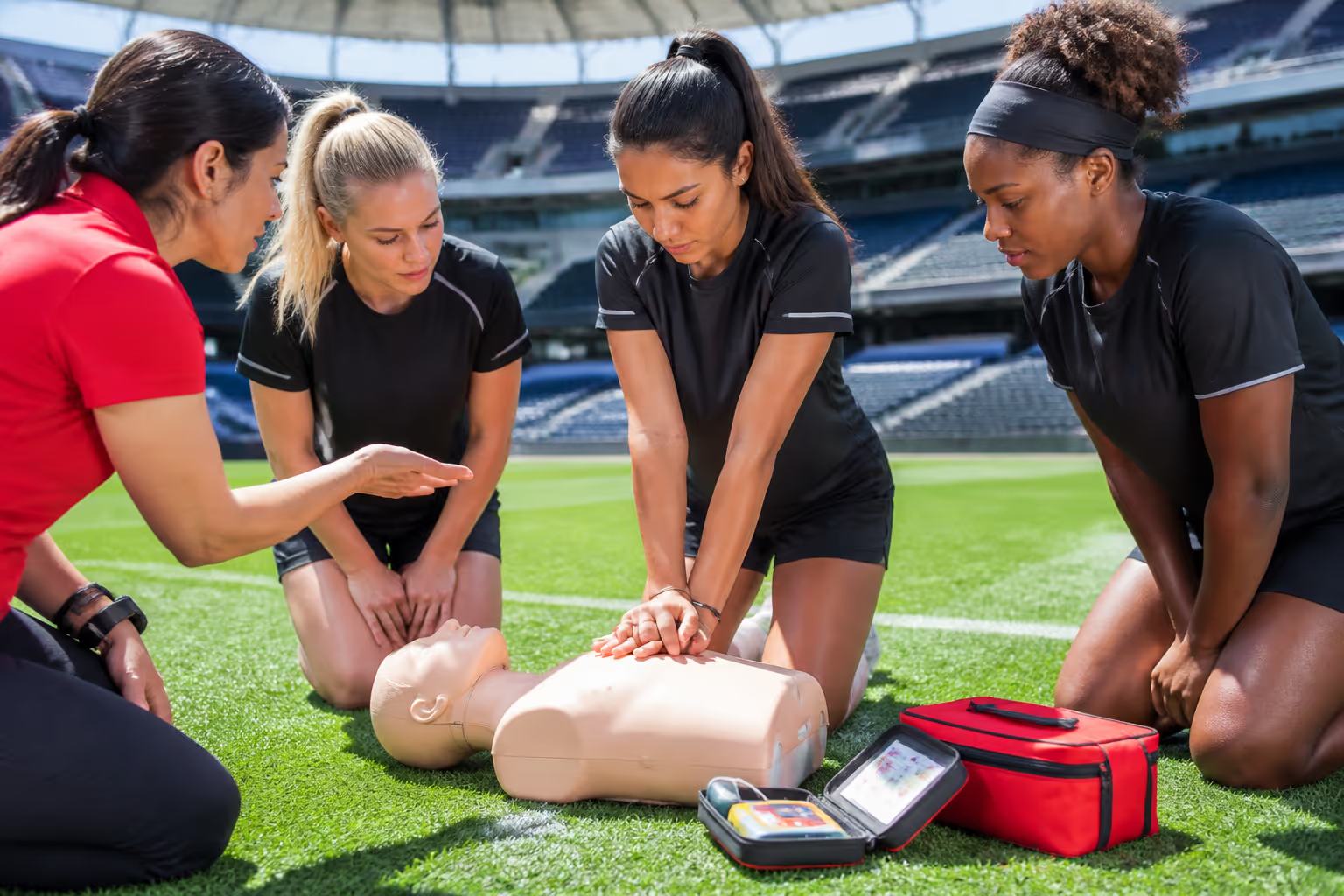
Hands-Only CPR is especially important for adults and teens who suddenly collapse and are not breathing normally. It focuses on firm, steady chest compressions while someone else calls for help and locates an AED if one is nearby. In many settings, a few clear steps are better than hesitation. For broader emergency readiness, a review of first aid training can also help people respond more confidently to injuries and sudden illness.
What happened during the awareness week initiative
During National CPR and AED Awareness Week, the American Heart Association and the NWSL introduced the 2026 Nation of Lifesavers Ambassador Class. Players from all 16 clubs are supporting CPR education through public messages, social media efforts, and community outreach. The goal is to make lifesaving knowledge feel practical, visible, and worth practicing.
According to the Heart Association, immediate CPR can be critical when sudden cardiac arrest occurs. The campaign also includes Hands-Only CPR education sessions for all 16 clubs, showing how a sports league can help normalize emergency response skills beyond the classroom.
How CPR, AED use, and emergency response fit together
When someone collapses and is not responding normally, the first priority is to call 911. Next, begin CPR if the person is unresponsive and not breathing normally, and ask someone nearby to bring an AED if one is available. AEDs are designed to give simple instructions and can help guide action during a cardiac emergency.
These are not skills reserved for hospitals or paramedics. They are useful in offices, gyms, schools, restaurants, and on the sidelines of youth or professional sports. People who want a stronger clinical foundation may also consider ACLS training, especially if they work in settings where advanced team response matters.
This article is for general educational purposes only and is not a substitute for professional medical advice, diagnosis, treatment, or certified CPR training. In an emergency, call 911 immediately.
Who should pay attention to this news
This partnership is useful for many groups, especially people who may need to respond before emergency medical services arrive:
- Healthcare professionals who want to keep CPR skills current
- Teachers, coaches, and athletic staff who work around groups
- Office employees and managers responsible for workplace preparedness
- Parents, caregivers, and volunteers who spend time with children or older adults
- Community members who want to be ready for a sudden cardiac arrest emergency
Even if someone has taken a class before, refresher training can improve confidence and speed. That is important because emergency response works best when people do not freeze or guess under pressure.
Why CPR Certification Labs supports readiness in San Antonio
CPR Certification Labs helps learners build practical confidence with CPR, AED use, first aid, BLS, and ACLS training. Our San Antonio Medical Center office serves local students who need a convenient place to train and refresh their skills without wasting time traveling across the city.
We are located at 8554 Huebner Road, Building 2, San Antonio, TX, and our hours are 6am - 12am - 7 Days a Week! That schedule is helpful for busy healthcare professionals, shift workers, and anyone trying to fit training into a full calendar. If you are comparing local options, the San Antonio location page can help you review class access and plan ahead.
Nearby relevance for learners in and around San Antonio
San Antonio includes medical corridors, business districts, schools, and athletic spaces where CPR readiness can matter at any time. Whether you are near a clinic, a workplace, or a neighborhood recreation area, knowing how to respond can help support the chain of survival before EMS takes over.
For local learners who want to act sooner and with more confidence, the next step is simple: choose a course that matches your role and schedule. You can visit the San Antonio Medical Center office page to learn more about available classes and location details.
What this awareness campaign should inspire next
The National CPR and AED Awareness Week partnership between the American Heart Association and the NWSL is a reminder that lifesaving education works best when it becomes routine. CPR, first aid, and AED familiarity should not be limited to one season or one profession. They are community skills that can help people act when seconds matter.
For more information on the campaign, see American Heart Association Newsroom. If you have not trained recently, now is a practical time to review your emergency response knowledge and sign up for a class that fits your needs.
FAQ
Q: What is Hands-Only CPR?
A: Hands-Only CPR is compression-only CPR for someone who has collapsed and is not breathing normally.
Q: Why is an AED important?
A: An AED can analyze heart rhythm and provide prompts during certain cardiac emergencies.
Q: Who should learn CPR?
A: CPR training is useful for healthcare workers, teachers, coaches, parents, caregivers, and many other adults.
Q: Where can I get CPR training in San Antonio?
A: CPR Certification Labs offers training through its San Antonio Medical Center location.
About our San Antonio Medical Center office
- Address: 8554 Huebner Road, Building 2
- Phone: (726) 224-7200
- Email: sanantonio@cprcertificationlabs.com
- Hours:
6am - 12am - 7 Days a Week!