Infant CPR Techniques and What Recent Evidence Adds
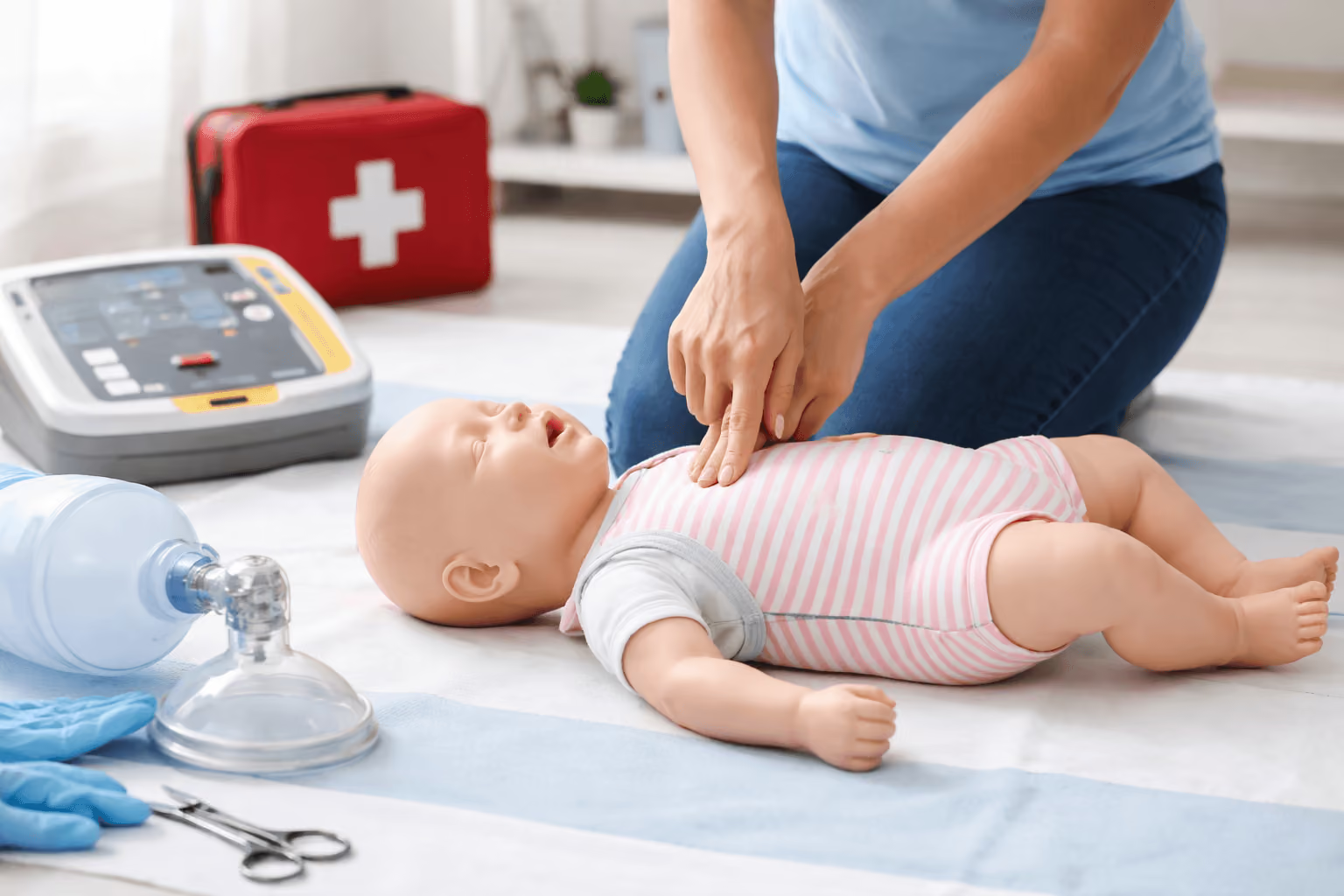
Infant CPR techniques are an essential part of emergency care for the smallest patients, and new research continues to refine how rescuers can deliver compressions efficiently. A recent meta-analysis comparing the over-the-head and lateral positions focused on simulated infant and neonatal resuscitation and found that both approaches can perform similarly on key measures such as compression depth, rate, airway handling, and hand placement time.
For healthcare professionals, this matters because infant and neonatal cardiac arrest is different from adult arrest. The cause is often related to breathing failure, hypoxia, or asphyxia, which means CPR, ventilation, and rapid emergency response must work together. In difficult spaces, such as crowded rooms or transport settings, technique selection can affect how smoothly a team works.
Local Context for Healthcare Teams in Leesburg
Clinicians, nurses, paramedics, and medical students in Leesburg and the surrounding Northern Virginia area may encounter infant emergencies in emergency departments, outpatient settings, ambulances, or community locations. In those moments, the goal is not only to know CPR steps but also to apply them quickly, calmly, and in coordination with the rest of the response team.
That is why regular CPR and first aid training remains practical for professionals who may be the first to respond before a higher level of care arrives. Whether you work near downtown Leesburg or commute from nearby Loudoun County communities, staying current on pediatric and neonatal emergency response can help you act with confidence.
What the Comparison Means for Infant CPR Techniques
The study compared two ways of positioning the rescuer during infant and neonatal compressions. The lateral position is more familiar in many training programs, while the over-the-head approach can be useful when a single rescuer must manage compressions and ventilation or when access around the patient is limited.
The main practical lesson is that both techniques can be effective when performed correctly. The evidence did not show a major difference in basic performance measures, which suggests that training should emphasize competence, consistency, and adapting to the scene. In real emergencies, the best method is often the one that allows the rescuer to maintain quality compressions, manage the airway, and coordinate with the team without unnecessary delay.
Why technique still matters
Even when two methods look similar on paper, small differences in body position, reach, fatigue, and workflow can affect performance during a stressful event. That is especially important in neonatal care, where hands-on care must be precise and interruptions should be minimized.
For that reason, teams should practice more than one setup during simulation, review where AED use fits into the larger response when age-appropriate, and understand how CPR changes for infants versus older children and adults.
Who Should Pay Attention to This Research
This topic is especially relevant for:
- Emergency nurses and physicians
- Paramedics and EMTs
- NICU and pediatric staff
- Family medicine and urgent care teams
- Medical assistants and clinical support staff
- CPR instructors and training coordinators
It is also useful for anyone responsible for emergency preparedness in a clinic, school, childcare setting, or transport environment. In infant care, quick recognition and a clear response plan are just as important as hands-on skill.
Benefits of Choosing CPR Certification Labs
CPR Certification Labs offers training that is designed to be clear, practical, and relevant to healthcare professionals who need real-world readiness. Courses focus on CPR, AED awareness, first aid fundamentals, and emergency response skills that can support clinical confidence in fast-moving situations.
For professionals in the Leesburg area, convenient local access can make it easier to stay current on training without adding unnecessary travel burden. If you are looking for a nearby option, you can learn more at Leesburg CPR Certification Labs.
Training also helps teams speak the same language during a code or resuscitation event. That coordination matters in infant and neonatal care, where each person’s role must be understood quickly and executed without confusion.
Nearby References and Community Relevance
Leesburg serves healthcare workers who may commute across Loudoun County and the wider Northern Virginia region. Being close to a local training office at 19 Wirt St. SW, Suite 102 can make it easier for busy professionals to schedule skill refreshers before or after shifts. The office can also be reached at (571) 601 3318 or leesburg@cprcertificationlabs.com, with hours listed as 7am - 8am - 7 Days a Week!
For teams working in clinics, urgent care centers, long-term care facilities, or mobile care settings, local access to CPR and first aid education supports preparedness when every second matters.
When to Call 911 and Why Practice Matters
If an infant is unresponsive, not breathing normally, or has signs of severe distress, call 911 immediately and start emergency response steps according to your training and workplace protocol. This article is for general educational purposes only and is not a substitute for professional medical advice, diagnosis, treatment, or certified CPR training. In an emergency, call 911 immediately.
Research like this does not replace hands-on education. Instead, it helps refine how professionals think about position, workflow, and fatigue during infant CPR techniques. For healthcare teams, the most important outcome is a response that is fast, coordinated, and practiced before the emergency happens.
If your team is due for refresher training, visit the Leesburg office page to find a convenient class option and keep your CPR skills ready for the next emergency.
FAQ
Are the over-the-head and lateral positions both used in infant CPR?
Yes. The recent evidence suggests both positions can be effective when performed correctly, especially in simulation-based settings. The best choice often depends on the rescuer, the space available, and the workflow required.
Does this change how healthcare professionals should train?
It reinforces the value of practicing different approaches. Teams should be comfortable with CPR fundamentals, AED use where appropriate, airway management basics, and emergency response coordination.
Why is infant CPR different from adult CPR?
Infants and neonates often arrest because of breathing-related problems rather than a primary heart problem. That is why ventilation, compression quality, and rapid response are especially important.