Offer ends October 18.
This is some text inside of a div block.
Restart a Heart BLS Sale
RESTART99
Copy code

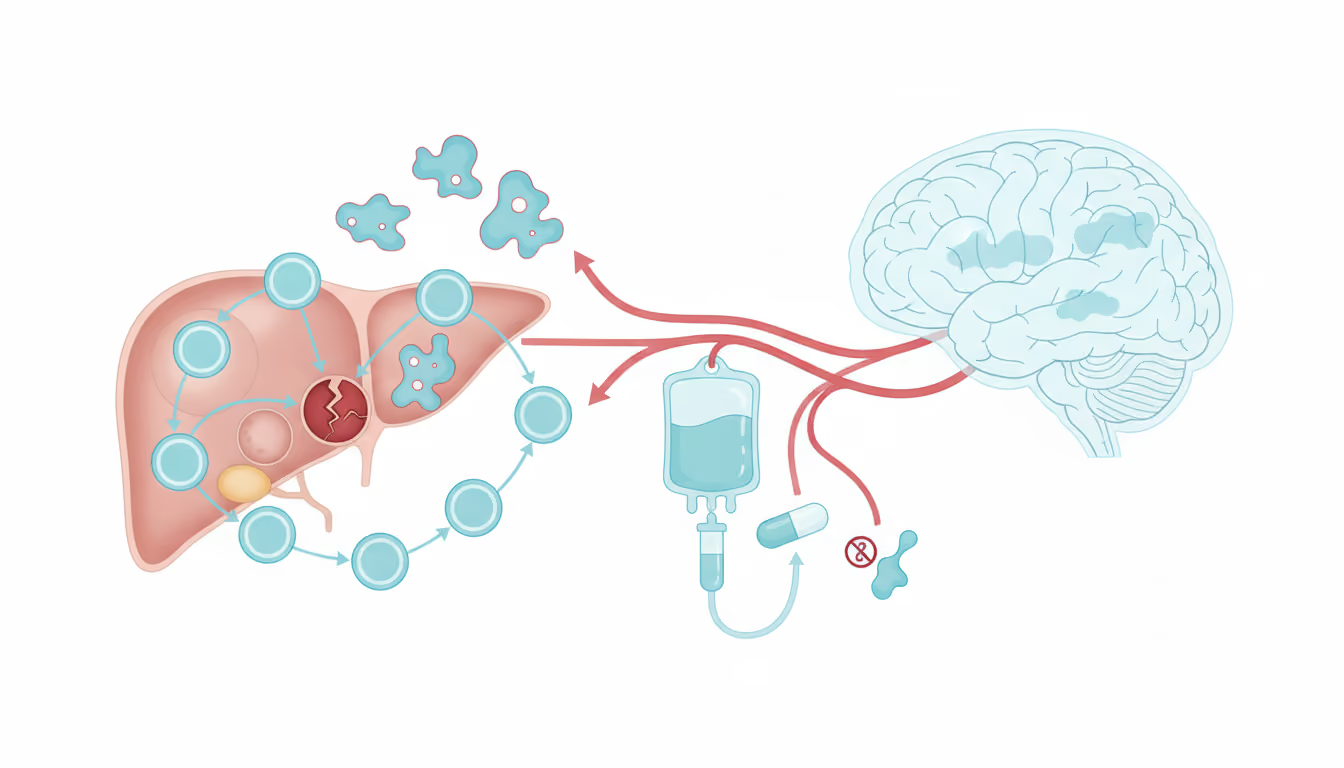
Ornithine transcarbamylase (OTC) deficiency is a rare metabolic condition and one of the disorders affecting the urea cycle. The urea cycle consists of five liver enzymes that assist in eliminating ammonia, a harmful byproduct of protein metabolism, from the body. When any of these enzymes are absent or insufficient, ammonia builds up in the bloodstream and reaches the brain, leading to coma, brain damage, and potentially death.OTC deficiency is the most prevalent disorder within the urea cycle group, affecting approximately one in every 40,000 births. The genetic mutation causing OTC resides on the X chromosome, meaning women are generally carriers, whereas their sons who inherit the gene manifest the illness.Severe OTC deficiency is a grave condition, often resulting in newborns falling into a coma within the first 72 hours of life. Many experience significant brain damage, with half of the affected infants dying within the first month, and half of those who survive not reaching the age of five.Treatment involves the use of a low-protein formula known as keto-acid, along with sodium benzoate, a preservative, and another sodium compound that binds with ammonia to aid in its removal from the body.
Our technology delivers immediate, actionable feedback that refines your skills in real time.
Understand how to safely and effectively operate an Automated External Defibrillator (AED) for adults, children, and infants.
Learn how to perform the Heimlich maneuver and clear airway obstructions caused by choking in both adults and infants.
Gain experience working as part of a team when more than one rescuer is available during an emergency.
Receive your AHA CPR Certification E-Card on the same day you complete the class and pass the exam.

CPR Certification Labs provides professional CPR and emergency training courses based on recognized industry standards.