CPR training Houston and the lesson behind a school tragedy
CPR training Houston is getting renewed attention after a Houston middle school student’s death raised difficult questions about school emergency readiness. When a student collapses at school, every minute matters. CPR, AED access, and fast action from trained staff can shape what happens before paramedics arrive.
The case has also prompted a state lawmaker to push for stronger school requirements. While the student’s cause of death remains unresolved, the broader message is clear: schools need a practical emergency response plan that staff can use without hesitation.
What happened and why it matters locally
The student died after collapsing at school early in the academic year, and the incident has remained under review for months. Reports from the district indicated that an AED was available and that CPR was started before emergency responders arrived. Even so, the loss has become a painful reminder that equipment alone is not enough. People on site must know how to respond quickly and confidently.
For Houston families, this is more than a political story. It is a school safety issue that affects students, teachers, coaches, nurses, and volunteers across the city. The discussion now includes whether more staff members should be trained in CPR and how schools can better track AED readiness.
How CPR, AEDs, and emergency response work together
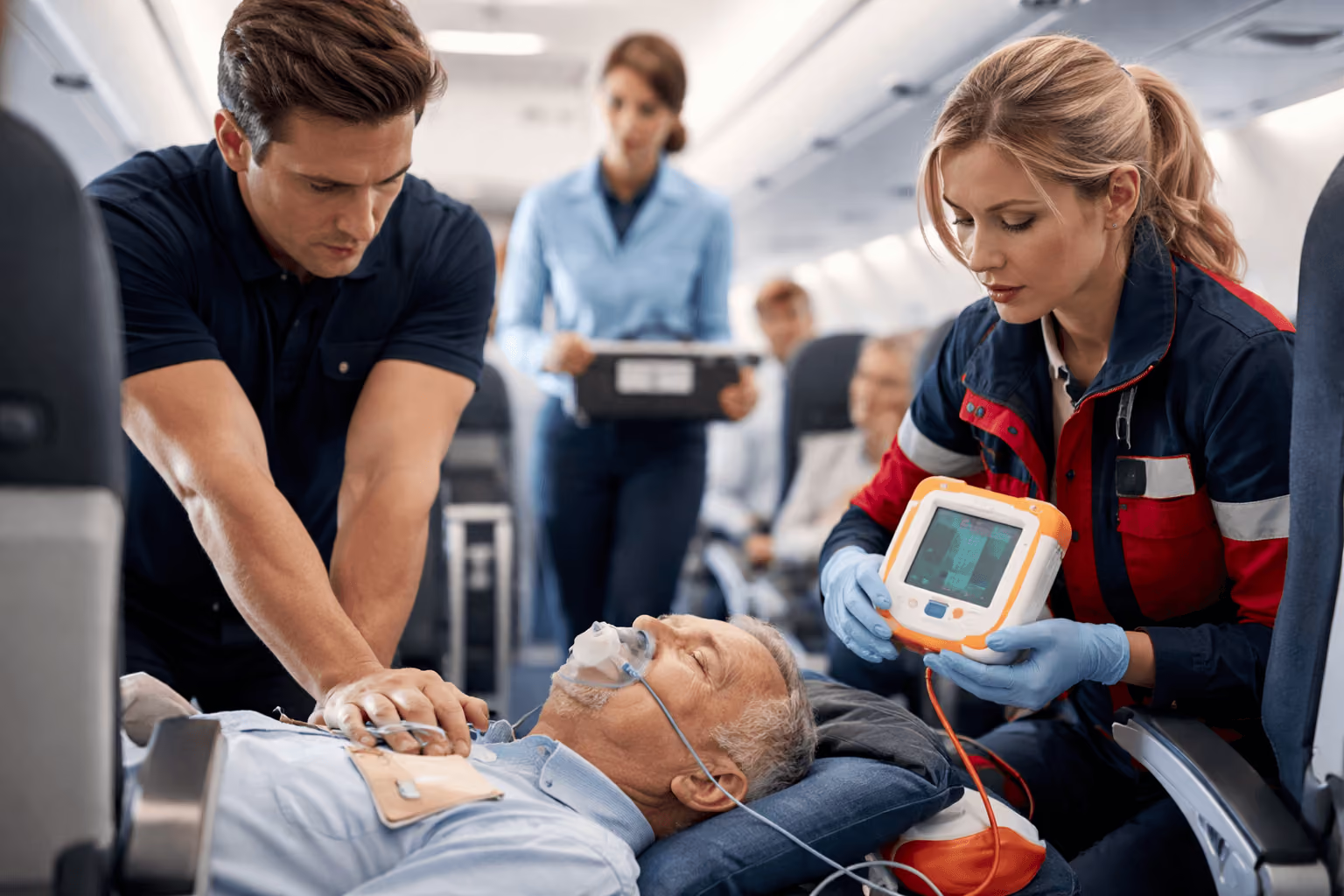
In a sudden collapse, CPR helps maintain circulation until advanced care takes over. An AED can analyze the heart rhythm and deliver a shock if needed. Both tools are important, but they work best when people nearby know what to do and act quickly.
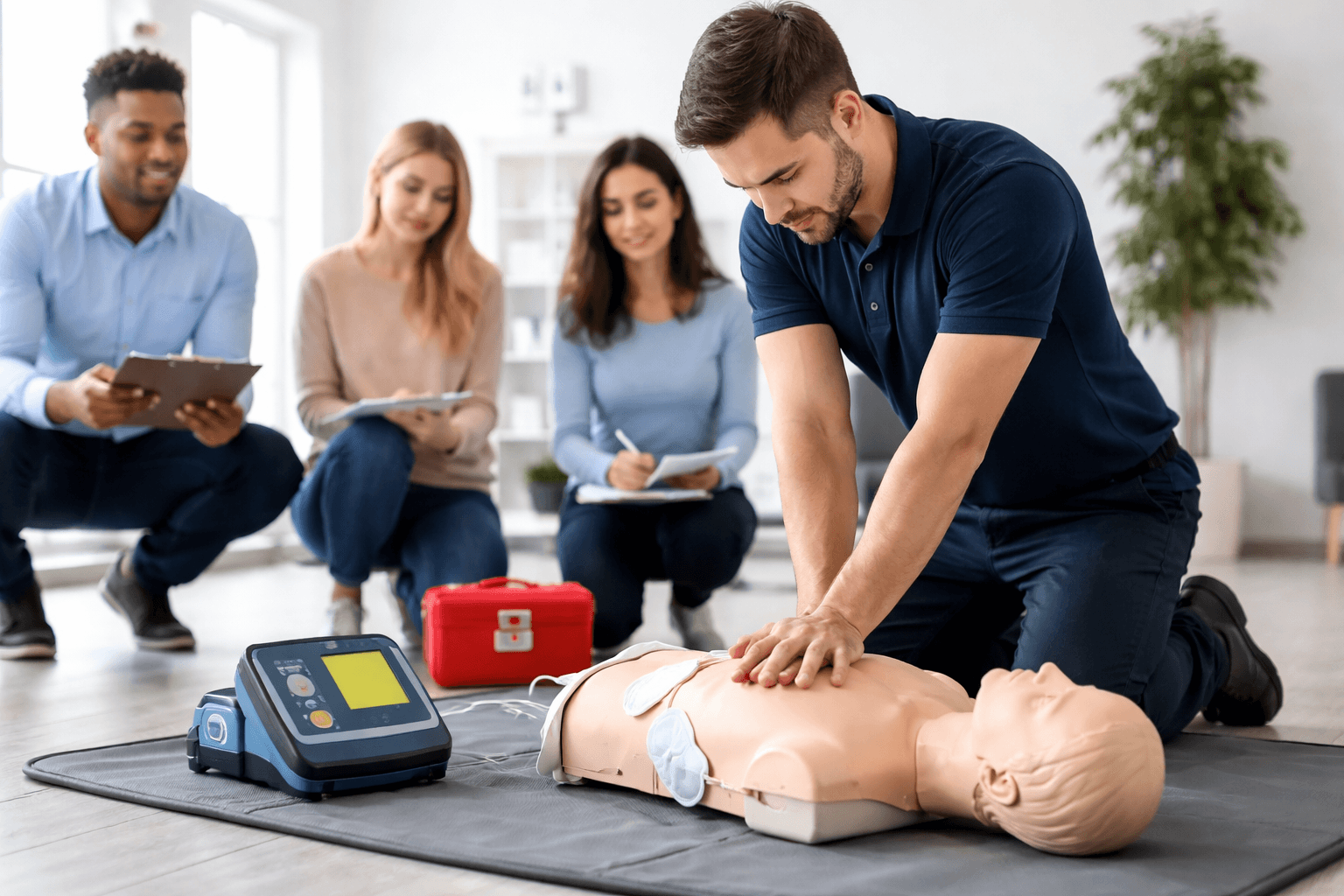
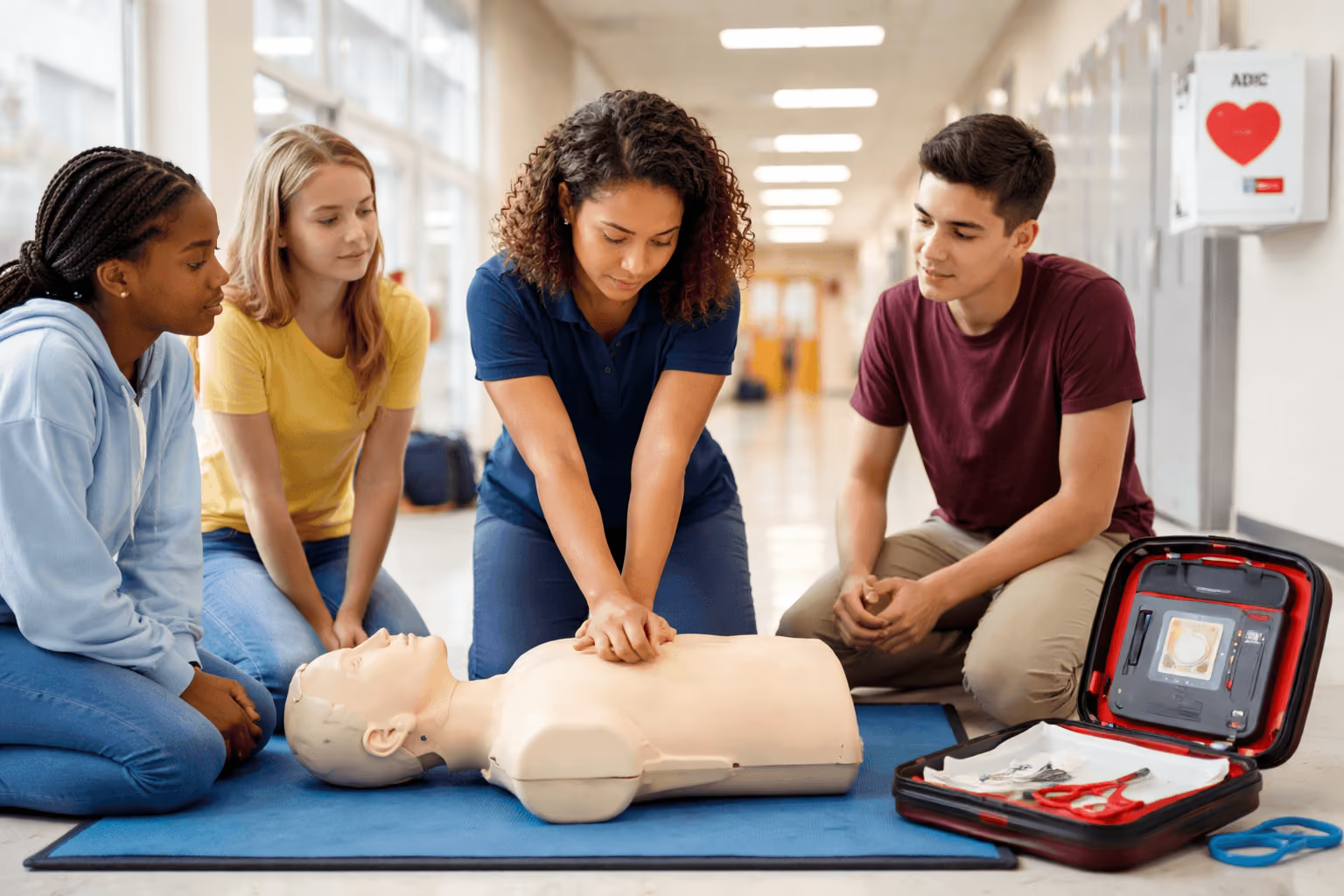
Good emergency response training teaches staff to recognize an unresponsive person, get help immediately, use the AED as directed, and continue care until EMS arrives. That is why CPR and AED instruction are often paired in school safety plans. The goal is not to replace professional responders. The goal is to buy time.
It is also important to remember that some emergencies look different from a heart attack. A student may faint, stop breathing normally, or collapse without warning. In those moments, trained adults should follow the school emergency plan, start CPR if needed, and call 911 right away.
This article is for general educational purposes only and is not a substitute for professional medical advice, diagnosis, treatment, or certified CPR training. In an emergency, call 911 immediately.
Who should be trained in school settings
Any adult who may be first on scene should know the basics of CPR and AED use. That includes:
- School nurses
- Coaches and athletic staff
- Band directors and activity leaders
- Teachers and administrators
- Substitute staff and volunteers
- Students assigned to athletic or training roles when allowed by policy
Training helps reduce confusion during high-stress moments. It also builds confidence so staff can respond without delay when a student, visitor, or coworker needs help.
Why CPR training Houston matters for schools and workplaces
CPR training Houston is important not only for schools, but also for workplaces, community centers, churches, and youth programs. Emergencies do not wait for a convenient time. A prepared person can make a difference in the first few minutes, especially when an AED is nearby and emergency response begins at once.
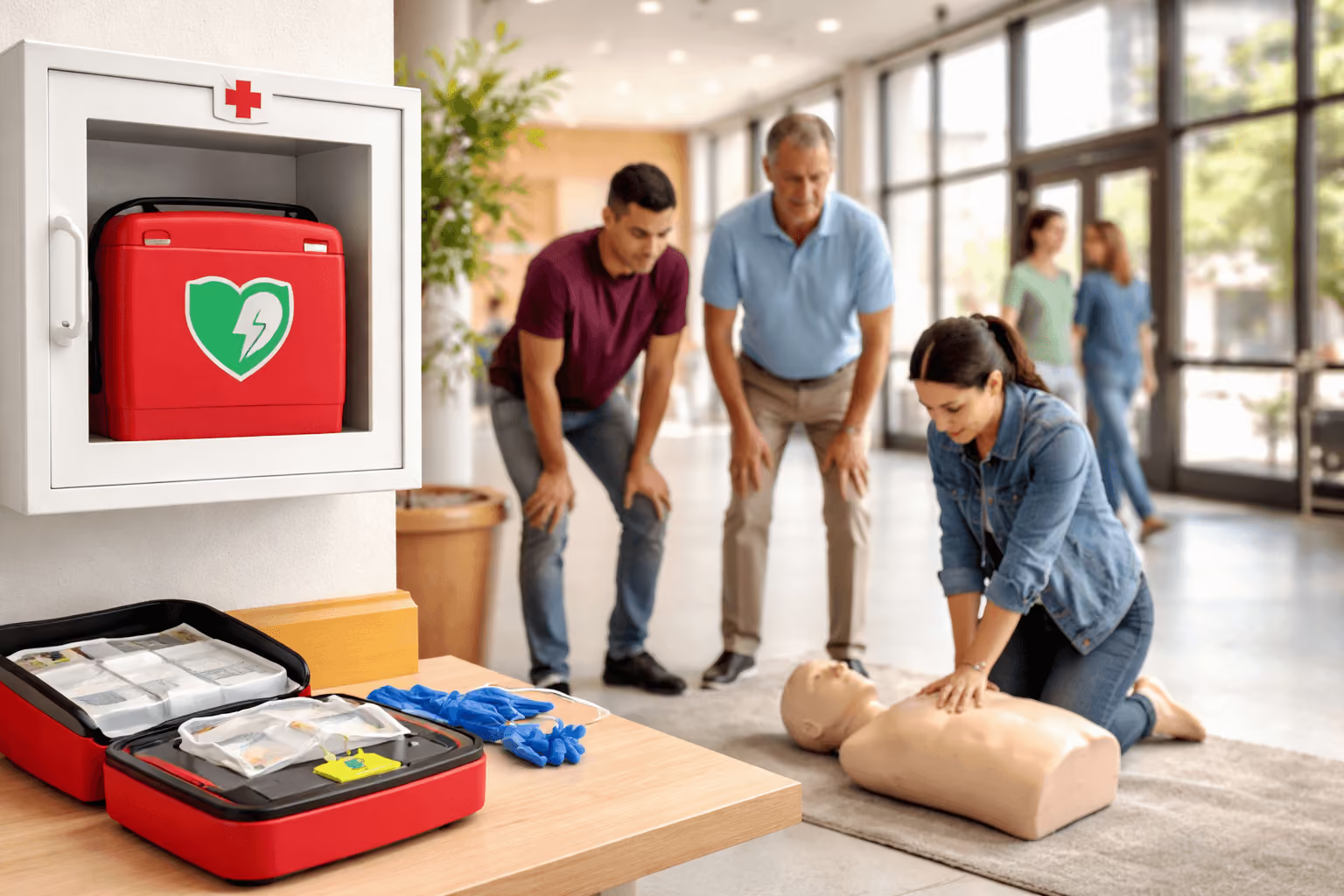
For organizations, training supports safer environments and clearer procedures. It can also help teams review where AEDs are stored, whether they are maintained, and who is responsible for checking them.
Benefits of choosing CPR Certification Labs
CPR Certification Labs provides CPR, BLS, ACLS, AED, and first aid training for professionals and workplace teams. Courses are designed to be straightforward, practical, and easy to follow for healthcare workers and other adults who need clear emergency skills.
Students and employers often choose CPR Certification Labs because the training focuses on real-world response, not just memorization. The format is built to help learners understand what to do in urgent situations, how to use an AED, and how to work through a response step by step.
For those outside Houston who still want convenient scheduling and a reliable training option, the Dayton-Centerville office offers flexible hours and a local point of contact for course questions.
Nearby facilities and local references
In Houston, schools and youth programs continue to evaluate AED access, staff readiness, and response systems. District safety tools, school nurses, and campus emergency plans all play a role in how quickly help can be delivered.
If you are preparing your team for CPR, AED, or first aid responsibilities, you can learn more through our Dayton - Centerville office. The office is located at 2723 Miamisburg Rd, Suite 130, Dayton, OH, and serves students with hours from 6am - 12am, 7 days a week.
Final takeaway for Houston schools
The death of a student is always heartbreaking, and unanswered questions can leave a community searching for lessons that may prevent another tragedy. Strong CPR training, working AEDs, and clear emergency response procedures are practical steps schools can take now.
For Houston-area administrators, coaches, and staff, the priority is simple: train early, review the plan, and make sure people know how to act when seconds count.