Offer ends October 18.
This is some text inside of a div block.
Restart a Heart BLS Sale
RESTART99
Copy code

Chromosome:A structure carrying genetic information, observable under a standard light microscope. Each human chromosome is composed of two sections: the p arm, which is short, and the q arm, which is long, with the centromere separating them. The centromere serves as the attachment point for the spindle during cell division. Human DNA consists of about 3 billion base pairs, organized into 24 chromosomes. Genes are linearly arranged along these chromosomes. Typically, a human cell contains two chromosome sets, one inherited from each parent, comprising 23 individual chromosomes: 22 autosomes and one sex chromosome, either X or Y. Females typically have two X chromosomes, while males have one X and one Y. Each chromosome is made up of approximately equal amounts of protein and DNA, with the DNA containing an average of 150 million nucleotide bases. These DNA molecules rank among the largest known to science.
Our technology delivers immediate, actionable feedback that refines your skills in real time.
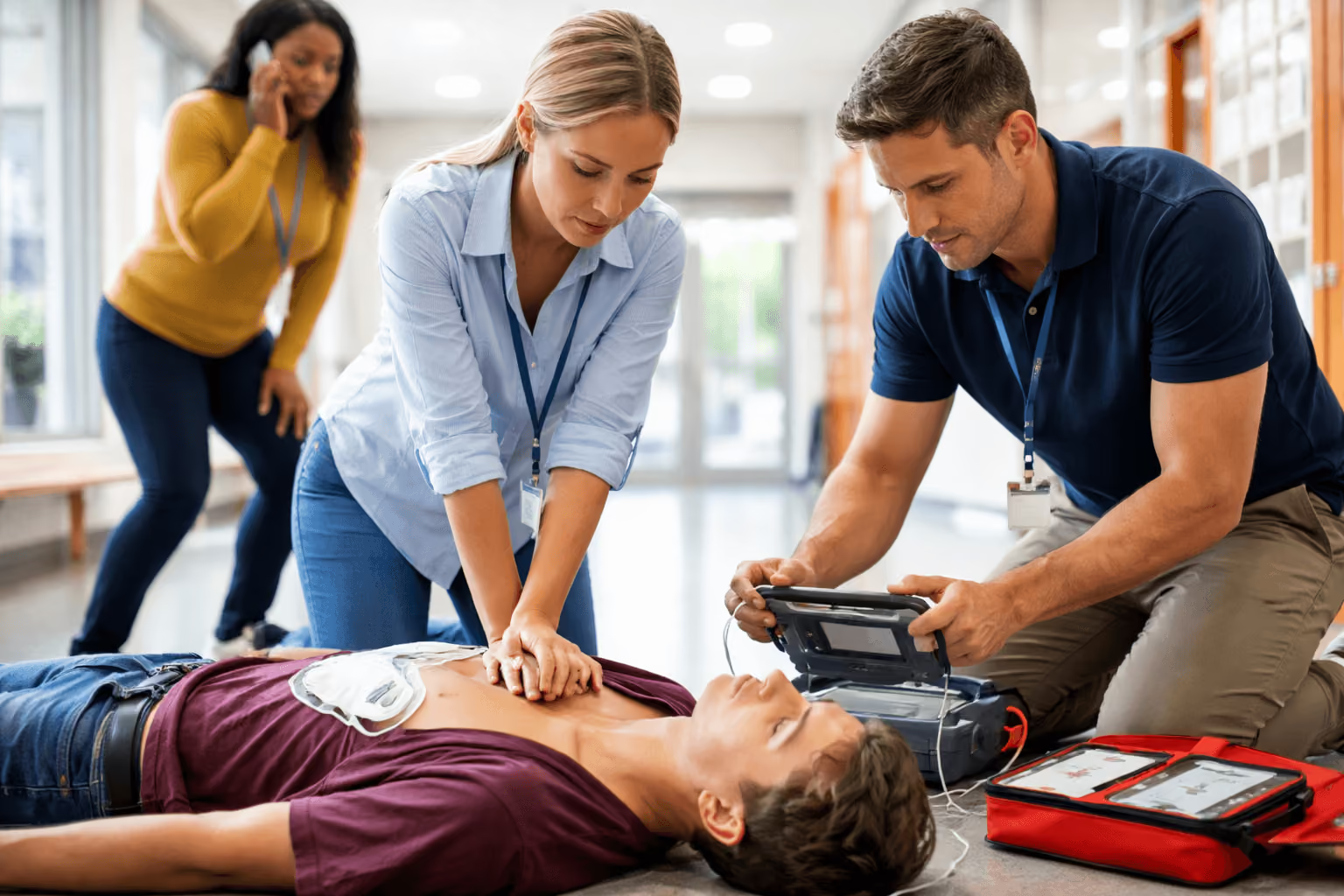
Understand how to safely and effectively operate an Automated External Defibrillator (AED) for adults, children, and infants.
Learn how to perform the Heimlich maneuver and clear airway obstructions caused by choking in both adults and infants.
Gain experience working as part of a team when more than one rescuer is available during an emergency.
Receive your AHA CPR Certification E-Card on the same day you complete the class and pass the exam.

CPR Certification Labs provides professional CPR and emergency training courses based on recognized industry standards.