Carrollton AED installation is giving park visitors faster emergency access
Carrollton AED installation in park facilities is a direct response to a real safety need: residents, athletes, and families gathering in public spaces should have faster access to an AED if a cardiac emergency happens. The city has placed automated external defibrillators in park and recreation settings so help can begin sooner while emergency responders are on the way.
That matters because parks are busy, active places where medical emergencies can happen without warning. A public AED rollout can shorten the time between collapse and first response, which is why the update is important for anyone who uses Carrollton’s athletic fields, splash areas, or recreation buildings.
The city’s park and recreation team discussed the idea with fire and rescue staff before moving forward, according to Carrollton officials. That local coordination is a good reminder that emergency readiness works best when equipment, planning, and training are aligned.
Why Carrollton AED installation matters in park facilities
Park facilities are different from offices or clinics because access can change throughout the day. A device stored inside a staffed room is helpful, but it is less useful if someone cannot reach it quickly. Publicly accessible AEDs can improve response time in outdoor and recreational settings where people may be spread out across fields, courts, or play areas.
For residents, the key takeaway is simple: if someone collapses and is unresponsive, the first minutes matter. AED access in parks supports emergency response by making life-saving equipment easier to find when seconds count.
- An AED should be easy to locate and clearly marked.
- Staff and regular visitors should know where the nearest device is kept.
- Emergency plans work better when the AED location is included in site orientation.
What an AED does during cardiac arrest
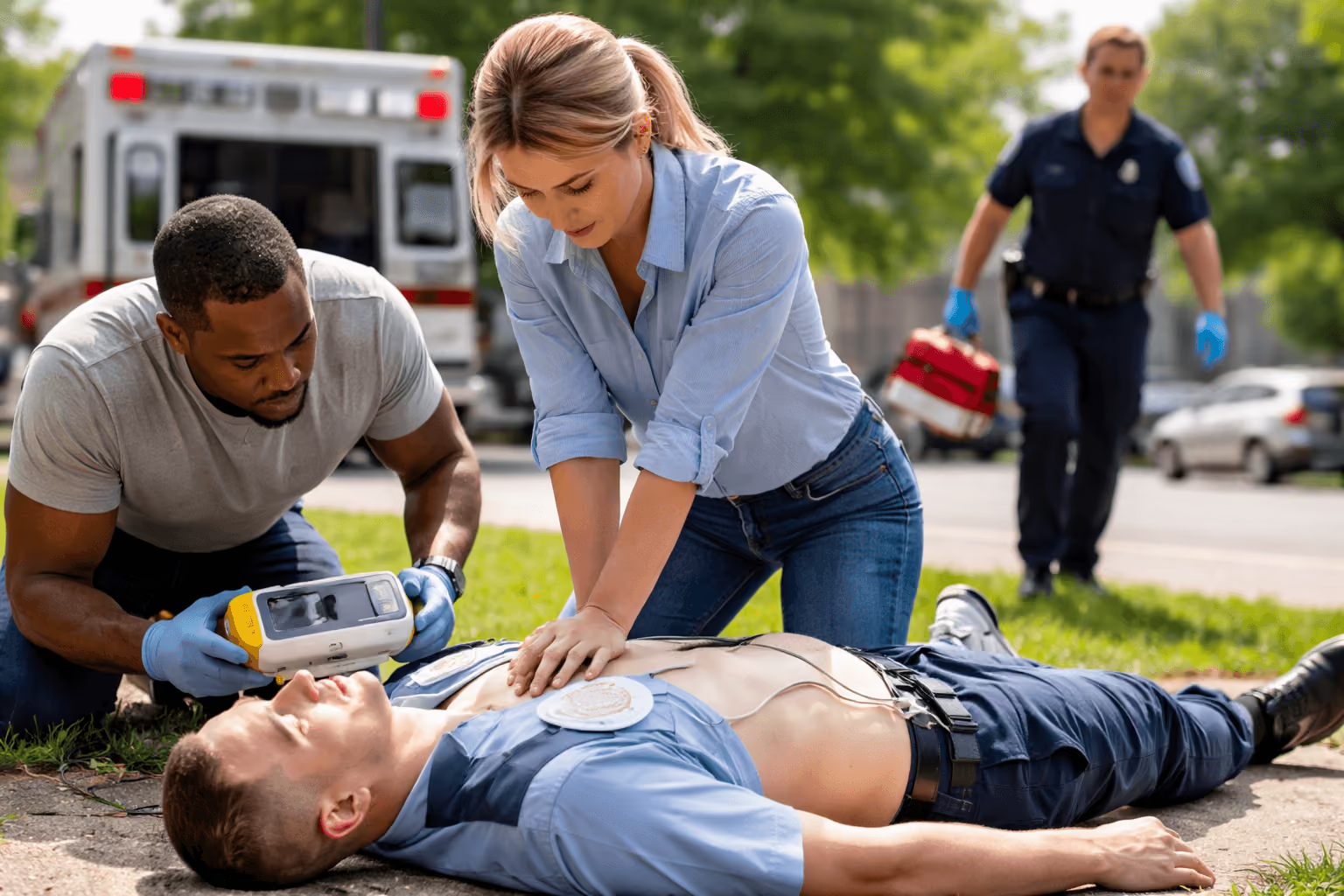
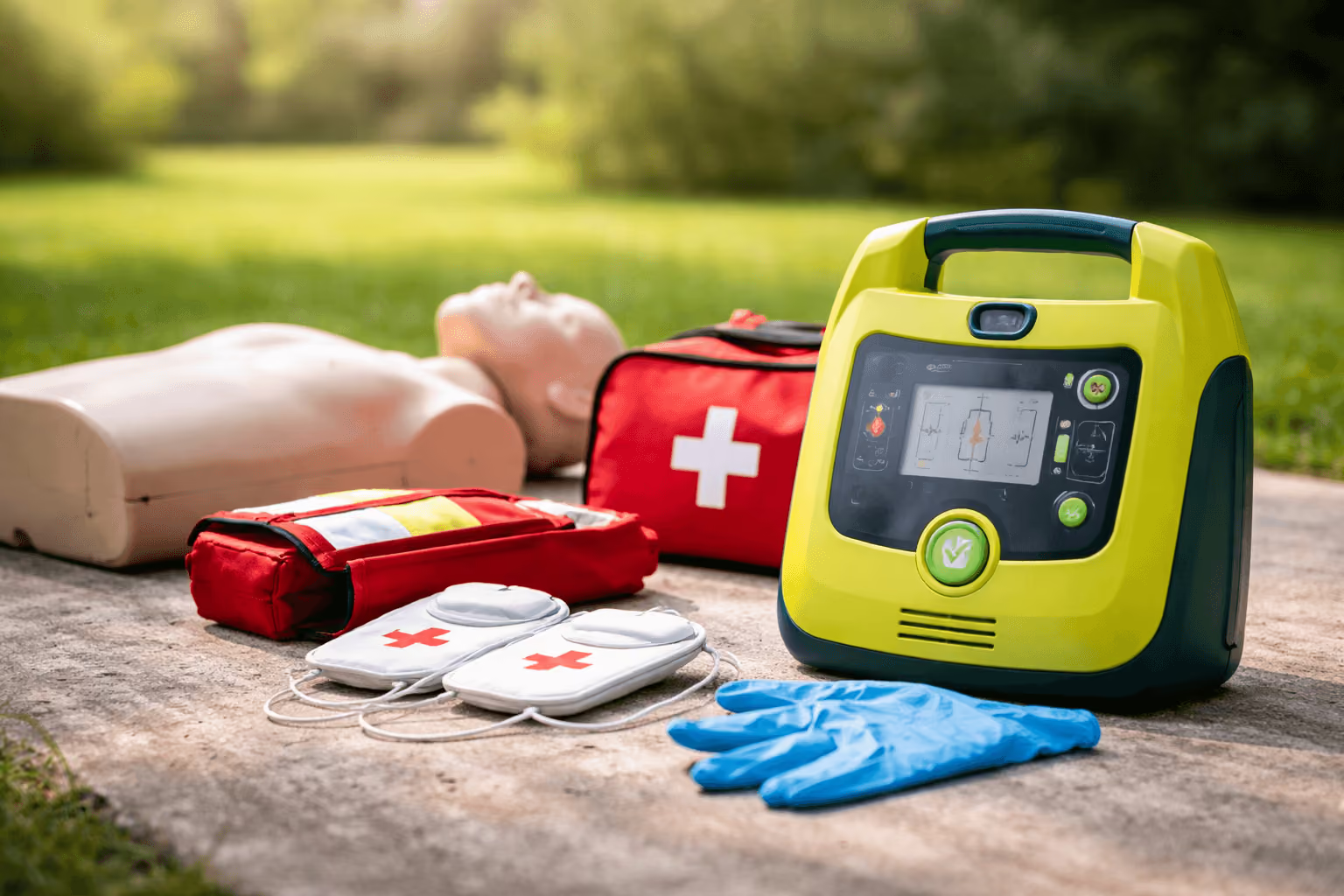
An AED is designed to analyze a person’s heart rhythm and provide voice prompts that guide the user through the process. It is intended for use with CPR and emergency response, not as a stand-alone solution. The device is built for simple operation, but people still benefit from training so they can act quickly and calmly.
In a cardiac arrest emergency, the basic sequence is familiar: check the scene, assess the person, call 911, start CPR if the person is not breathing normally, and get the AED as soon as possible. Public AED access helps reduce delay, and CPR helps keep blood moving until advanced care arrives.
This article is for general educational purposes only and is not a substitute for professional medical advice, diagnosis, treatment, or certified CPR training. In an emergency, call 911 immediately.
Practical emergency response lessons for parks and recreation spaces
Carrollton’s park rollout highlights a few practical best practices that apply to any public setting. First, emergency equipment should be visible and easy to reach. Second, the response plan should be simple enough that staff, coaches, and volunteers can follow it under pressure. Third, AED placement should match how people actually use the space, not just where storage is convenient.
Two concrete examples stand out. A soccer complex may benefit from a device mounted where it can be reached from the field without entering a locked office. A splash park or recreation building may need signage that directs visitors to the nearest AED even when the main desk is closed. These kinds of decisions can make a difference during a real emergency.
It also helps when a site reviews how someone would direct EMS to the exact location. Clear gate access, visible address markers, and a staff member assigned to meet responders are all small steps that support faster care.
Who should pay attention to this local update
This news is relevant to more than park employees. Coaches, parents, youth sports volunteers, recreation staff, maintenance teams, and community members should all know where AEDs are located and how to respond if someone becomes suddenly unresponsive.
It is also useful for anyone responsible for another public-facing property in Carrollton. Schools, faith communities, office buildings, and fitness spaces all benefit from the same mindset: if an emergency happens, people should know who calls for help, who retrieves the AED, and who starts CPR.
- Know the location of the closest AED.
- Understand the basic signs of cardiac arrest.
- Review how to call for emergency help quickly.
- Keep CPR skills current through regular training.
How CPR, AED, and first aid training work together
CPR, AED use, and first aid are often taught together because they support the same goal: faster and more organized emergency response. CPR helps sustain circulation. AED training teaches people how to follow device prompts. First aid training adds preparation for injuries and other urgent situations that may happen before EMS arrives.
For many people, the main obstacle is hesitation. Training helps replace uncertainty with a clear process. That matters in parks, where bystanders may be the first to notice something is wrong and may need to act before professional responders reach the scene.
Clear training also helps teams work together. One person can call 911, another can retrieve the AED, and another can begin CPR if needed. That division of roles makes emergencies easier to manage.
Benefits of choosing CPR Certification Labs for local training
CPR Certification Labs provides CPR, AED, and first aid training for healthcare professionals and other local learners who want practical, easy-to-follow instruction. Our courses are designed to support real-world emergency response in places like parks, workplaces, schools, and community facilities.
If your team needs to prepare for cardiac emergencies, training can help people learn the steps before they ever face a stressful situation. That includes recognizing when to call for help, understanding how to use an AED, and practicing effective CPR technique.
- Training focused on CPR, AED, and first aid fundamentals
- Instruction for healthcare and community settings
- Practical skills for public-facing emergency response
- Local convenience for Carrollton-area learners
Local context for Carrollton residents and park users
Carrollton’s AED rollout fits the way local parks are used every day. Sports games, camps, family outings, and community programs all create situations where a medical emergency could happen in a place that is not always staffed around the clock. Public access to AEDs is a practical step toward better readiness in those settings.
For readers looking to strengthen their own emergency response plan, it helps to think beyond the equipment itself. The best preparedness plans include visible AED placement, simple instructions, practiced roles, and routine review of who is responsible during an emergency.
If you are in the Carrollton area and want training that supports that kind of readiness, learn more at Dallas - Carrollton.
Why this update matters beyond the park system
Carrollton AED installation is a reminder that public safety improves when communities invest in both access and action. An AED can be part of the solution, but only if people know where it is and how to respond. That is where CPR and first aid training remain essential.
For residents, staff, and volunteers, the best approach is straightforward: learn the location of the nearest AED, review the emergency plan, and practice the steps that matter before an emergency happens. In a cardiac arrest, preparation can help the first response begin without delay.
About our Dallas - Carrollton office
- Address: 1406 Halsey Way Suite 110
- Phone: (972) 440-0527
- Email: carrollton@cprcertificationlabs.com
- Hours:
Monday – Sunday: 7am - 8pm