Offer ends October 18.
This is some text inside of a div block.
Restart a Heart BLS Sale
RESTART99
Copy code

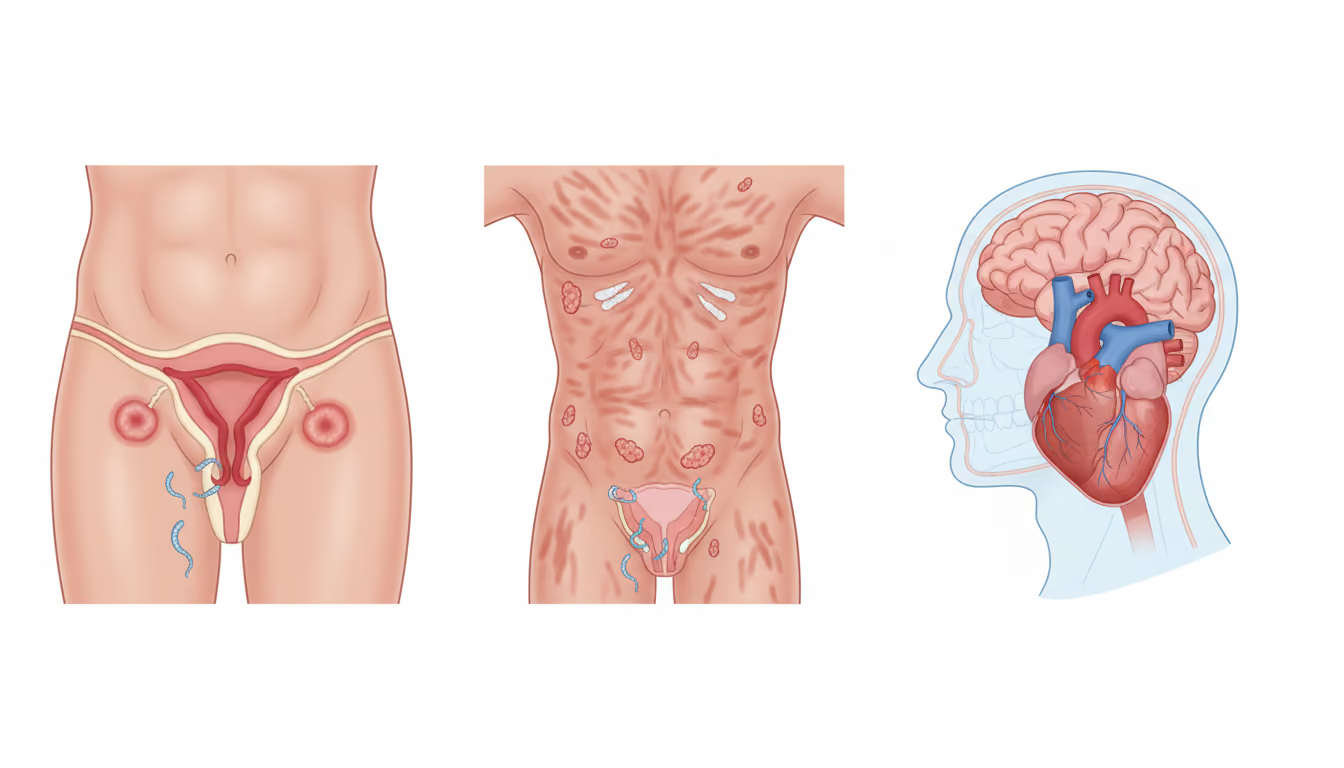
Syphilis is a sexually transmitted infection caused by the bacterium Treponema pallidum, a spiral-shaped microorganism known as a spirochete. This organism penetrates the moist membranes of the mouth or genitals to infect individuals. Initially, it causes a painless sore called a chancre. Syphilis progresses through three stages. During the first (primary) stage, the chancre forms, and the disease is highly infectious. This stage lasts from one to five weeks, and contact with the sore, which contains numerous spirochetes, can spread the infection. If the ulcer is located outside or on the genitals, condoms may not effectively prevent transmission. Similarly, kissing an infected person can transmit syphilis if the sore is in the mouth. Even without medical intervention, the initial infection often resolves on its own in most women. In the second (secondary) stage, about 25 percent of cases advance to this phase, which persists for four to six weeks. Symptoms can include hair loss, white patches in the nose, mouth, and vagina, fever, headaches, and a skin rash. Lesions resembling warts may appear on the genitals, but these are due to spirochetes, not a virus. Both the wart-like lesions and the rash are highly contagious, especially if the rash appears on the palms. Casual contact can spread the infection.The third (tertiary) stage affects the brain and heart and usually is no longer contagious. However, during this stage, the infection can cause severe damage to internal organs and the brain, potentially leading to death. Diagnosis is conducted through blood tests, such as the rapid plasma reagin (RPR) or the Venereal Disease Research Laboratory (VDRL) test. Antibiotics are used for treatment.
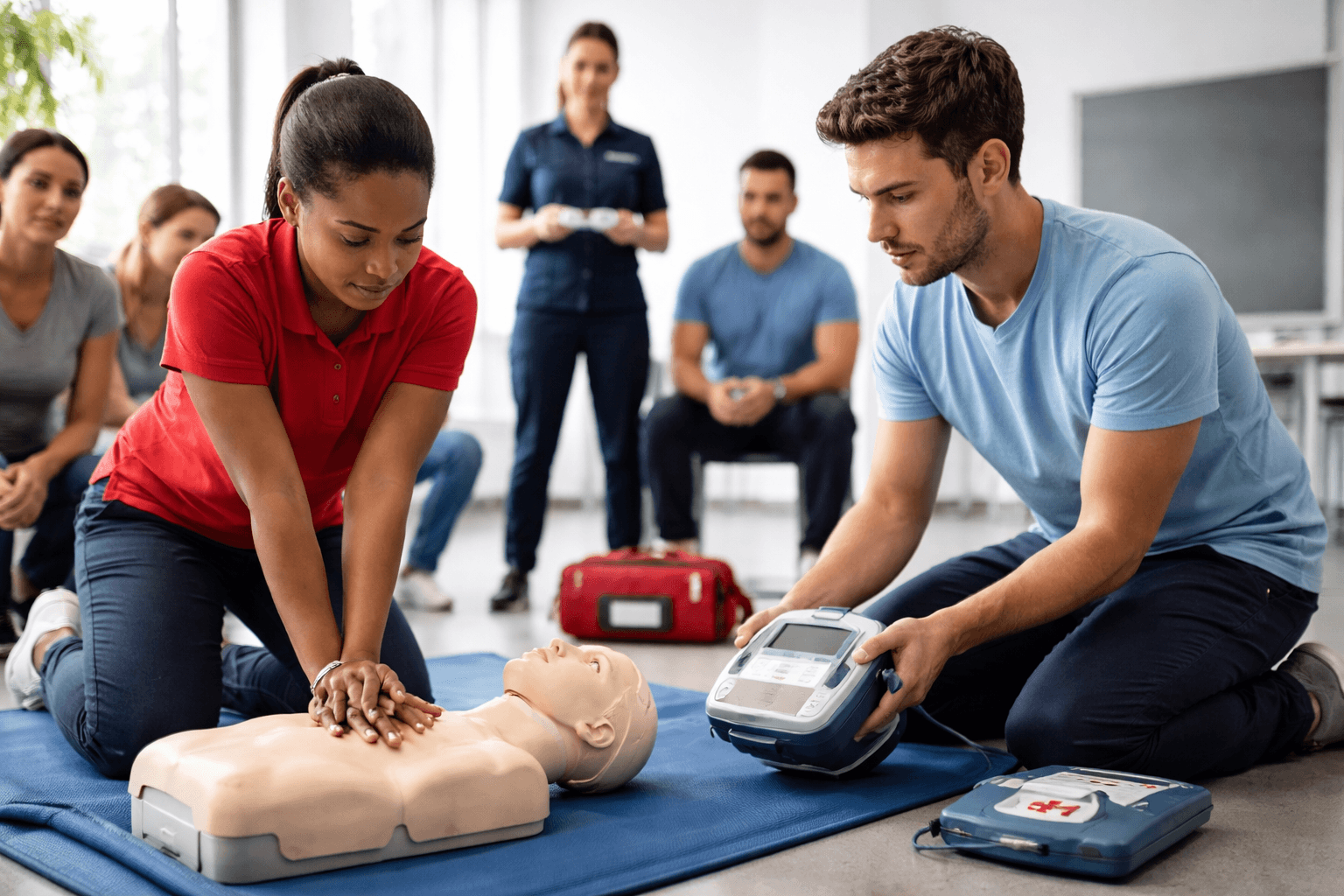
Our technology delivers immediate, actionable feedback that refines your skills in real time.
Understand how to safely and effectively operate an Automated External Defibrillator (AED) for adults, children, and infants.
Learn how to perform the Heimlich maneuver and clear airway obstructions caused by choking in both adults and infants.
Gain experience working as part of a team when more than one rescuer is available during an emergency.
Receive your AHA CPR Certification E-Card on the same day you complete the class and pass the exam.

CPR Certification Labs provides professional CPR and emergency training courses based on recognized industry standards.