Offer ends October 18.
This is some text inside of a div block.
Restart a Heart BLS Sale
RESTART99
Copy code

Statins are a category of medications designed to reduce cholesterol. In the United States, the statins available include Atorvastatin (commonly known as Lipitor), Lovastatin (Mevacor), Simvastatin (Zocor), Pravastatin (Pravachol), Fluvastatin (Lescol), and Rosuvastatin (Crestor). These medications effectively decrease cholesterol levels, particularly LDL-cholesterol, more effectively than other drugs. Statins work by inhibiting the enzyme HMG-CoA reductase, which plays a key role in cholesterol production. By slowing cholesterol synthesis and boosting the liver's ability to clear LDL-cholesterol from the bloodstream, statins achieve their cholesterol-lowering effects.Research has shown that the significant reductions in total and LDL-cholesterol achieved with statins have led to fewer heart attacks and deaths. Their proven efficacy in lowering LDL-cholesterol has made statins the go-to prescription for individuals with heart disease requiring cholesterol management. Clinical studies have indicated that statins can reduce LDL-cholesterol levels by 20% to 60% in patients. These drugs also modestly elevate HDL-cholesterol and lower high triglyceride levels.Typically, statins are administered once daily, either with the evening meal or at bedtime, to capitalize on the body's increased cholesterol production during the night. Patients often begin to notice improvements within several weeks, with the full impact realized in 4 to 6 weeks. Statins are generally well-tolerated, with serious side effects being uncommon. Some may experience mild to moderate symptoms like upset stomach, gas, constipation, and abdominal discomfort, which usually subside as the body adjusts. Rarely, patients may encounter liver test abnormalities or muscle-related issues such as soreness, pain, and weakness.Interestingly, statins might also contribute to stronger bones. A study published in the Journal of the American Medical Association (JAMA) in 2000 found that individuals over 50 taking statins for cholesterol reduction experienced fewer hip fractures.
CPR Certification Labs provides hands-on, American Heart Association–aligned CPR, BLS, ACLS, and PALS certification training to help providers master these life-saving skills.
Our technology delivers immediate, actionable feedback that refines your skills in real time.
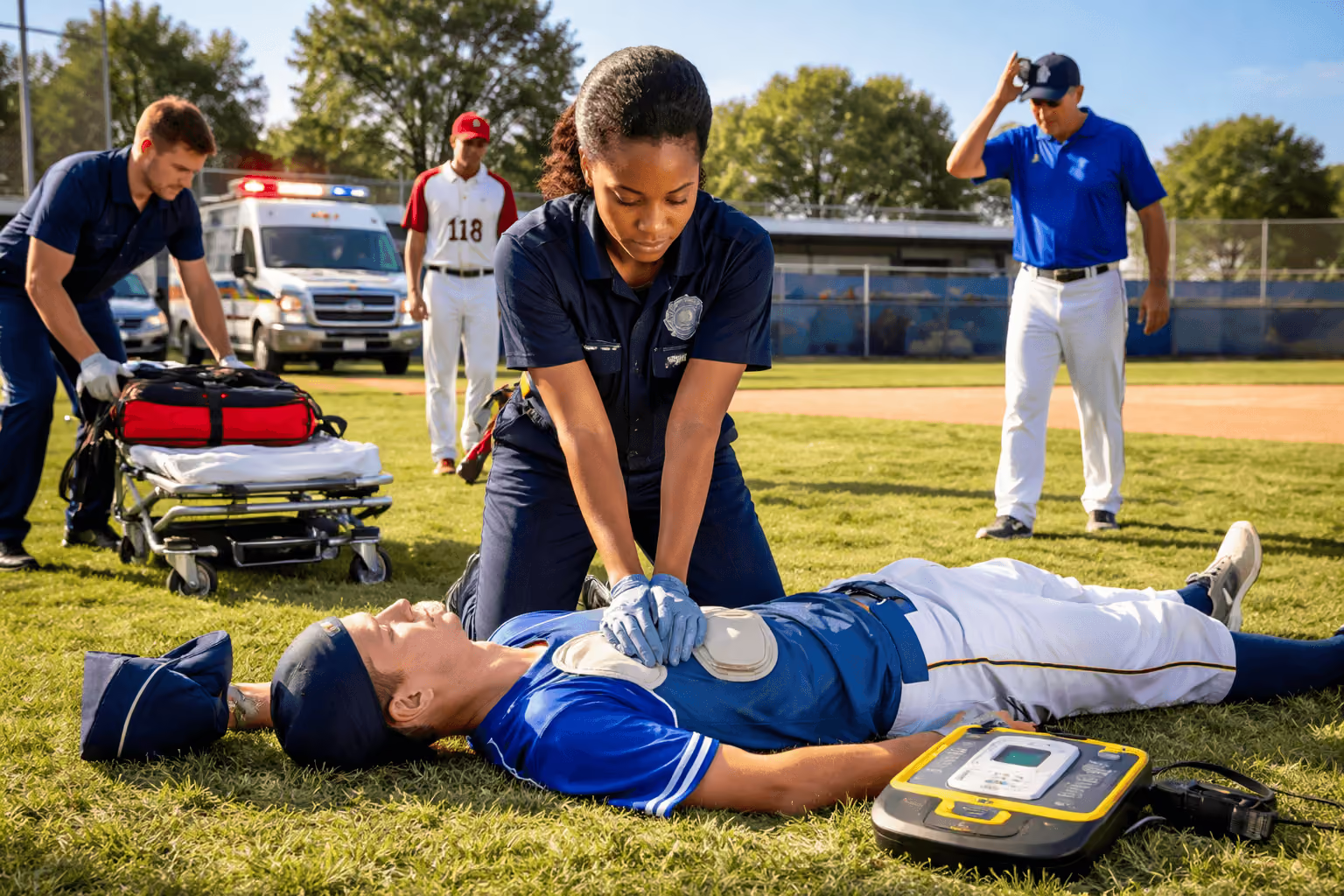
Understand how to safely and effectively operate an Automated External Defibrillator (AED) for adults, children, and infants.
Learn how to perform the Heimlich maneuver and clear airway obstructions caused by choking in both adults and infants.
Gain experience working as part of a team when more than one rescuer is available during an emergency.
Receive your AHA CPR Certification E-Card on the same day you complete the class and pass the exam.

CPR Certification Labs provides professional CPR and emergency training courses based on recognized industry standards.