Offer ends October 18.
This is some text inside of a div block.
Restart a Heart BLS Sale
RESTART99
Copy code

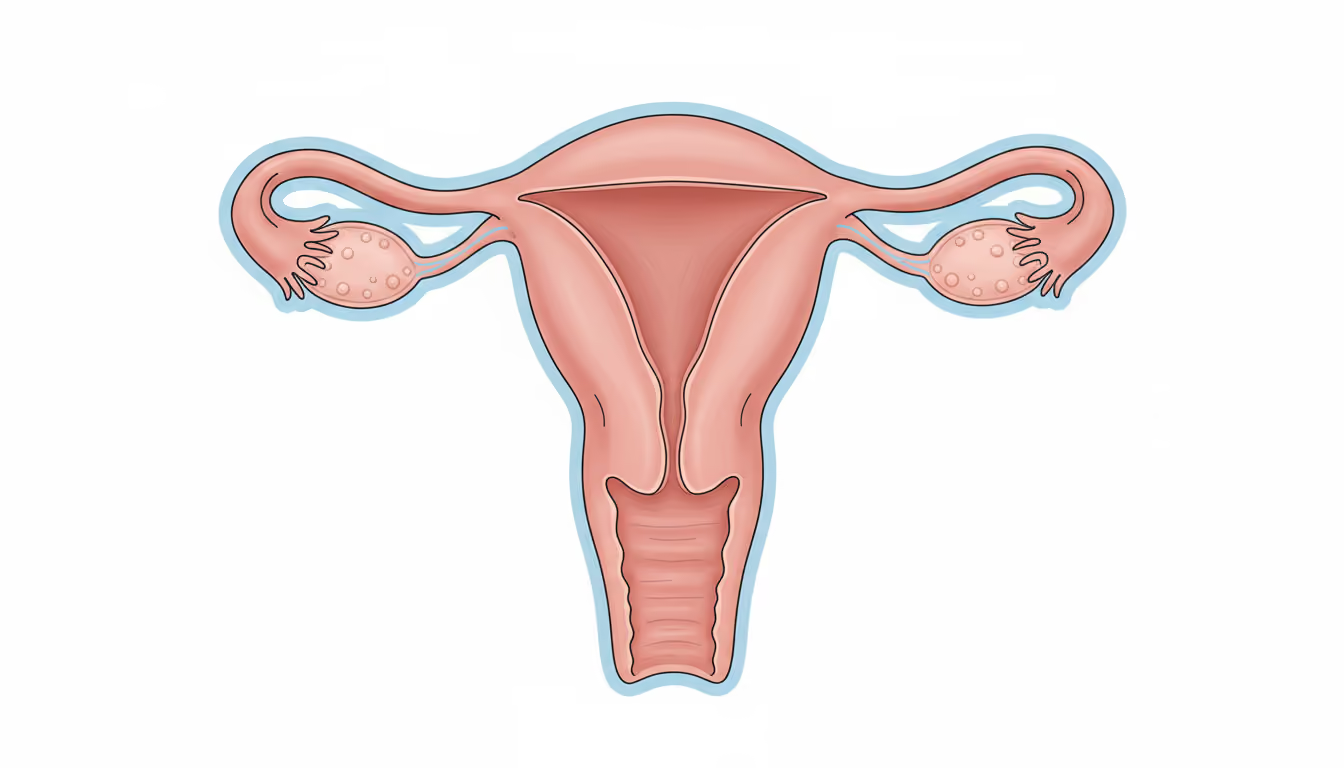
Female Reproductive System:The internal components of the female reproductive system include the ovaries, Fallopian tubes, uterus, and cervix. The ovaries, often referred to as "egg sacs," are two almond-shaped organs situated on either side of the uterus. Their primary roles are to produce eggs (ova) and secrete female hormones. During each menstrual cycle, an egg is released from an ovary and travels through a Fallopian tube to reach the uterus. These hormones, such as estrogen and progesterone, are crucial for developing female physical traits like breasts, body shape, and hair, as well as for regulating the menstrual cycle and pregnancy.The Fallopian tubes, located on each side of the body, serve as passageways for the egg to move from the ovary to the uterus. They are lined with tiny, hair-like structures known as cilia, which play a vital role in guiding the egg's movement. These tubes are named after Gabriele Falloppio, a 16th-century Italian physician.The uterus, a hollow, pear-shaped organ, resides in a woman's lower abdomen between the bladder and rectum. Its upper section, called the corpus, consists of two tissue layers. In women of reproductive age, the inner layer, or endometrium, undergoes monthly changes as part of the menstrual cycle. The endometrial tissue thickens each cycle to prepare for a potential fertilized egg. If no fertilization occurs, this tissue breaks down and exits the body through the vagina as menstruation. The outer muscular layer of the corpus, known as the myometrium, expands during pregnancy to accommodate the developing fetus and contracts during labor to facilitate childbirth.The cervix, the lower, narrow portion of the uterus, forms a canal opening into the vagina. Meanwhile, the vagina is a muscular canal that extends from the cervix to the body's exterior. The term "vagina" derives from Latin, meaning "sheath" or "scabbard," metaphorically referring to its role in sexual intercourse.
Our technology delivers immediate, actionable feedback that refines your skills in real time.
Understand how to safely and effectively operate an Automated External Defibrillator (AED) for adults, children, and infants.
Learn how to perform the Heimlich maneuver and clear airway obstructions caused by choking in both adults and infants.
Gain experience working as part of a team when more than one rescuer is available during an emergency.
Receive your AHA CPR Certification E-Card on the same day you complete the class and pass the exam.

CPR Certification Labs provides professional CPR and emergency training courses based on recognized industry standards.