Offer ends October 18.
This is some text inside of a div block.
Restart a Heart BLS Sale
RESTART99
Copy code

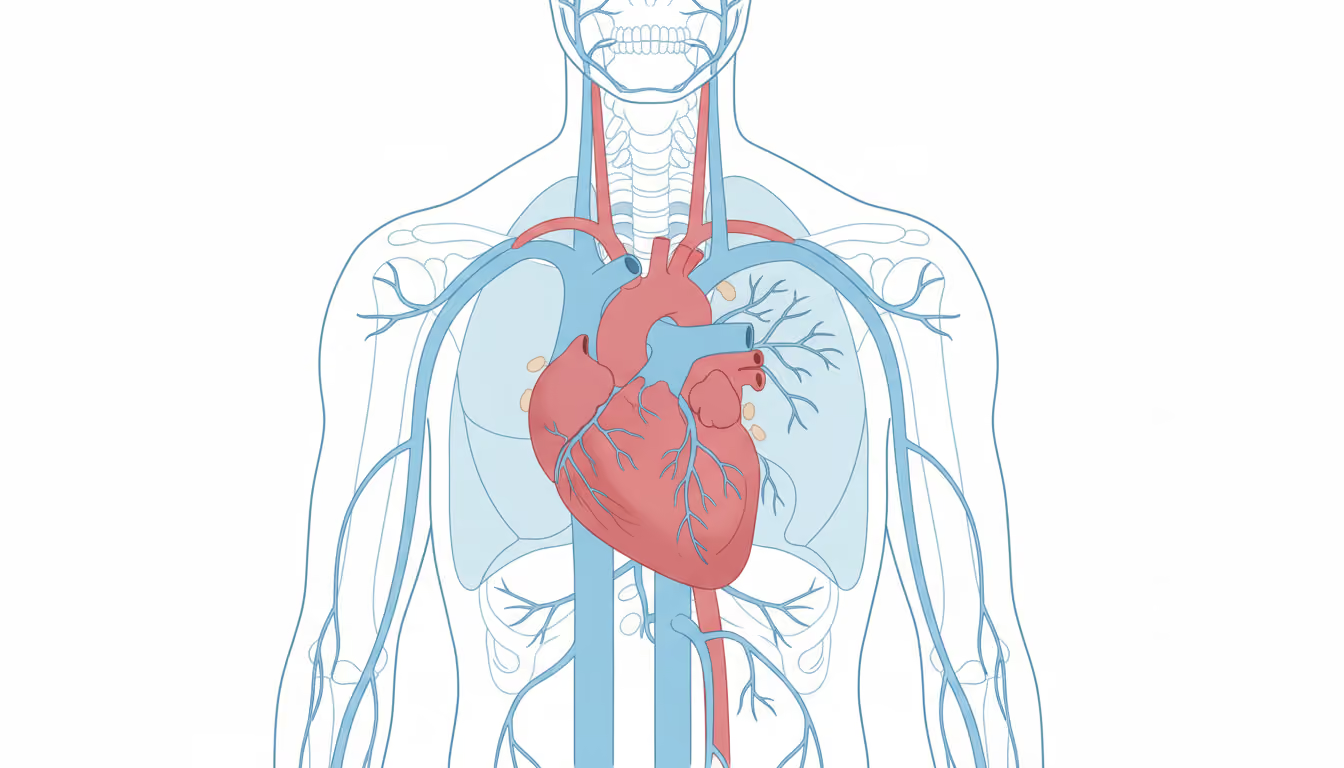
Superior Vena Cava: The superior vena cava is a major vein responsible for transporting blood back to the heart from the head, neck, and upper limbs. The inferior vena cava, on the other hand, carries blood from the lower body to the heart. Any disruption in the flow through these veins can lead to health issues. In superior vena cava syndrome, the large vein that delivers blood to the heart becomes obstructed, causing symptoms.Located in the center of the chest, the superior vena cava is surrounded by firm structures and lymph nodes. It is bordered by the trachea, esophagus, right lung, and pulmonary artery. Any disease affecting these surrounding structures or lymph nodes can compress the superior vena cava, leading to the syndrome.Symptoms of superior vena cava syndrome include facial, neck, and arm swelling, along with prominent neck veins. Patients may also experience a persistent cough and difficulty breathing, and other symptoms such as swelling around the eyes, fatigue, chest pain, headaches, and dizziness can occur.The syndrome can result from both cancerous (malignant) and non-cancerous (benign) conditions. Common cancers linked to the syndrome include lung cancer, lymphoma, and cancers that have metastasized to the chest, such as breast and testicular cancers. Non-cancerous causes include infections like tuberculosis, benign tumors such as teratomas, thymomas, or dermoid cysts, pericarditis, radiation therapy to the chest, pneumothorax, catheter-induced complications, and heart surgery.Diagnosing superior vena cava syndrome involves identifying the underlying cause, often using X-rays, CT scans, or MRI scans. Treatment focuses on addressing the specific cause, which may involve cancer therapies, antibiotics, clot-dissolving medications, blood thinners, balloon angioplasty, or surgery.The prognosis for individuals with superior vena cava syndrome largely depends on the root cause of the condition.
CPR Certification Labs provides hands-on, American Heart Association–aligned CPR, BLS, ACLS, and PALS certification training to help providers master these life-saving skills.
Our technology delivers immediate, actionable feedback that refines your skills in real time.
Understand how to safely and effectively operate an Automated External Defibrillator (AED) for adults, children, and infants.
Learn how to perform the Heimlich maneuver and clear airway obstructions caused by choking in both adults and infants.
Gain experience working as part of a team when more than one rescuer is available during an emergency.
Receive your AHA CPR Certification E-Card on the same day you complete the class and pass the exam.

CPR Certification Labs provides professional CPR and emergency training courses based on recognized industry standards.