Offer ends October 18.
This is some text inside of a div block.
Restart a Heart BLS Sale
RESTART99
Copy code

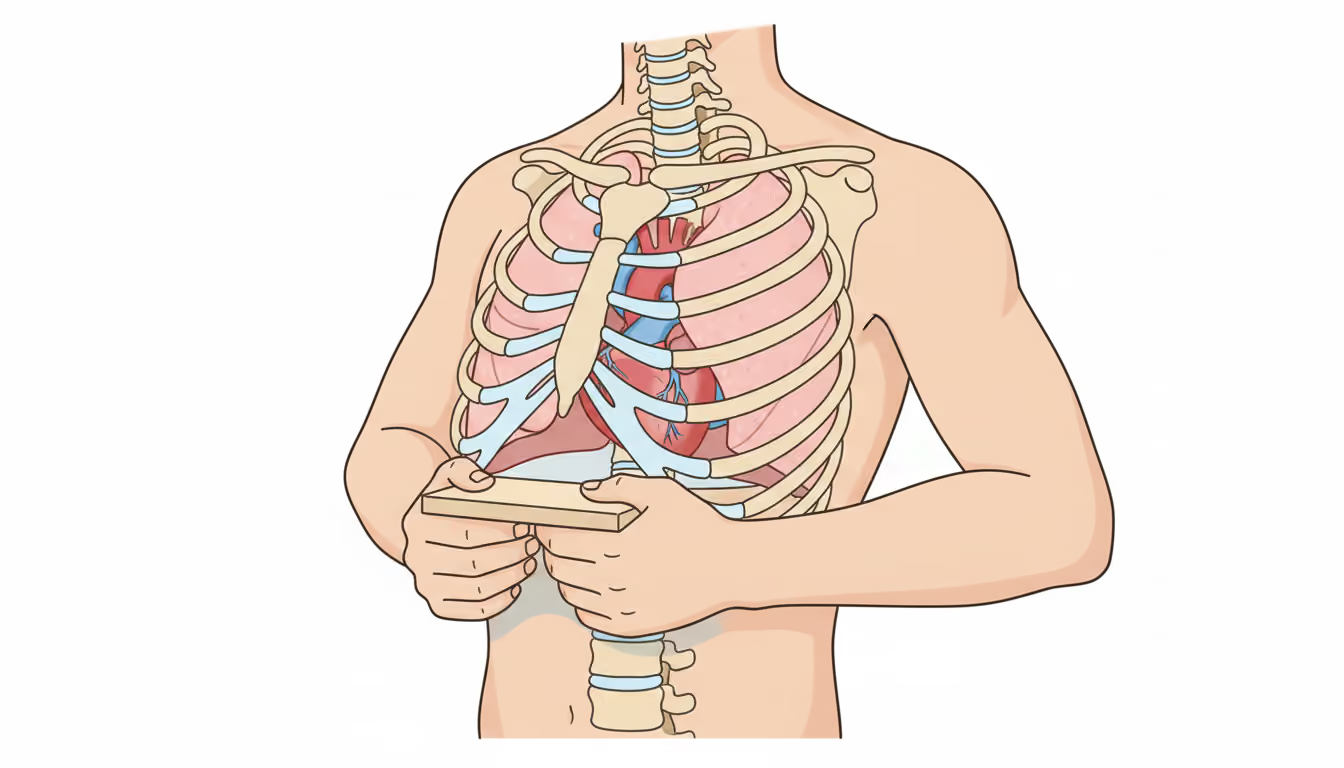
The breast is located at the front of the chest and is primarily associated with the mammary gland, which is responsible for producing milk. This gland is mainly composed of fat and contains a complex network of branching ducts. These ducts originate from sac-like lobules capable of producing milk in females and lead out of the breast through the nipple.The breast is often considered an organ primarily for milk production. The lobules serve as the milk-producing glands, while the ducts function as channels that transport milk from these glands to the nipple. The nipple can become erect due to cold, breastfeeding, or sexual arousal. The darker pigmented area surrounding the nipple is known as the areola.The lobules and ducts are supported by surrounding fatty tissue and ligaments, with no muscles present within the breast itself. Blood vessels and lymphatics, which are thin channels similar to blood vessels but do not carry blood, are also present. Instead, lymphatics collect and transport tissue fluid back into the bloodstream. This fluid drains through the lymphatics into the lymph nodes located in the underarm (axilla) and behind the chest wall.
Our technology delivers immediate, actionable feedback that refines your skills in real time.
Understand how to safely and effectively operate an Automated External Defibrillator (AED) for adults, children, and infants.
Learn how to perform the Heimlich maneuver and clear airway obstructions caused by choking in both adults and infants.
Gain experience working as part of a team when more than one rescuer is available during an emergency.
Receive your AHA CPR Certification E-Card on the same day you complete the class and pass the exam.

CPR Certification Labs provides professional CPR and emergency training courses based on recognized industry standards.