Offer ends October 18.
This is some text inside of a div block.
Restart a Heart BLS Sale
RESTART99
Copy code


Types of Bones:The human skeleton consists of four primary bone shapes.Long Bones:Characterized by a cylindrical shaft and joint surfaces at both ends, long bones include the major arm bones (humerus, radius, and ulna) and the major leg bones (femur, tibia, and fibula).Short Bones:Though they also possess a tubular shaft and joint surfaces at each end, short bones are notably smaller. These bones encompass the metacarpals and phalanges in the hands, as well as the metatarsals and phalanges in the feet.Flat Bones:Flat bones are recognized by their thin, expansive surfaces. Examples include the scapula (shoulder blade), ribs, and sternum (breastbone).Irregular Bones:Irregular bones are distinguished by their unique shapes and sizes and are typically dense. This category includes vertebrae, carpal bones in the hands, tarsal bones in the feet, and the patella (kneecap).
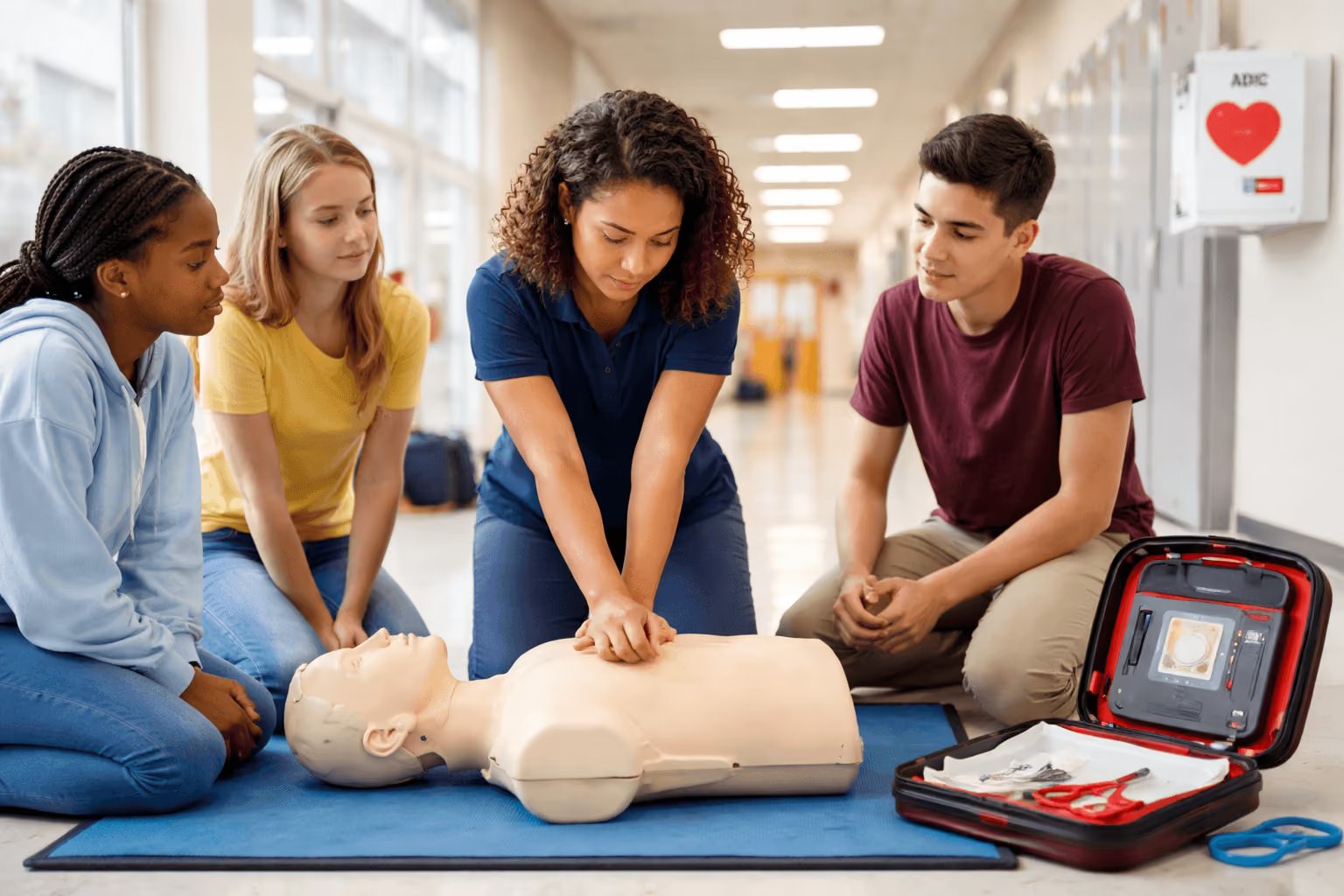
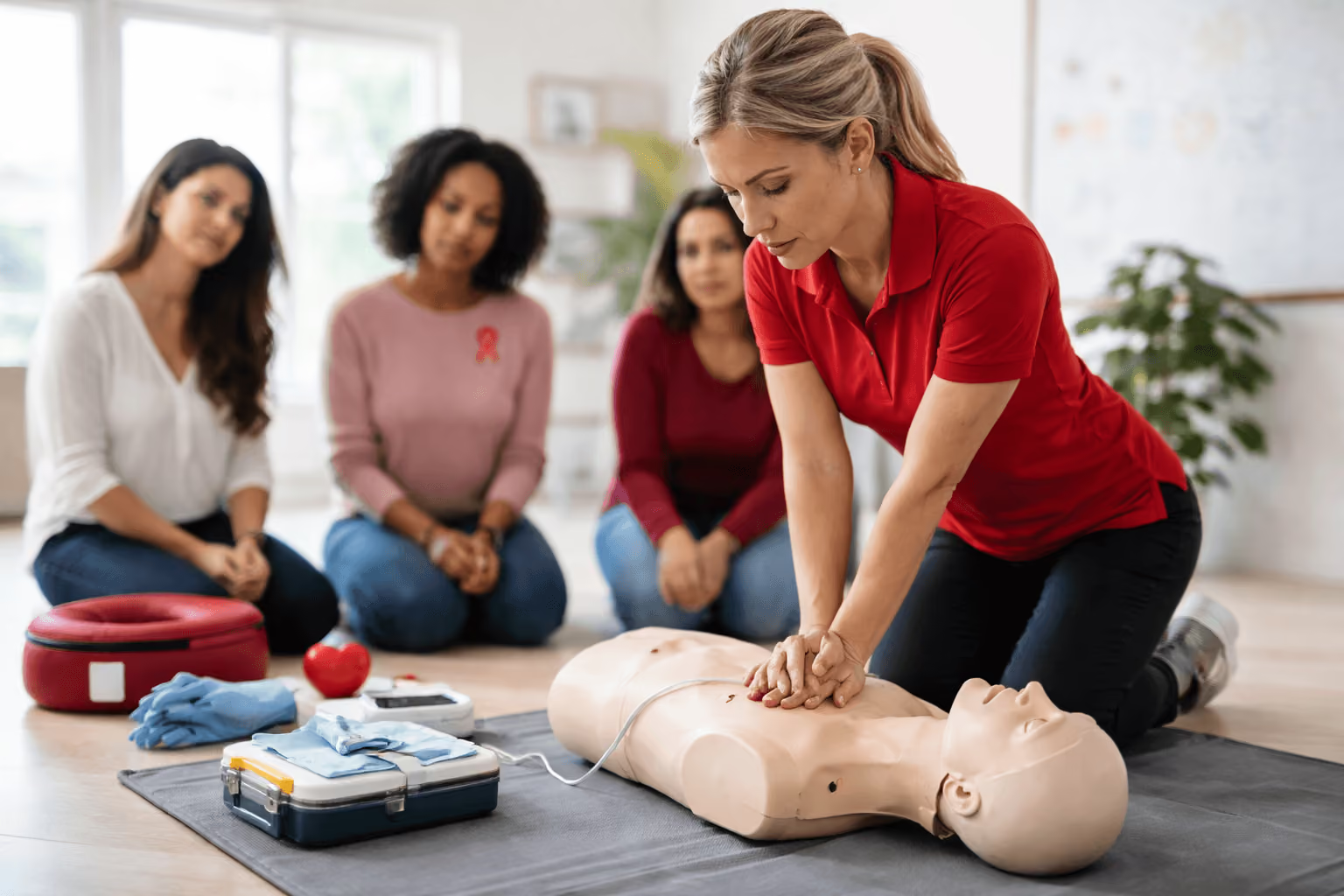
Our technology delivers immediate, actionable feedback that refines your skills in real time.
Understand how to safely and effectively operate an Automated External Defibrillator (AED) for adults, children, and infants.
Learn how to perform the Heimlich maneuver and clear airway obstructions caused by choking in both adults and infants.
Gain experience working as part of a team when more than one rescuer is available during an emergency.
Receive your AHA CPR Certification E-Card on the same day you complete the class and pass the exam.

CPR Certification Labs provides professional CPR and emergency training courses based on recognized industry standards.