Offer ends October 18.
This is some text inside of a div block.
Restart a Heart BLS Sale
RESTART99
Copy code

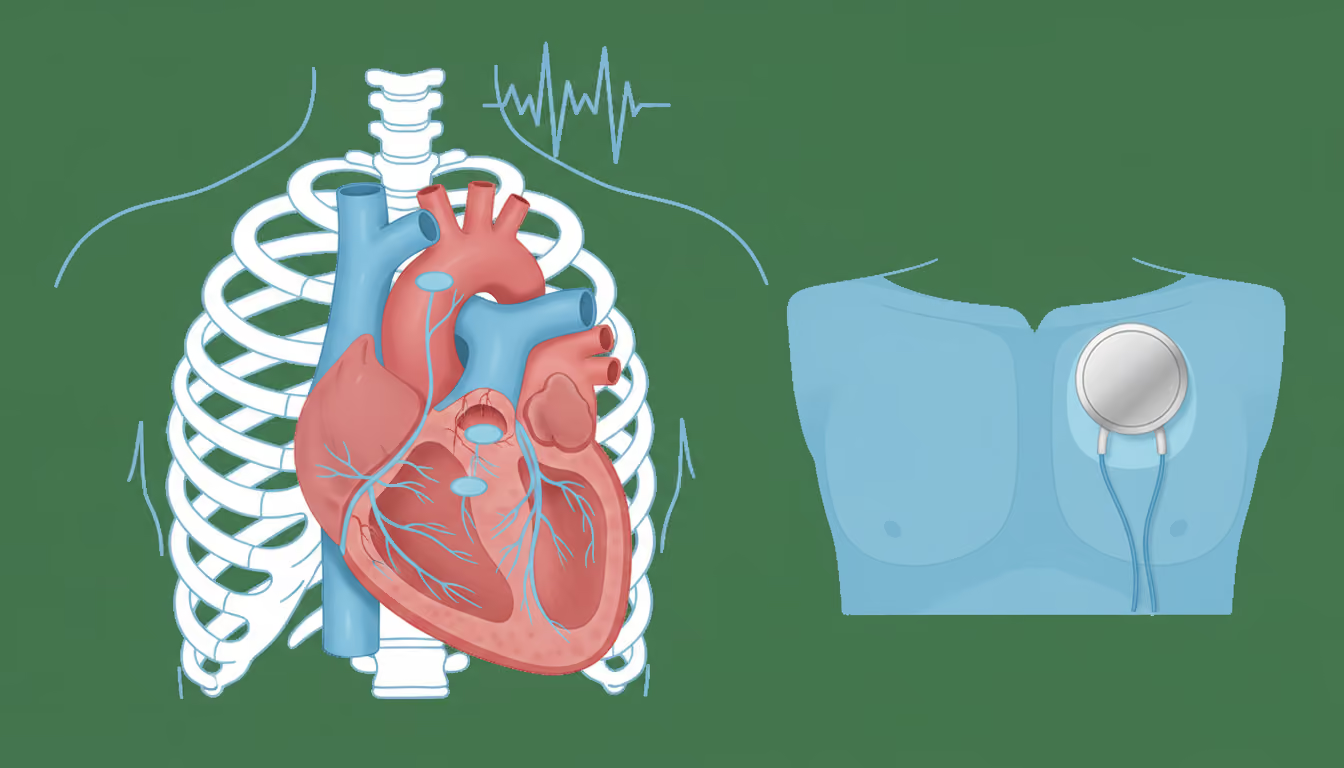
Pacemaker:A mechanism that delivers electrical signals to the heart to maintain its rhythm. This role can be fulfilled by the heart's inherent "natural" pacemaker or by an electronic device. The heart's natural pacemaker is a crucial part of the cardiac conduction system, which regulates heart rate. This intricately designed system produces electrical signals and transmits them throughout the heart muscle, prompting it to contract and circulate blood.The natural pacemaker, known as the sinoatrial node (SA node), is a group of cells located in the upper section of the right atrium's wall. Here, the electrical signals are generated. These signals travel from cell to cell through the heart until they reach the atrioventricular node (AV node), another group of cells positioned centrally between the atria and the ventricles. The AV node acts as a gateway, temporarily delaying the electrical impulse to allow the atria to contract fully before the ventricles are activated. Following the AV node, the signal proceeds to the ventricles via specialized fibers embedded in the heart's lower walls.There are various kinds of artificial pacemakers, all designed to address bradycardia, which is an abnormally slow heart rate. Some pacemakers operate continuously at a fixed or heightened rate during physical activity. Others are programmed to detect extended pauses between heartbeats and stimulate the heart as needed. For additional details, refer to Artificial pacemaker.
CPR Certification Labs provides hands-on, American Heart Association–aligned CPR, BLS, ACLS, and PALS certification training to help providers master these life-saving skills.
Our technology delivers immediate, actionable feedback that refines your skills in real time.
Understand how to safely and effectively operate an Automated External Defibrillator (AED) for adults, children, and infants.
Learn how to perform the Heimlich maneuver and clear airway obstructions caused by choking in both adults and infants.
Gain experience working as part of a team when more than one rescuer is available during an emergency.
Receive your AHA CPR Certification E-Card on the same day you complete the class and pass the exam.

CPR Certification Labs provides professional CPR and emergency training courses based on recognized industry standards.