Offer ends October 18.
This is some text inside of a div block.
Restart a Heart BLS Sale
RESTART99
Copy code

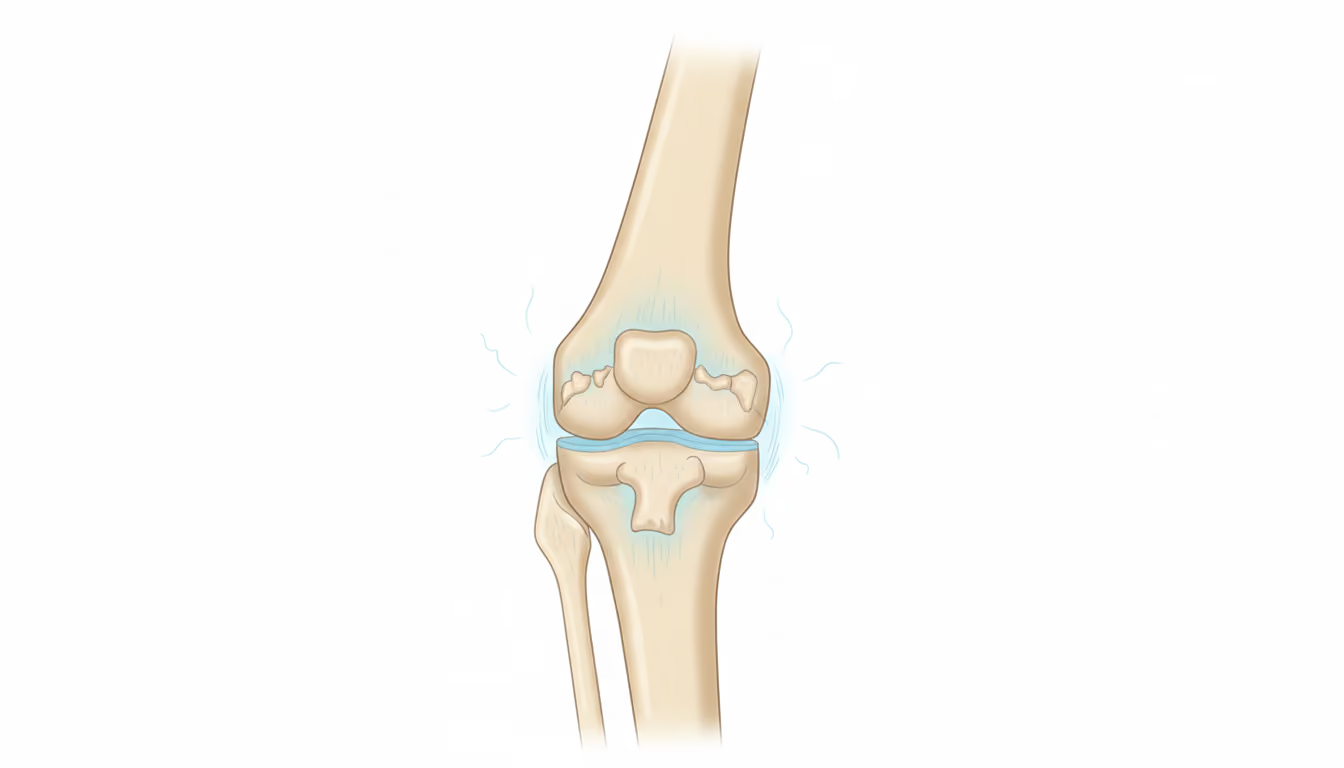
Osgood-Schlatter Disease:This condition involves inflammation and sometimes tearing of the ligaments within the knee. Treatment typically involves rest, casting if necessary, and in some cases, surgery. Osgood-Schlatter disease arises from repetitive strain or tension on a growth area of the upper tibia known as the apophysis. It is marked by inflammation of the patellar tendon and surrounding soft tissues where the tendon attaches to the tibia. The condition can also result in an avulsion injury, where the tendon is pulled so strongly that it tears away from the tibia, often taking a piece of bone with it. This disease primarily affects active young individuals, especially boys aged 10 to 15, who participate in sports or activities involving frequent running and jumping.Individuals with this disease experience pain just below the knee joint, which typically worsens with activity and eases with rest. A noticeable bony bump, which is particularly tender when pressed, may develop on the upper edge of the tibia beneath the kneecap. Generally, knee movement is not restricted. The pain may persist for several months and can recur until the child's growth is complete.Osgood-Schlatter disease is usually diagnosed based on symptoms. An X-ray might appear normal, reveal an avulsion injury, or more commonly, show fragmentation of the apophysis. The condition often resolves without treatment. Applying ice when pain begins helps reduce inflammation and is sometimes paired with stretching and strengthening exercises. Doctors might advise limiting participation in intense sports activities. Children who want to continue playing moderate or less stressful sports may need knee pads for protection and should apply ice after activities. If significant pain occurs during sports, participation should be reduced until the discomfort is manageable.
Our technology delivers immediate, actionable feedback that refines your skills in real time.
Understand how to safely and effectively operate an Automated External Defibrillator (AED) for adults, children, and infants.
Learn how to perform the Heimlich maneuver and clear airway obstructions caused by choking in both adults and infants.
Gain experience working as part of a team when more than one rescuer is available during an emergency.
Receive your AHA CPR Certification E-Card on the same day you complete the class and pass the exam.

CPR Certification Labs provides professional CPR and emergency training courses based on recognized industry standards.