AED mapping in Allen and why it matters
AED mapping in Allen is becoming a practical way for schools, businesses, and event venues to respond faster when cardiac arrest happens. A North Texas rescue story from a Plano high school shows how CPR, an AED, and quick teamwork can help create a better outcome before EMS arrives.
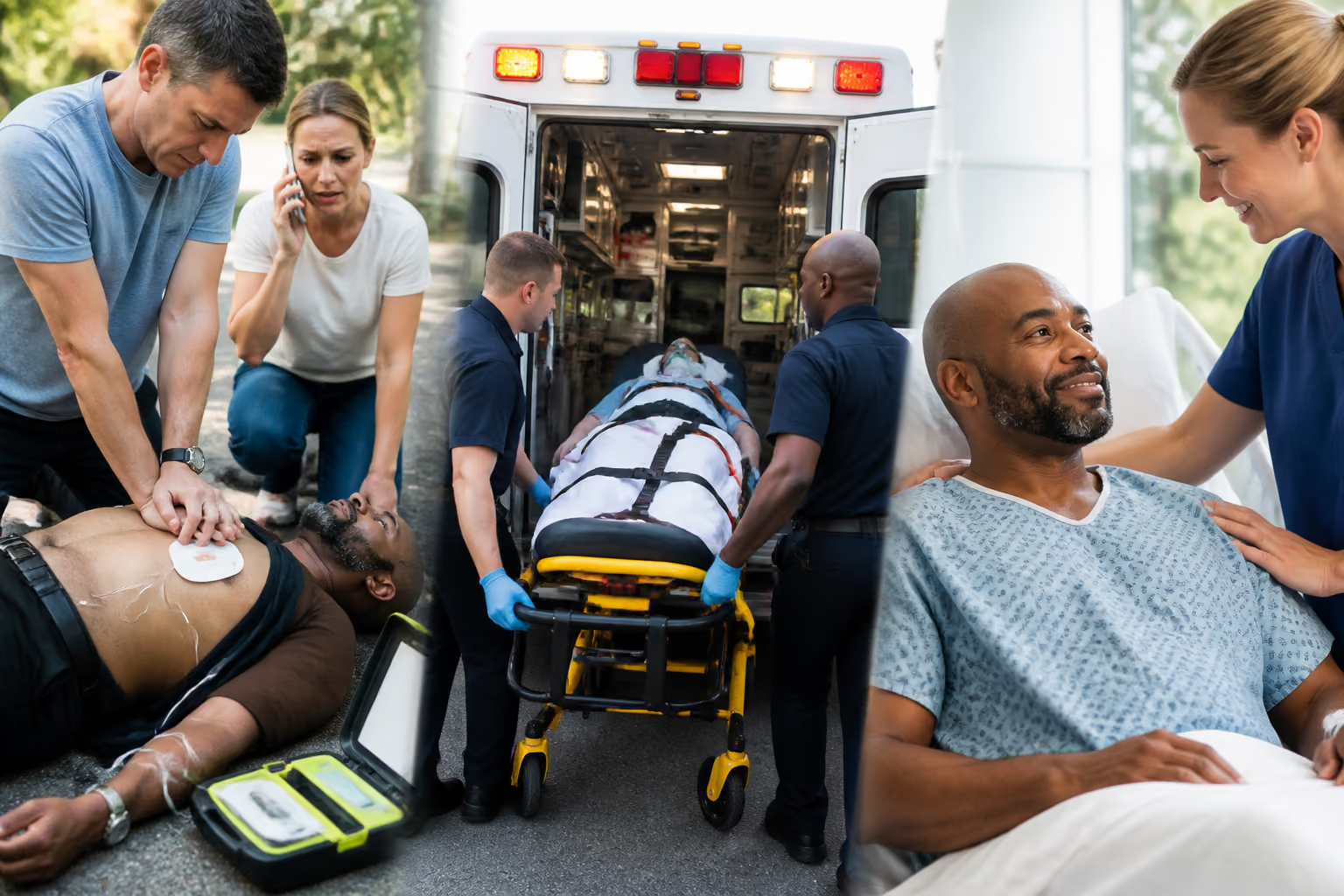
The lesson for Allen is simple: if a person suddenly collapses, is not responding, or is not breathing normally, call 911, start CPR if you are trained, and send someone to retrieve the nearest AED right away. The faster the response, the better the chance that trained help can take over smoothly.
What happened in North Texas
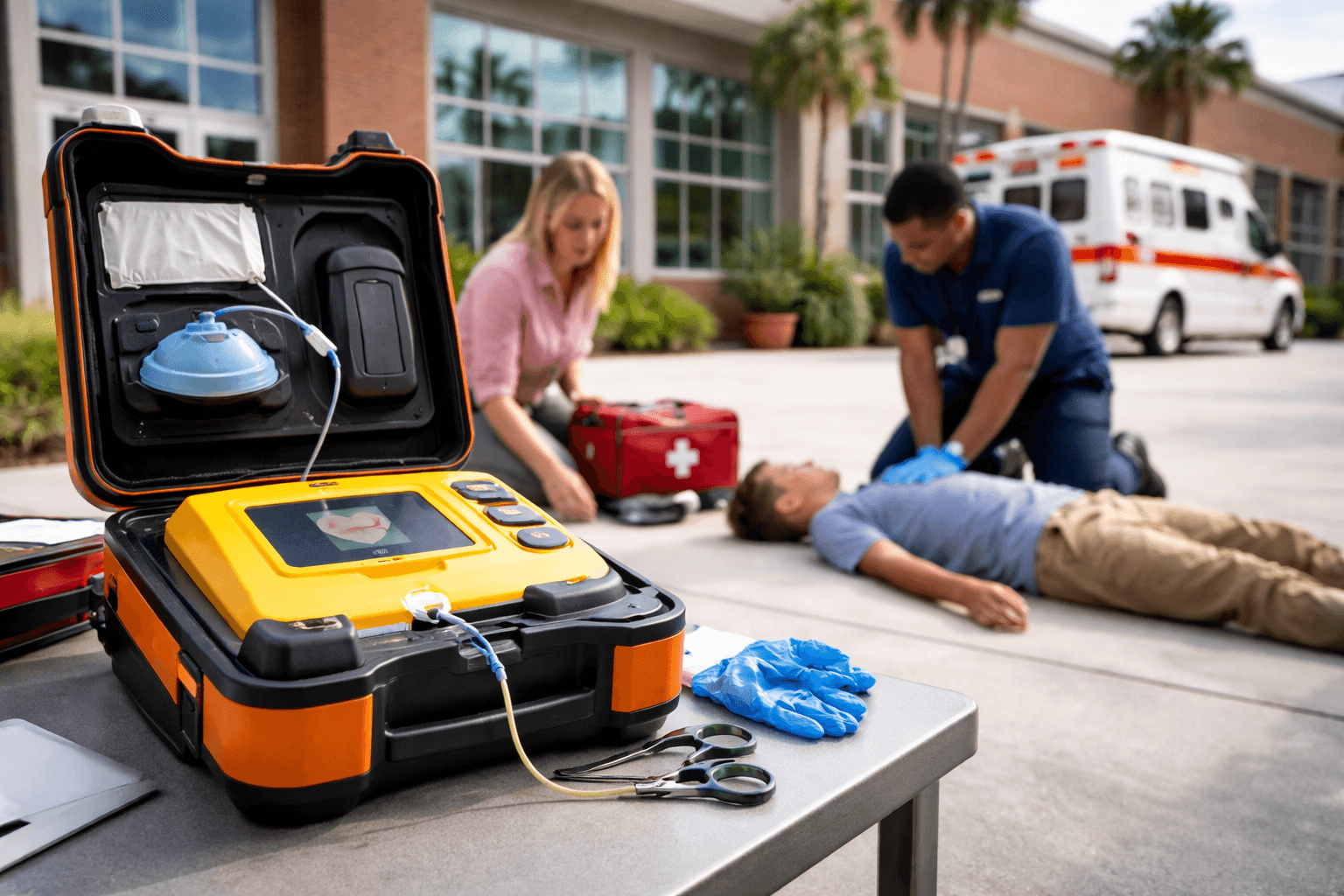
In a story reported by WFAA, Julie Coon collapsed while volunteering at Plano Senior High School during a Pink Out Day event. Nearby students, staff, a bus driver with first responder training, and an athletic trainer acted quickly. CPR began, an AED was brought to the scene, and the device was used before emergency crews arrived.
That rescue later became the foundation for Cardiac Crusade, a nonprofit started by Coon and her husband to help people find AEDs more easily. Their story is a reminder that a device only helps if people know where it is and are ready to use it.
This article is for general educational purposes only and is not a substitute for professional medical advice, diagnosis, treatment, or certified CPR training. In an emergency, call 911 immediately.
How AED mapping in Allen works in real settings
AED mapping is the process of identifying, recording, and sharing the location of every automated external defibrillator in a building or on a campus. In practice, that means people can move from search time to action time much faster.
For Allen-area organizations, the process can be straightforward:
- List every AED by exact location, such as the front office, gym entrance, cafeteria wall, or fieldhouse hallway.
- Assign a staff member to verify the device is present, visible, and ready for use.
- Post a simple map for employees, coaches, and volunteers.
- Include the AED location in emergency response plans and event checklists.
- Review the map during staff training so people can find the device under pressure.
That approach works well in schools, offices, faith communities, gyms, and community centers. It is also useful for event venues that may have temporary setups, changing room access, or multiple entrances.
Local examples for schools, businesses, and venues in Allen
In a school setting, AED mapping can help coaches, teachers, and front-office staff know whether the device is closest to the gym, the auditorium, or an athletic field. In a workplace, it can help managers direct a team member to the right hallway cabinet instead of searching floor by floor. At a community event, it can reduce confusion when volunteers need to find equipment quickly.
These steps matter because emergency response is strongest when people do not have to guess. Clear labels, updated maps, and regular drills can make CPR and first aid support more effective while someone is waiting for EMS.
Who should pay attention to AED mapping in Allen
AED mapping is relevant for anyone responsible for safety planning. That includes school administrators, coaches, nurses, office managers, building supervisors, church leaders, fitness staff, and event organizers. It also matters to parents and employees who want to know what to do during a cardiac emergency.
- Schools: Map devices near gyms, cafeterias, main offices, and outdoor activity areas.
- Businesses: Train reception teams and floor leaders to point responders to the closest AED.
- Event venues: Make sure temporary staff know device locations before crowds arrive.
When people know where the AED is, they are more likely to act quickly instead of waiting for someone else to respond.
Why CPR and AED training still matter
AED mapping is helpful, but it does not replace CPR education. Training teaches people how to recognize cardiac arrest, begin compressions, follow AED prompts, and keep the response moving until professional help arrives. First aid training adds another layer of preparedness for injuries and other urgent situations that may happen at the same time.
For many teams, the biggest barrier is uncertainty. Good instruction reduces hesitation, and that can matter as much as the equipment itself. In a real emergency, confidence, coordination, and a clear plan help people respond with purpose.
What to do first if your organization wants to start
If your school, business, or venue is ready to improve emergency response, start with a simple checklist:
- Confirm where every AED is located.
- Check that the device is easy to reach and clearly marked.
- Create a basic floor map or shared digital list.
- Train staff to call 911 first and assign one person to get the AED.
- Review CPR, AED, and first aid procedures during team meetings.
These steps are practical, affordable, and easy to build into existing safety routines. They also support a faster response when seconds matter.
How CPR Certification Labs supports local preparedness
CPR Certification Labs helps healthcare professionals and community members build confidence with CPR, AED use, and first aid skills. If you are looking for local training connected to North Texas, our McKinney office serves nearby communities and is a practical option for Allen-area learners. You can learn more here: McKinney - Tucker Hill.
We focus on clear instruction that helps people remember the steps under pressure. That is especially important for teams that need to support emergency response in schools, workplaces, and public spaces.
Why this story matters for Allen
The North Texas rescue story is not just about one person and one device. It is about preparation, teamwork, and access. Allen organizations that invest in AED mapping, CPR awareness, and first aid readiness can make it easier for bystanders to help while waiting for EMS.
For communities that host students, employees, families, and visitors every day, small planning choices can make a meaningful difference. Knowing where the AED is, who can use it, and when to call 911 are simple steps that support a stronger emergency response.
To explore local training options, visit the McKinney - Tucker Hill office page and review class availability for your team.
FAQ
What is AED mapping?
AED mapping is the process of documenting where automated external defibrillators are located so people can find them quickly in an emergency.
Why should schools and businesses in Allen map AEDs?
Mapping helps staff, volunteers, and visitors reach the nearest device faster, which can improve emergency response during cardiac arrest.
Should someone call 911 before getting the AED?
Yes. The first step is to call 911, then start CPR if trained, and send someone to bring the AED as quickly as possible.
About our McKinney - Tucker Hill office
- Address: 7200 W University Dr, Suite 218
- Phone: (903) 627-2841
- Email: McKinney@cprcertificationlabs.com
- Hours:
Monday to Friday: 6am - 8pm
Saturday to Sunday: 7am - 5pm