Head-up CPR and neurologically intact survival
Head-up CPR is getting more attention after new research linked the approach with better odds of surviving cardiac arrest with brain function intact. For healthcare professionals and first responders, that finding matters because CPR is not only about restoring circulation — it is also about protecting the brain during emergency response.
The study focused on a head and shoulder elevation method used during resuscitation. Researchers reported stronger outcomes when this approach was started early, particularly when treatment began within 18 minutes of the 911 call. The results add to growing interest in CPR methods designed to improve blood flow to the heart and brain during cardiac arrest.
What the research suggests about head-up CPR
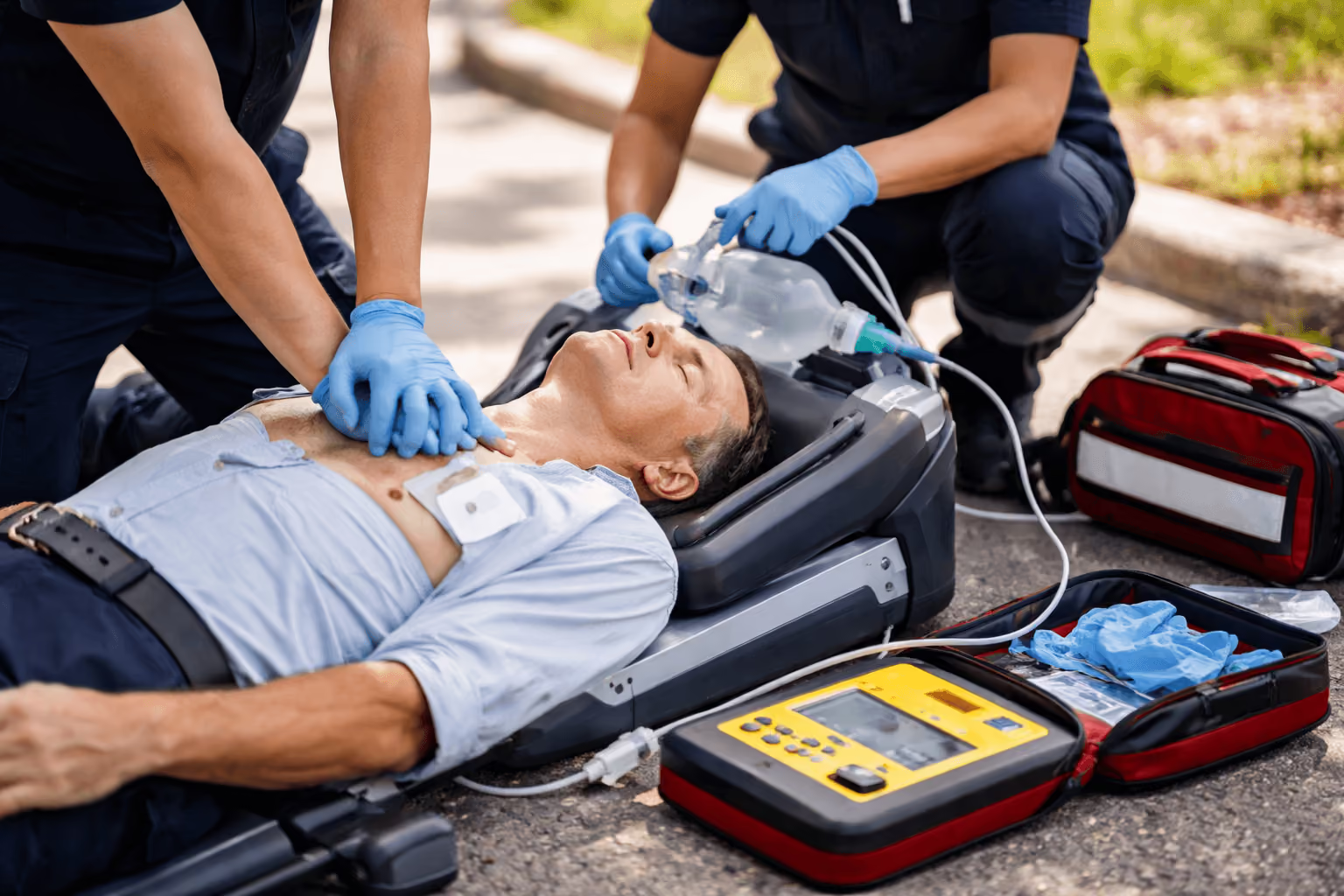
In the study, the head-up CPR strategy combined controlled elevation of the head and thorax with active compression-decompression CPR and an impedance threshold device. The goal is to support circulation while limiting pressure changes that may affect the brain. Investigators reported improved neurological survival compared with conventional supine CPR in cases where the technique was used early.
The findings are important because neurological outcome is one of the most meaningful measures after cardiac arrest. Survival alone is not the full picture. Patients and families benefit most when return of circulation is followed by a meaningful recovery with preserved brain function.
Local relevance for Oklahoma City North providers
For clinicians, EMTs, nurses, and other responders in Oklahoma City, these findings reinforce a familiar principle: the first minutes after collapse matter. Rapid recognition, prompt CPR, and early use of an AED when indicated can all influence outcomes. Local teams that stay current on resuscitation science are better prepared to deliver emergency response in high-stakes situations.
That is especially relevant in busy community settings, workplaces, schools, outpatient offices, and healthcare environments where a cardiac arrest can happen without warning. Knowing how to start CPR quickly and coordinate with EMS can make a critical difference before advanced care arrives.
How head-up CPR fits into CPR and AED training
Head-up CPR is a developing resuscitation approach, but the basics remain unchanged: recognize cardiac arrest, begin CPR, and use an AED as soon as possible if one is available. Training helps professionals understand chest compression quality, teamwork, scene coordination, and when to transition to advanced emergency response.
For many learners, CPR classes also reinforce practical first aid skills that support real-world readiness. Even when a department or EMS system is not using a specialized head-up CPR protocol, strong fundamentals still matter. High-quality compressions, early defibrillation, and organized response remain the foundation of care.
Who should pay attention to this study
This information is useful for EMS personnel, nurses, physicians, dental teams, athletic staff, and anyone responsible for emergency preparedness. It is also relevant for managers and trainers who build workplace response plans. Understanding emerging CPR research can help teams evaluate protocols, refresh skills, and stay aligned with current resuscitation practices.
Healthcare workers often serve as the first clinical contact in a crisis. That makes ongoing CPR education valuable not only for certification, but for confidence under pressure. The more familiar a team is with CPR, AED use, and emergency response roles, the faster it can act when seconds count.
Why CPR Certification Labs is a practical choice
CPR Certification Labs offers training that is straightforward, professional, and focused on real emergency situations. Courses are designed for busy healthcare professionals who need clear instruction and practical skill development. If you are looking for CPR, BLS, ACLS, or first aid training in the Oklahoma City area, it helps to learn in a setting that emphasizes readiness and accuracy.
Our Oklahoma City North office is located at 9012 N Kelley Avenue, Oklahoma City, OK. The office serves learners who want accessible training in a local setting, with hours that work for many schedules. For more information about classes and scheduling, visit our Oklahoma City North office page.
Nearby facilities and local context
Oklahoma City has a wide range of healthcare, public safety, and community environments where CPR readiness matters. Whether in clinics, urgent care settings, schools, or workplace response teams, staff members benefit from knowing how to act quickly during a cardiac emergency. Good training supports calm decision-making and better coordination with EMS.
As research continues to refine techniques like head-up CPR, the core message remains consistent: early action saves time, and time matters in cardiac arrest. The more prepared a team is, the better positioned it is to support a patient before and during transfer to higher-level care.
FAQ
What is head-up CPR?
Head-up CPR is a resuscitation approach that elevates the head and thorax during CPR. It is being studied as a way to improve circulation and neurological outcomes during cardiac arrest.
Does head-up CPR replace standard CPR?
No. Standard CPR remains the foundation of cardiac arrest response. Head-up CPR is an emerging technique that may be used in some systems or studied in specific settings, but core CPR skills are still essential.
When should I call 911 during a cardiac arrest?
Call 911 immediately if a person is unresponsive and not breathing normally. Start CPR if you are trained to do so and use an AED as soon as one is available.
This article is for general educational purposes only and is not a substitute for professional medical advice, diagnosis, treatment, or certified CPR training. In an emergency, call 911 immediately.
CPR Certification Labs helps healthcare professionals build confidence with CPR, BLS, ACLS, and first aid training that supports real-world emergency response.