Offer ends October 18.
This is some text inside of a div block.
Restart a Heart BLS Sale
RESTART99
Copy code

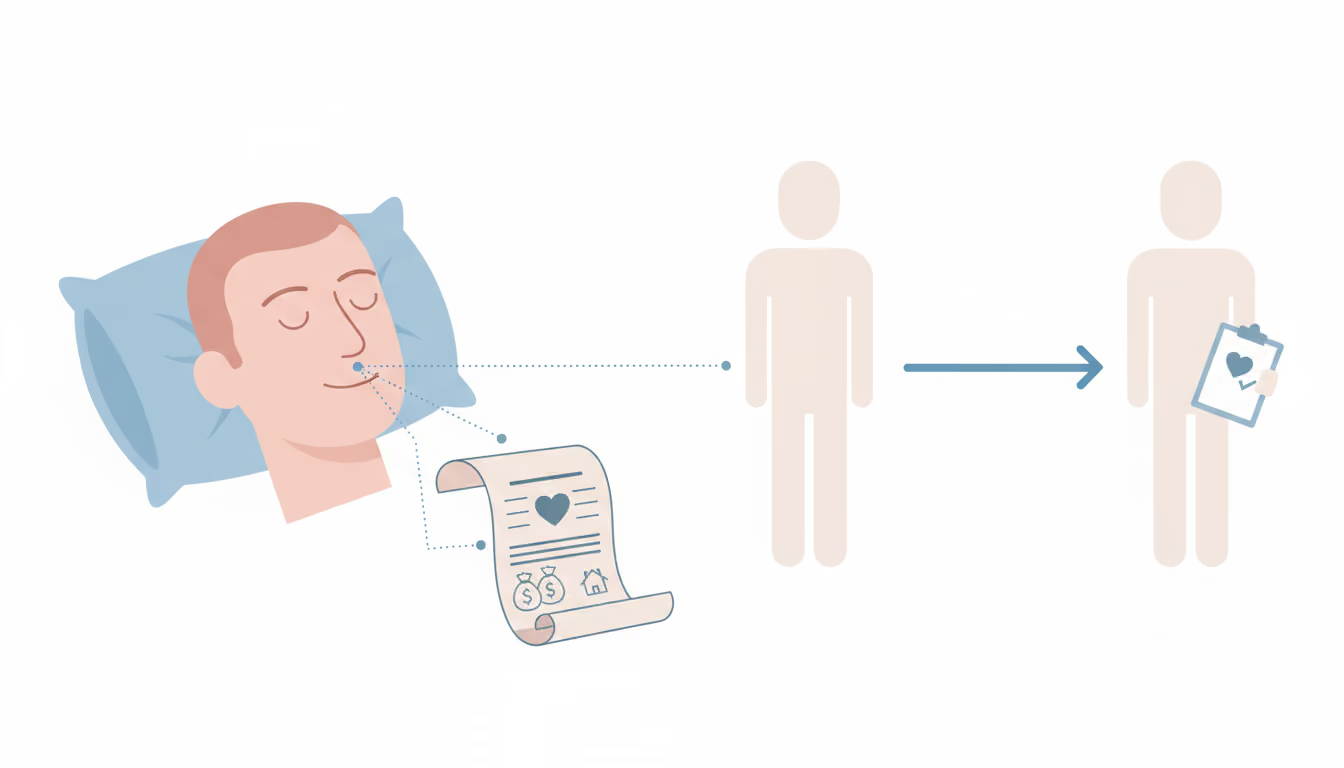
Advance directives involve outlining treatment preferences and appointing someone to make decisions if an individual is unable to do so themselves. These directives are typically divided into three types: a living will, a power of attorney, and a health care proxy.**Living Will:** This is a documented statement detailing the medical treatments a person wishes to receive or avoid. It can range from being very detailed to quite broad. A typical clause in a living will states that if a person suffers from a terminal, irreversible condition and their doctor confirms the terminal nature of their situation, they wish to forgo life-sustaining treatments that merely extend the dying process. More detailed living wills might also specify preferences regarding pain management, antibiotics, hydration, nutrition, ventilator use, and similar interventions.**Health Care Proxy:** This legal document allows an individual to appoint someone else to make healthcare decisions on their behalf if they become unable to express their wishes. The designated health care proxy has the same authority to accept or decline treatments as the individual would if they were capable of making decisions themselves.**Power of Attorney:** This is another form of advance directive where a person can authorize someone else to act on their behalf if they become medically incapacitated. The durable power of attorney enables the appointed person to handle tasks such as managing financial transactions, signing Social Security checks, applying for disability benefits, or paying bills while the individual is unable to do so.
Our technology delivers immediate, actionable feedback that refines your skills in real time.
Understand how to safely and effectively operate an Automated External Defibrillator (AED) for adults, children, and infants.
Learn how to perform the Heimlich maneuver and clear airway obstructions caused by choking in both adults and infants.
Gain experience working as part of a team when more than one rescuer is available during an emergency.
Receive your AHA CPR Certification E-Card on the same day you complete the class and pass the exam.

CPR Certification Labs provides professional CPR and emergency training courses based on recognized industry standards.