Offer ends October 18.
This is some text inside of a div block.
Restart a Heart BLS Sale
RESTART99
Copy code

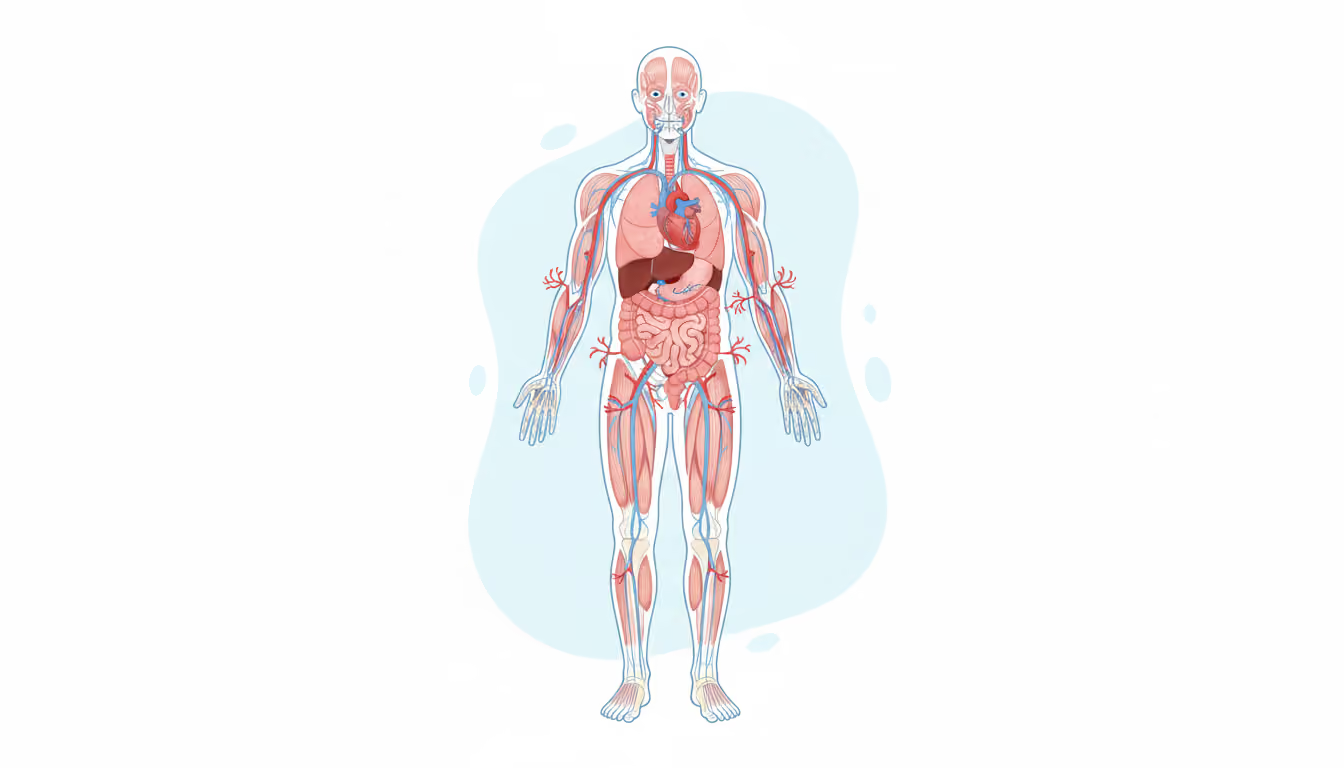
In medical and biological terms, stress refers to any physical, mental, or emotional factor that induces tension in the body or mind. Stressors can be external, such as those arising from environmental, psychological, or social situations, or internal, like illness or medical procedures. Stress can trigger the "fight or flight" response, a complex interaction of neurological and endocrine systems. Hormones like adrenaline and noradrenaline promote immediate physical reactions to prepare the body for intense activity. These reactions include increased heart and lung activity, changes in skin color (either paling or flushing), slowed or halted digestion due to stomach and intestinal inhibition, effects on body sphincters, blood vessel constriction in various areas, release of nutrients like fat and glucose for muscle use, dilation of blood vessels in muscles, and suppression of tear and saliva production. Other effects include pupil dilation, muscle relaxation, inhibition of erection, reduced hearing, narrowed vision, disinhibition of spinal reflexes, and trembling. Stress can exacerbate or influence numerous medical issues, including psychological disorders such as depression and anxiety. It can also impact physical health, leading to poor wound healing, various medical complications, and inadequate control of certain conditions. Effective stress management, which includes both pharmacological and non-pharmacological strategies, is recognized as a beneficial approach to treatment.
Our technology delivers immediate, actionable feedback that refines your skills in real time.
Understand how to safely and effectively operate an Automated External Defibrillator (AED) for adults, children, and infants.
Learn how to perform the Heimlich maneuver and clear airway obstructions caused by choking in both adults and infants.
Gain experience working as part of a team when more than one rescuer is available during an emergency.
Receive your AHA CPR Certification E-Card on the same day you complete the class and pass the exam.

CPR Certification Labs provides professional CPR and emergency training courses based on recognized industry standards.