San Antonio medical transfer service expands critical care support
The new San Antonio medical transfer service from Methodist Healthcare is a timely reminder that getting a patient to the right level of care quickly can matter just as much as what happens inside the hospital. The system’s new ground and air transport program is built for interfacility transfers, helping move critically ill or injured patients to higher-acuity teams with more clinical consistency.
Unlike a 9-1-1 ambulance response, this type of service is designed for hospital-to-hospital transfers and other planned critical care moves. In a city as large and medically active as San Antonio, that distinction matters for patients, families, and healthcare teams who rely on smooth handoffs during high-pressure moments.
Local context for San Antonio hospitals and transport teams
San Antonio’s healthcare network serves a wide region, including patients who may need specialty treatment not available at every facility. A dedicated transfer program can help reduce delays when a patient needs a higher level of care, whether that means cardiac monitoring, stroke evaluation, sepsis management, ECMO-related coordination, or trauma support.
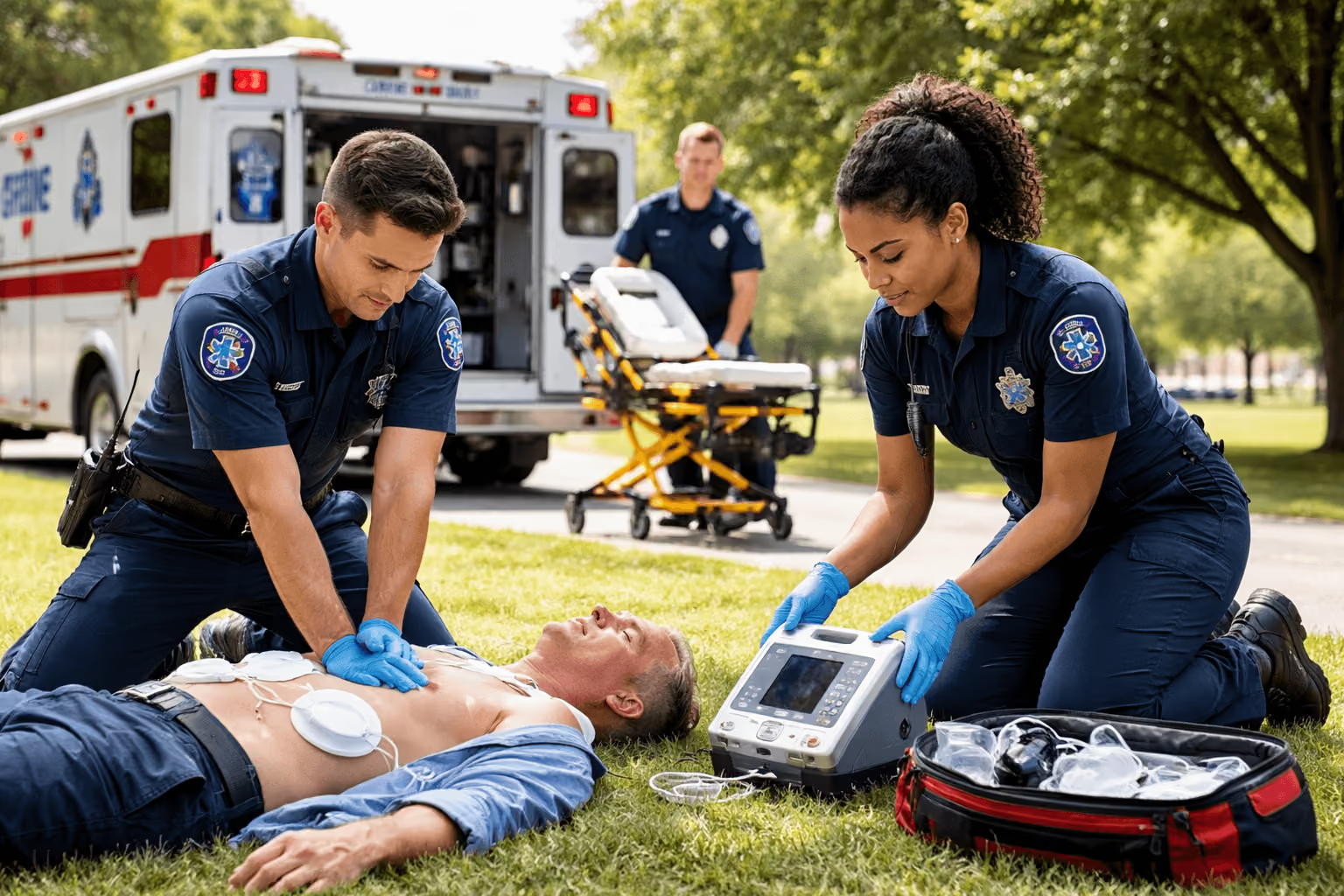
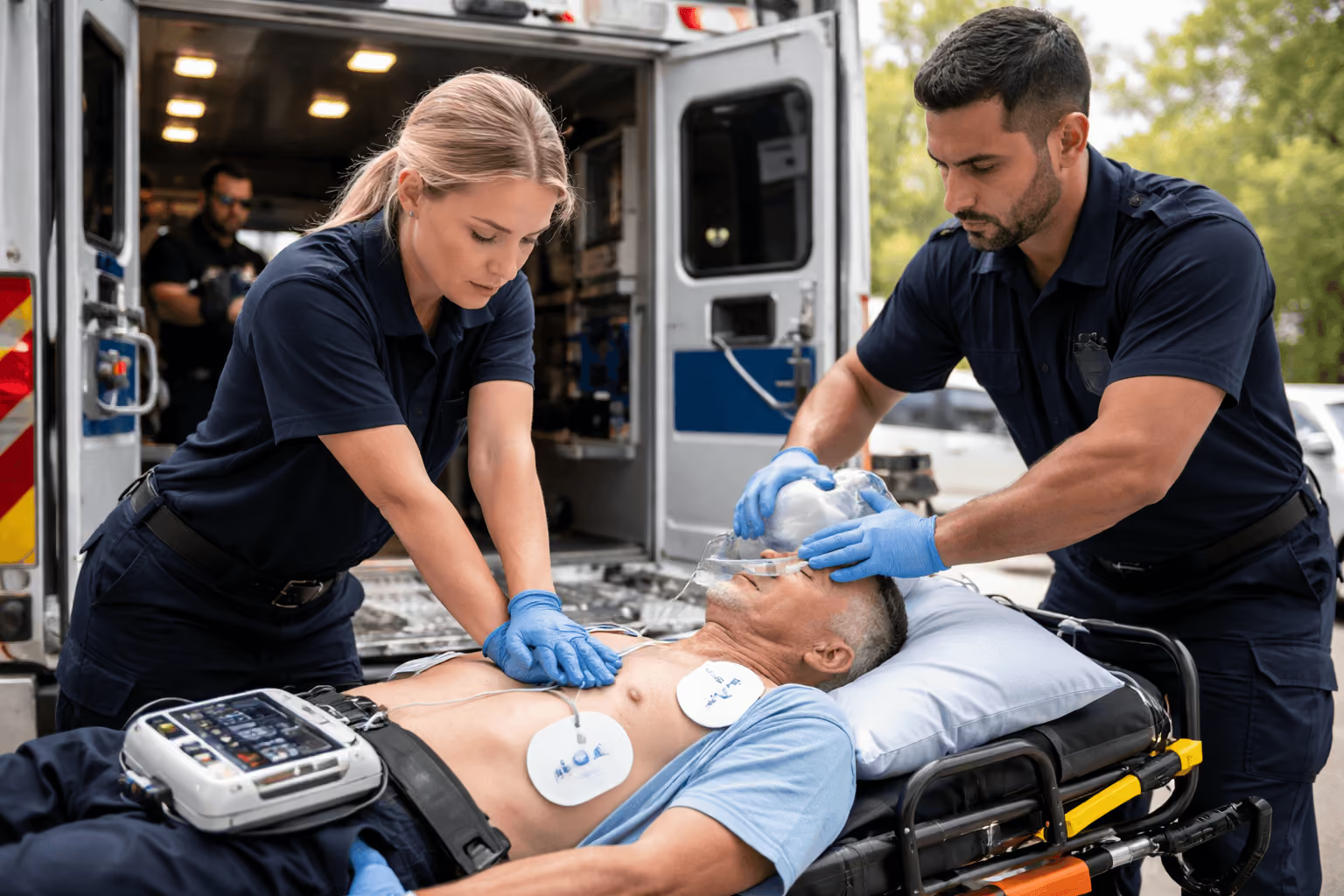
Methodist Healthcare’s new service includes ground or air transport depending on the situation, along with dedicated critical care ambulances and teams made up of paramedics and nurses trained for complex patient transfers. For local families, this kind of response can add structure to a stressful process and improve coordination between sending and receiving care teams.
What the new transfer program means for emergency response
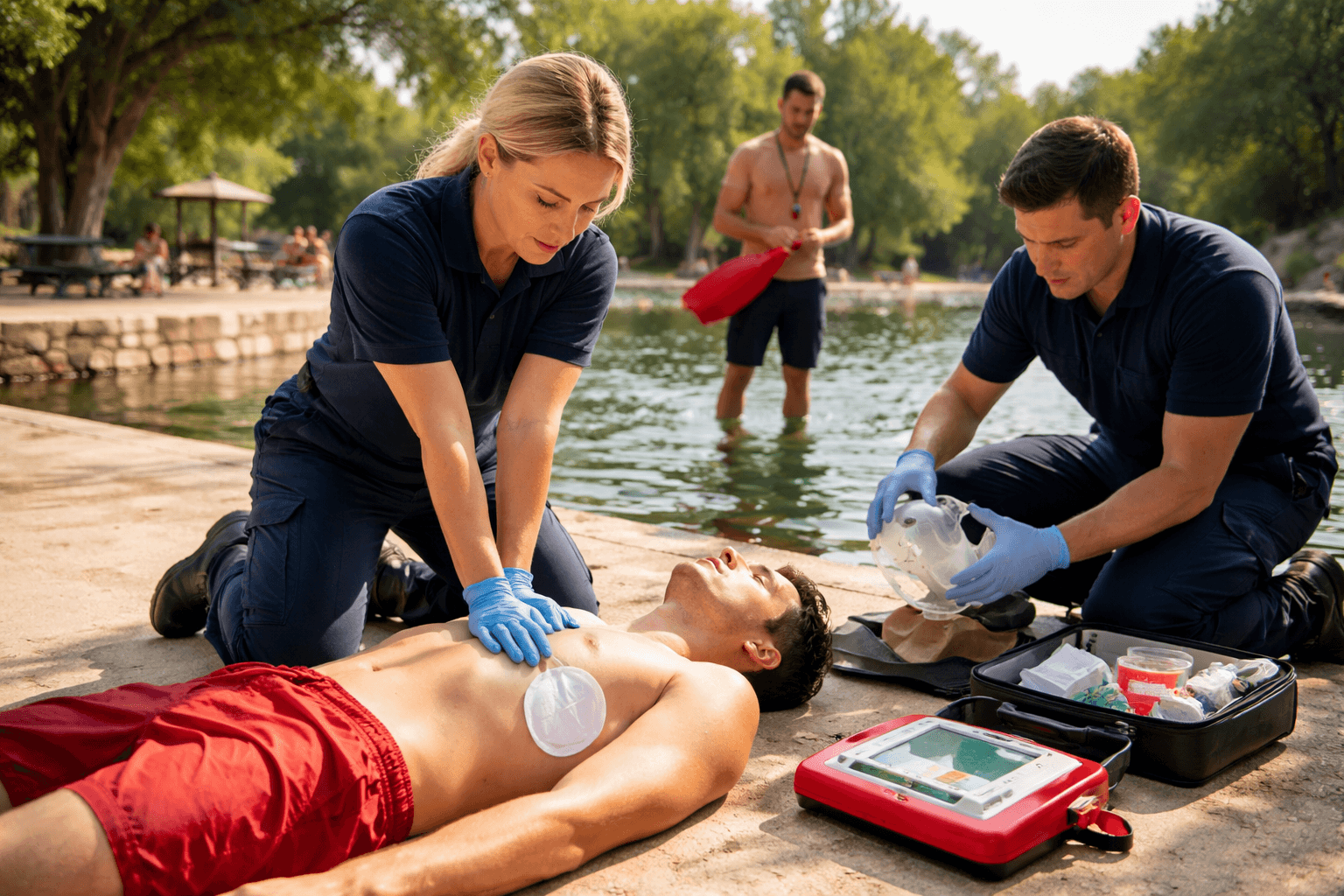
Good emergency response is not limited to what happens after a call for help. It also includes the safe movement of patients between facilities when advanced treatment is needed. In those situations, CPR, AED readiness, and first aid knowledge still play an important role because a patient can deteriorate before, during, or after transfer.
Hospitals and transport teams work best when they can recognize changes early, use trained staff, and communicate clearly. For the public, the lesson is simple: if someone collapses, is unresponsive, or is not breathing normally, call 911 right away and begin CPR if you are trained. Public access to AEDs and fast action from bystanders can help bridge the time until professional responders arrive.
This article is for general educational purposes only and is not a substitute for professional medical advice, diagnosis, treatment, or certified CPR training. In an emergency, call 911 immediately.
Who should pay attention to this San Antonio medical transfer service update
This update is relevant for hospital staff, nurses, paramedics, emergency department teams, and other healthcare professionals who coordinate patient movement across a system. It is also useful for administrators and care managers who track how critical care transfers affect patient flow and treatment timing.
For residents, the story is a reminder that San Antonio’s medical system depends on many layers of response. From first aid at the scene to CPR during a cardiac emergency to specialized transport between facilities, every step depends on trained people and clear communication.
Why CPR and AED training still matter
Even with advanced transport services in place, sudden cardiac arrest can happen anywhere: at work, in a clinic, at home, or in transit. CPR Certification Labs helps healthcare professionals build practical readiness for those moments with CPR, BLS, and ACLS training designed for real-world emergency response.
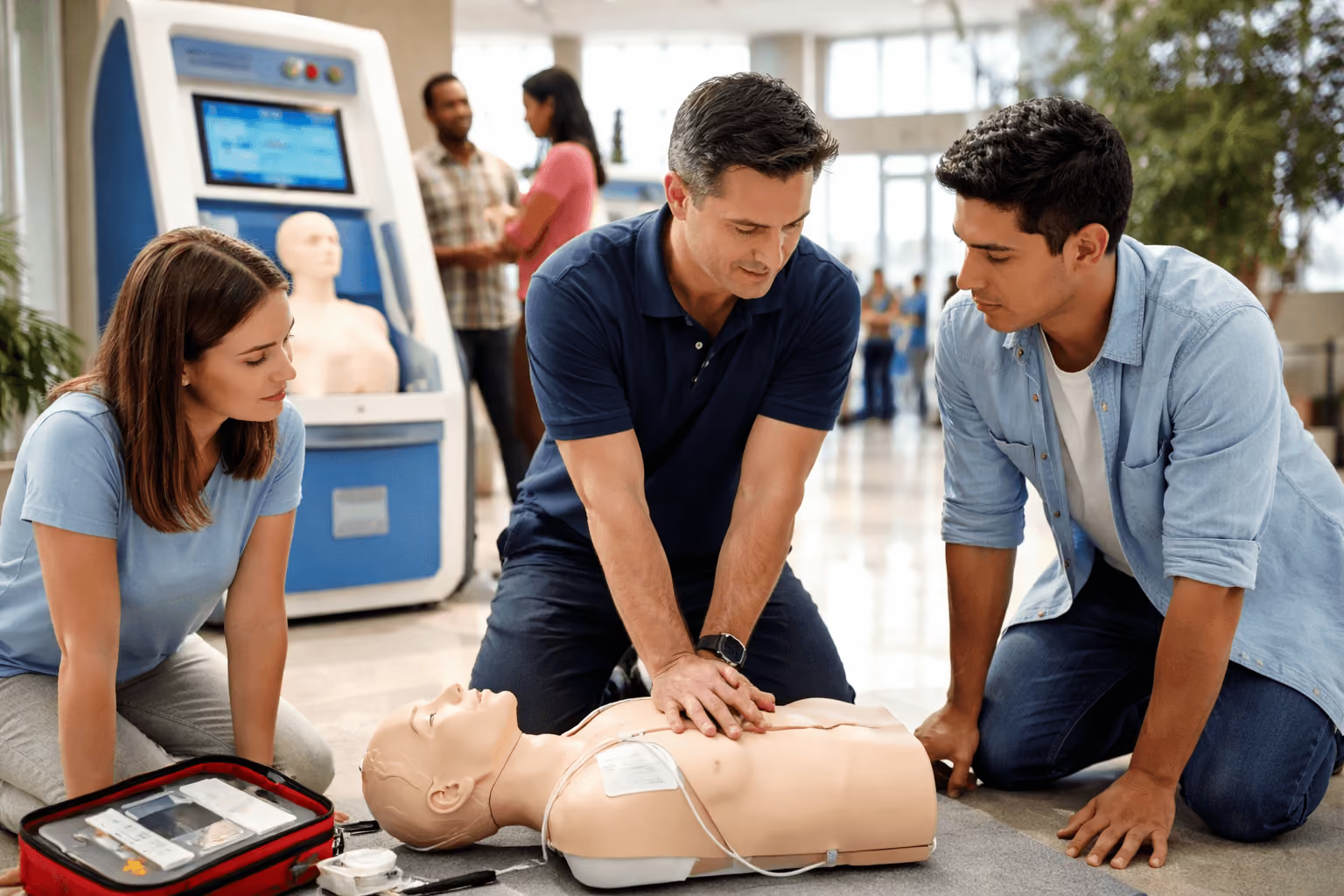
Training helps staff understand how to act quickly, use an AED, and support a team-based response while awaiting higher-level care. That kind of preparation is valuable in a hospital setting, but it is also important in outpatient offices, urgent care centers, and community environments throughout San Antonio.
Nearby facilities and local references
For healthcare professionals looking for training in the area, CPR Certification Labs serves the San Antonio Medical Center area from 8554 Huebner Road, Building 2. The office is a practical option for local clinicians who want convenient access to CPR and BLS education while working in one of the region’s busiest healthcare corridors.
Methodist Healthcare’s expanded transfer capability also reflects the broader role of specialty hospitals and transport programs across the city. When patients need a higher level of care, having a structured system for ground and air transfer can help keep the transition safer and more efficient.
Get CPR training in San Antonio
If you work in healthcare and want to stay prepared for cardiac emergencies, first aid situations, and team-based emergency response, explore training options at CPR Certification Labs San Antonio Medical Center. The location is convenient for professionals across the city who need practical, local CPR education.
In a medical environment where every minute counts, strong CPR and AED skills support better response at the bedside, in transport, and during critical handoffs between care teams.