Offer ends Nov 29.
This is some text inside of a div block.
Thankful for Those Who Care
THANKS99
Copy code

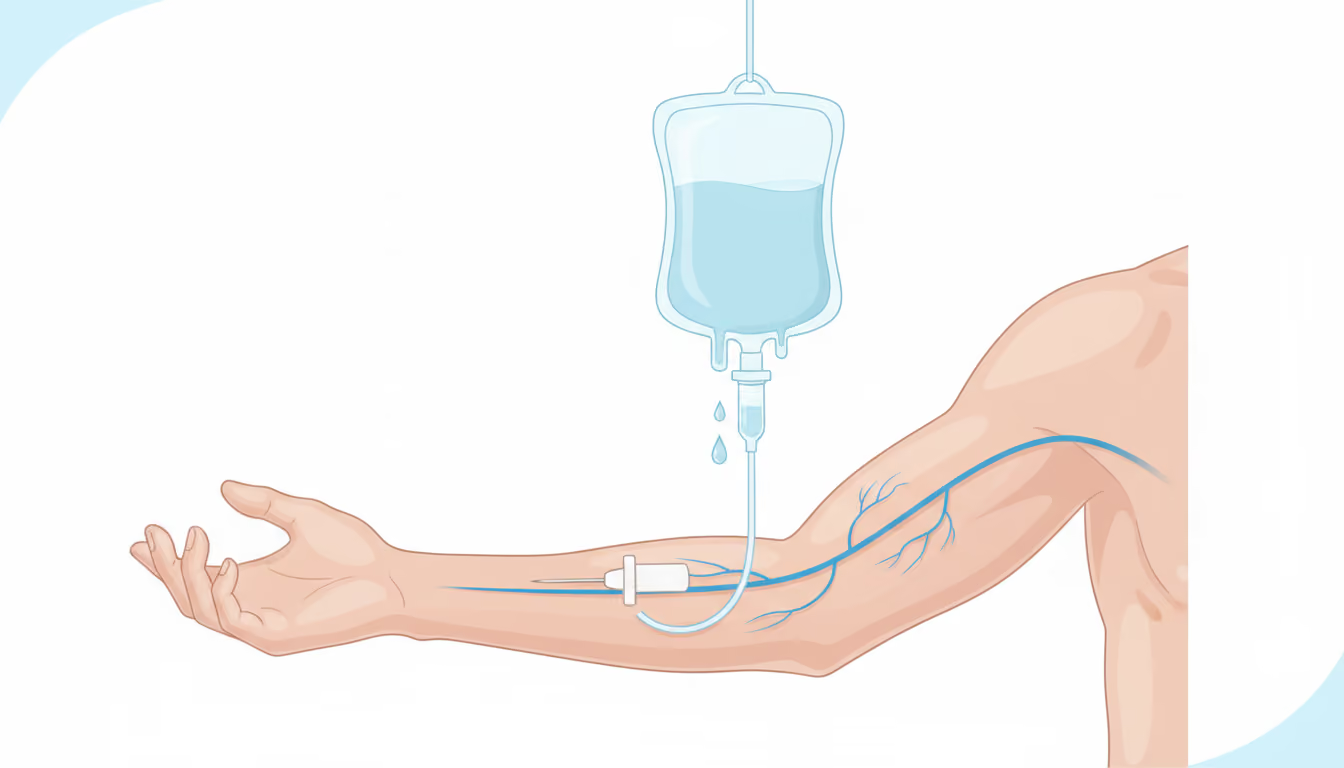
IV (intravenous) refers to something given or done through a vein. In resuscitation, drugs given during cardiac arrest need vascular access: the 2025 American Heart Association (AHA) Adult Cardiac Arrest Algorithm calls for IV or IO (intraosseous) access. IV access is tried first; IO access is a reasonable alternative if IV access is not feasible or delayed.
The abbreviation "IV" stands for "intravenous," which is primarily used as an adjective. The term "intravenous" was adopted into English around 1849, and according to Merriam-Webster's Collegiate Dictionary, it signifies something that is located within, performed within, or accessed through a vein. Here are some instances of "intravenous" used as an adjective:
The adverbial form is "intravenously," as in the sentence: "The glucose was administered intravenously." When used as a noun, "intravenous" refers to a fluid, typically a balanced solution, that is delivered straight into the venous system. This is also known as a drip.
Our technology delivers immediate, actionable feedback that refines your skills in real time.
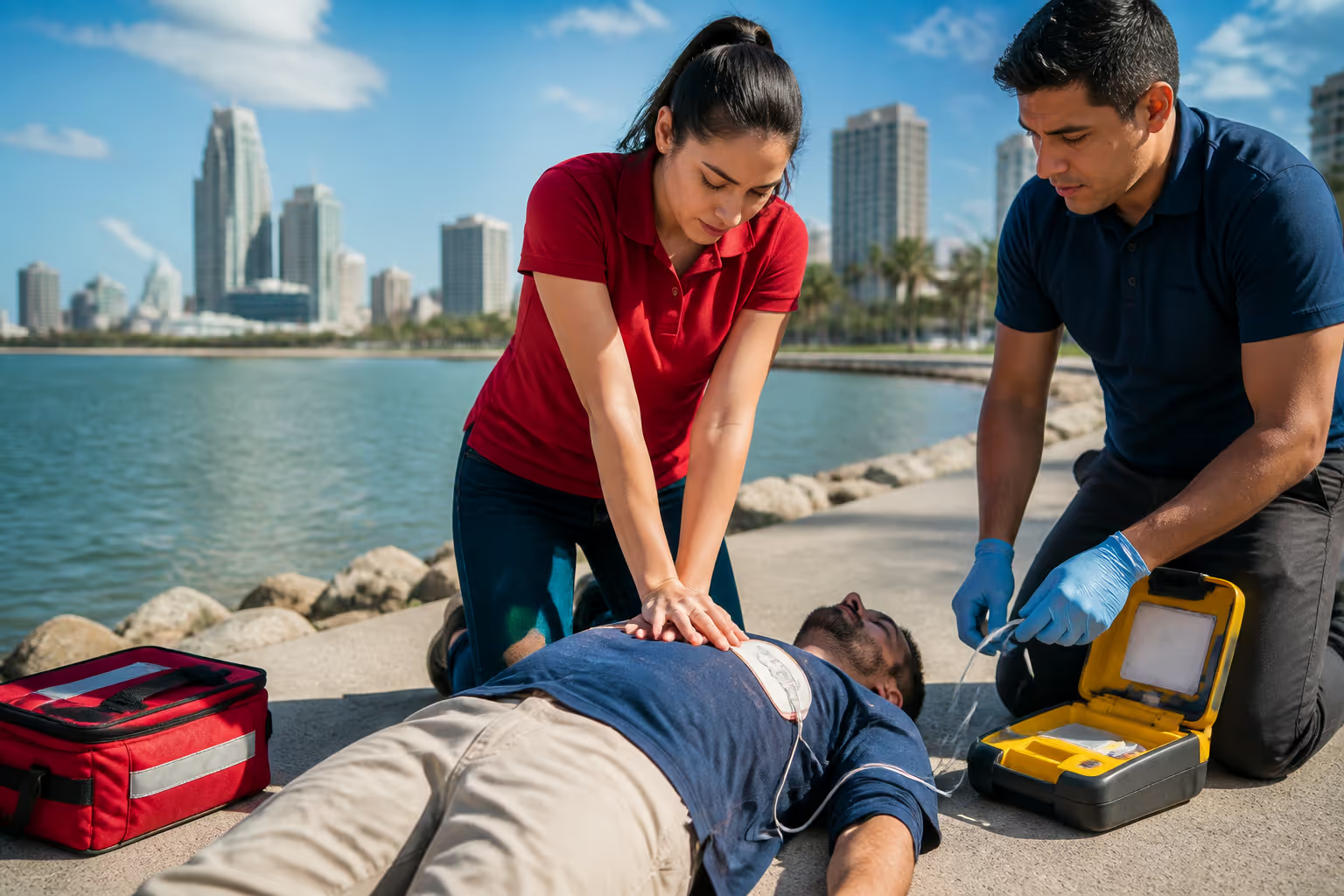
Understand how to safely and effectively operate an Automated External Defibrillator (AED) for adults, children, and infants.
Learn how to perform the Heimlich maneuver and clear airway obstructions caused by choking in both adults and infants.
Gain experience working as part of a team when more than one rescuer is available during an emergency.
Receive your AHA CPR Certification E-Card on the same day you complete the class and pass the exam.

CPR Certification Labs provides professional CPR and emergency training courses based on recognized industry standards.