Offer ends October 18.
This is some text inside of a div block.
Restart a Heart BLS Sale
RESTART99
Copy code

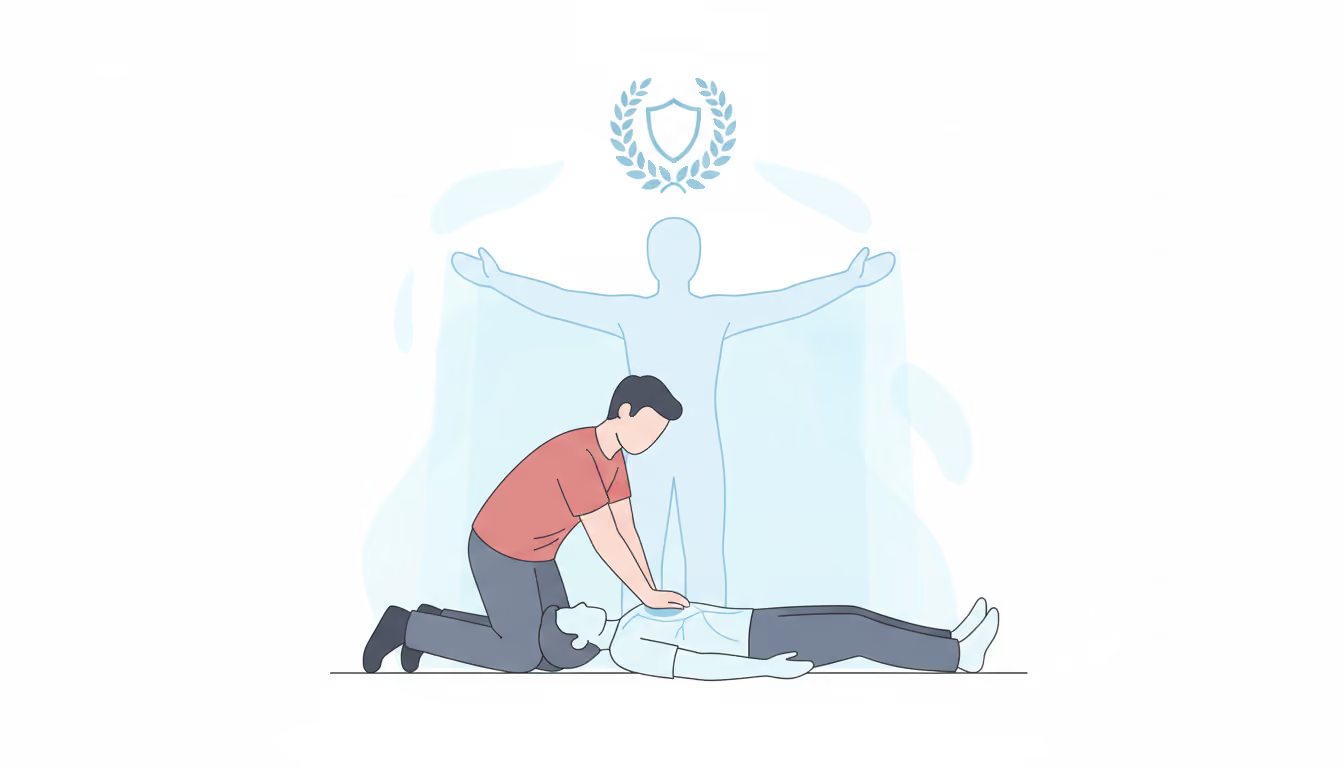
Hyperventilation is breathing that is faster or deeper than the body requires, causing carbon dioxide levels in the blood to fall. It can result from anxiety or panic, but also from serious conditions such as infection, lung disease, metabolic disturbances, or response to pain, so it should never be dismissed without assessment.
In resuscitation, excessive ventilation is specifically harmful: delivering too many breaths or too much volume raises pressure in the chest, reduces blood return to the heart, and lowers the effectiveness of chest compressions. For this reason, CPR guidelines emphasize controlled, measured breaths that produce just visible chest rise rather than rapid or forceful ventilation.
CPR Certification Labs provides hands-on, American Heart Association–aligned CPR, BLS, ACLS, and PALS certification training to help providers master these life-saving skills.
Our technology delivers immediate, actionable feedback that refines your skills in real time.
Understand how to safely and effectively operate an Automated External Defibrillator (AED) for adults, children, and infants.
Learn how to perform the Heimlich maneuver and clear airway obstructions caused by choking in both adults and infants.
Gain experience working as part of a team when more than one rescuer is available during an emergency.
Receive your AHA CPR Certification E-Card on the same day you complete the class and pass the exam.

CPR Certification Labs provides professional CPR and emergency training courses based on recognized industry standards.