Offer ends October 18.
This is some text inside of a div block.
Restart a Heart BLS Sale
RESTART99
Copy code

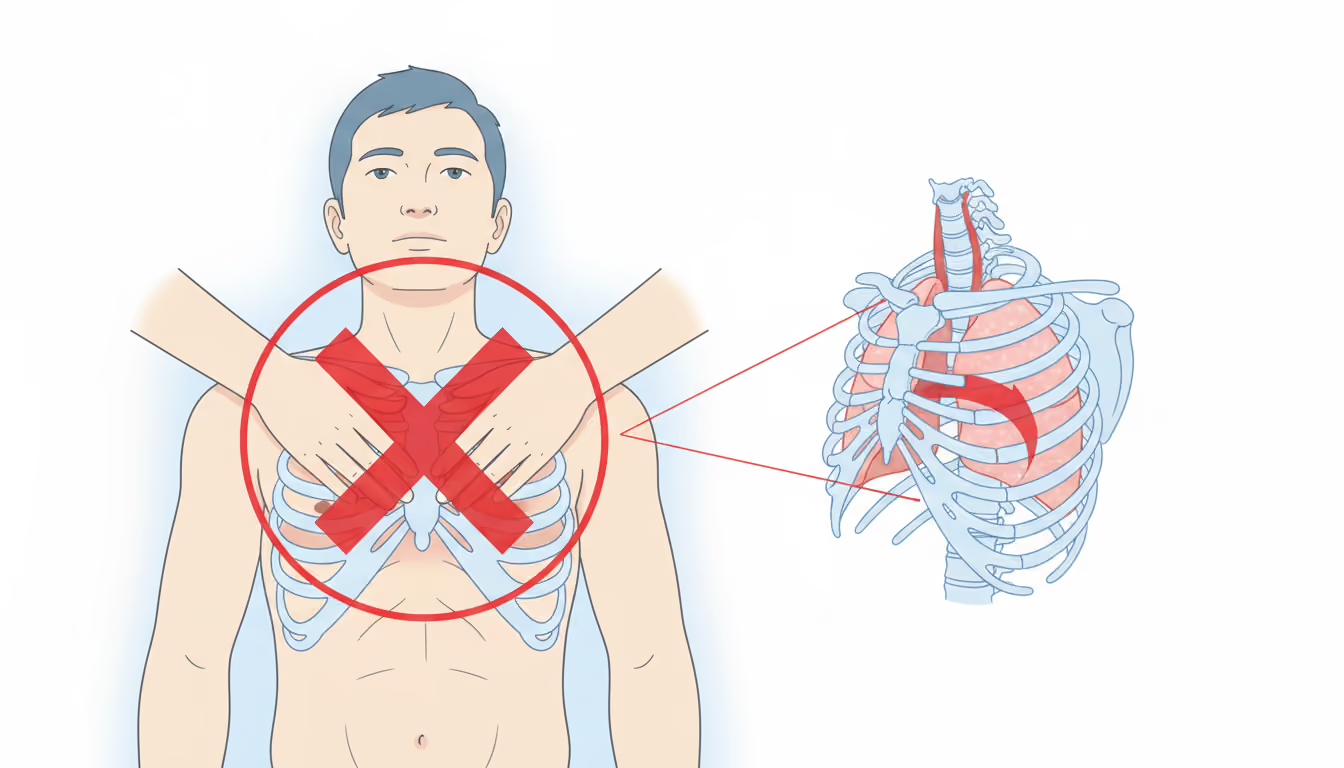
Contraindication:This term refers to a situation where a specific treatment or procedure might be unsuitable or risky. Contraindications can be classified as either absolute or relative. An absolute contraindication means that a treatment or procedure should not be performed under any circumstances. For instance, giving aspirin to children is generally avoided due to the risk of developing Reye syndrome. On the other hand, a relative contraindication suggests that a treatment or procedure might be inadvisable but not entirely ruled out. An example of this is the use of X-rays during pregnancy, which is generally avoided unless absolutely necessary, due to potential risks to the developing fetus. Contraindications often underscore the importance of weighing the risks against the potential benefits of a treatment or procedure.
Our technology delivers immediate, actionable feedback that refines your skills in real time.
Understand how to safely and effectively operate an Automated External Defibrillator (AED) for adults, children, and infants.
Learn how to perform the Heimlich maneuver and clear airway obstructions caused by choking in both adults and infants.
Gain experience working as part of a team when more than one rescuer is available during an emergency.
Receive your AHA CPR Certification E-Card on the same day you complete the class and pass the exam.

CPR Certification Labs provides professional CPR and emergency training courses based on recognized industry standards.