Offer ends October 18.
This is some text inside of a div block.
Restart a Heart BLS Sale
RESTART99
Copy code

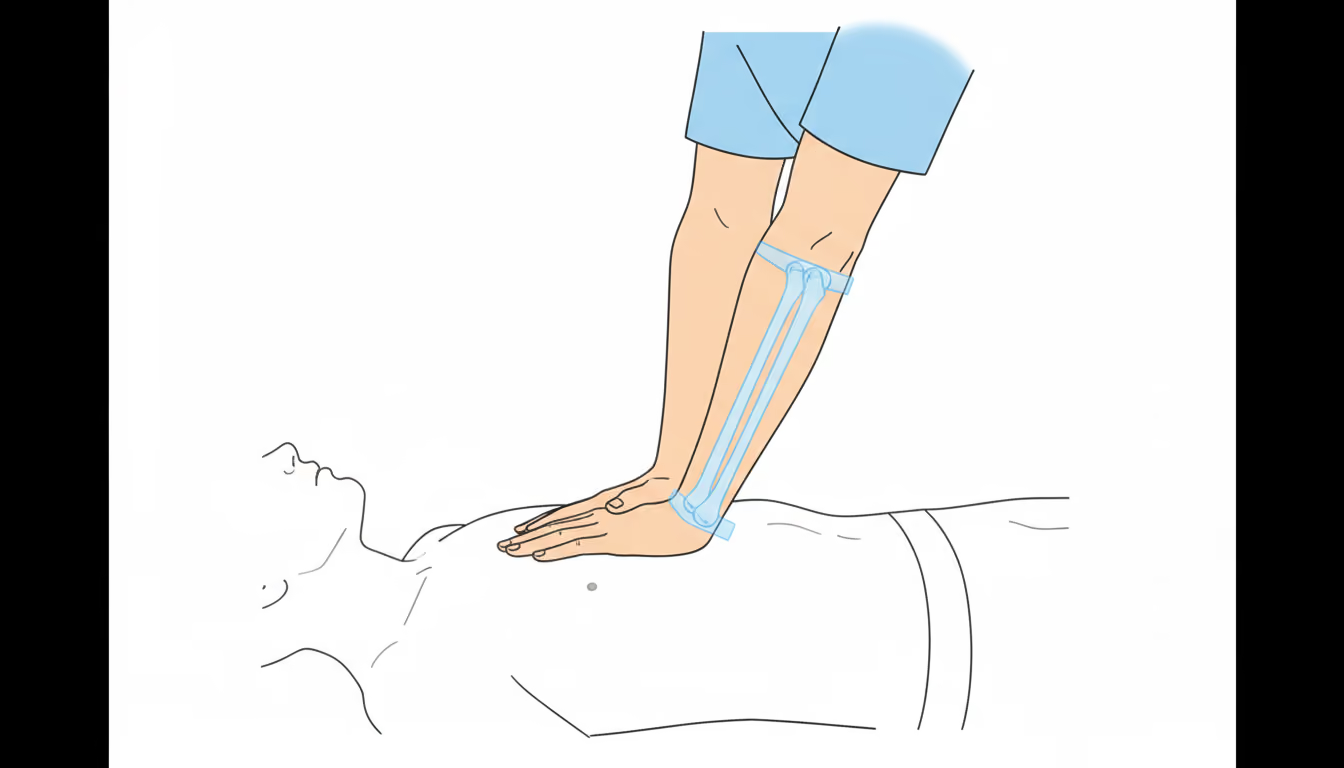
Elbow: The elbow is the point where the long bones of the upper arm connect. Here, the humerus, which is the bone of the upper arm, joins with the ulna (the inner bone of the forearm) and the radius (the outer bone of the forearm), creating a hinge joint. This joint allows the arm to move forward and backward like a hinge and also enables a slight rotation of the forearm. The biceps muscle is primarily responsible for bending the elbow, while the triceps muscle is key in straightening it. Stability of the elbow primarily comes from the ulnar ligament located on the inner side of the elbow. The outer bony part of the elbow is known as the epicondyle, a section of the humerus. Tendons attached to this area can become injured, leading to inflammation or tendonitis, commonly referred to as lateral epicondylitis or tennis elbow. Meanwhile, the inner part of the elbow features a bony prominence called the medial epicondyle of the humerus, where additional muscle tendons attach. Injury to these tendons can also result in inflammation or tendonitis, known as medial epicondylitis or golfer's elbow.
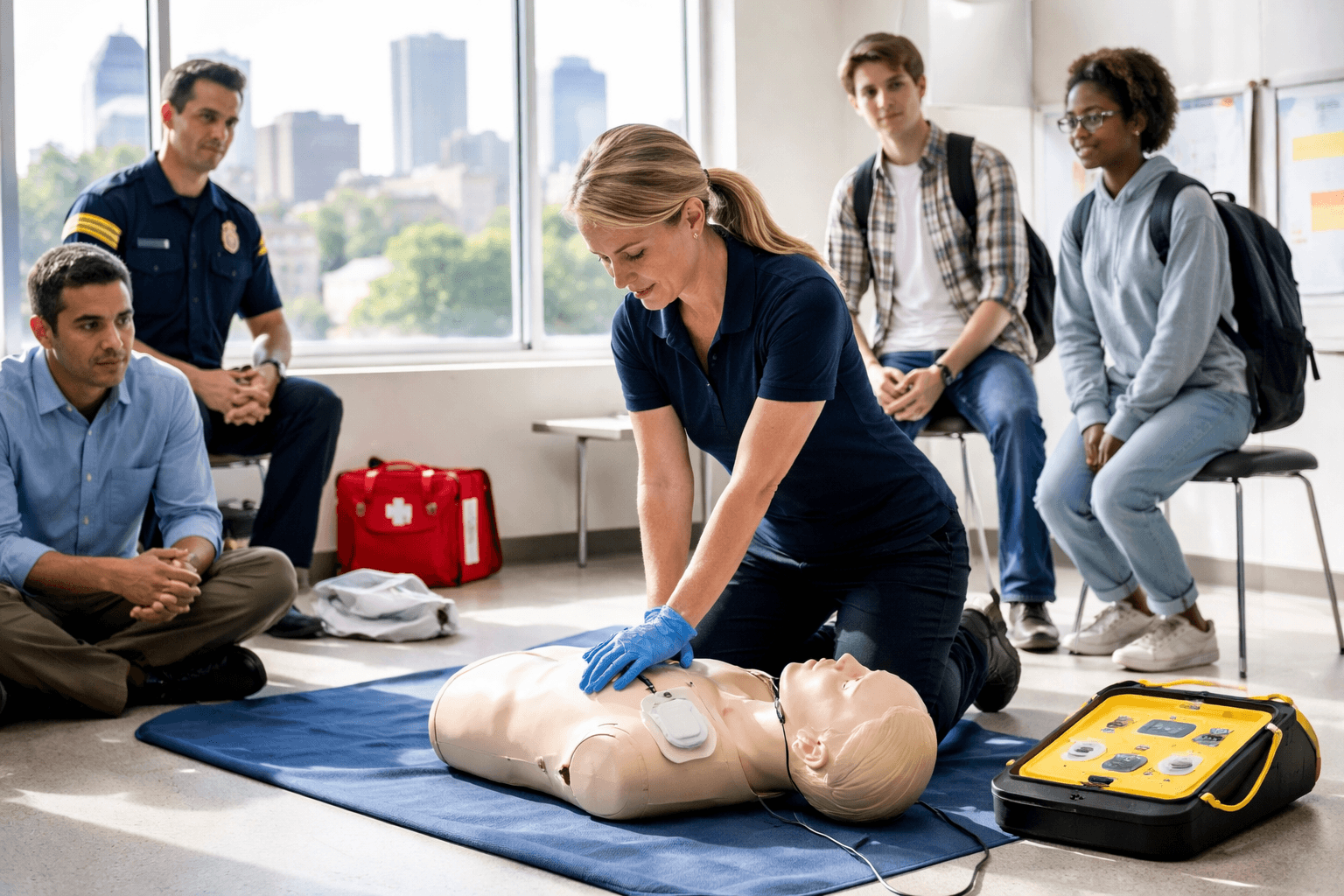
Our technology delivers immediate, actionable feedback that refines your skills in real time.
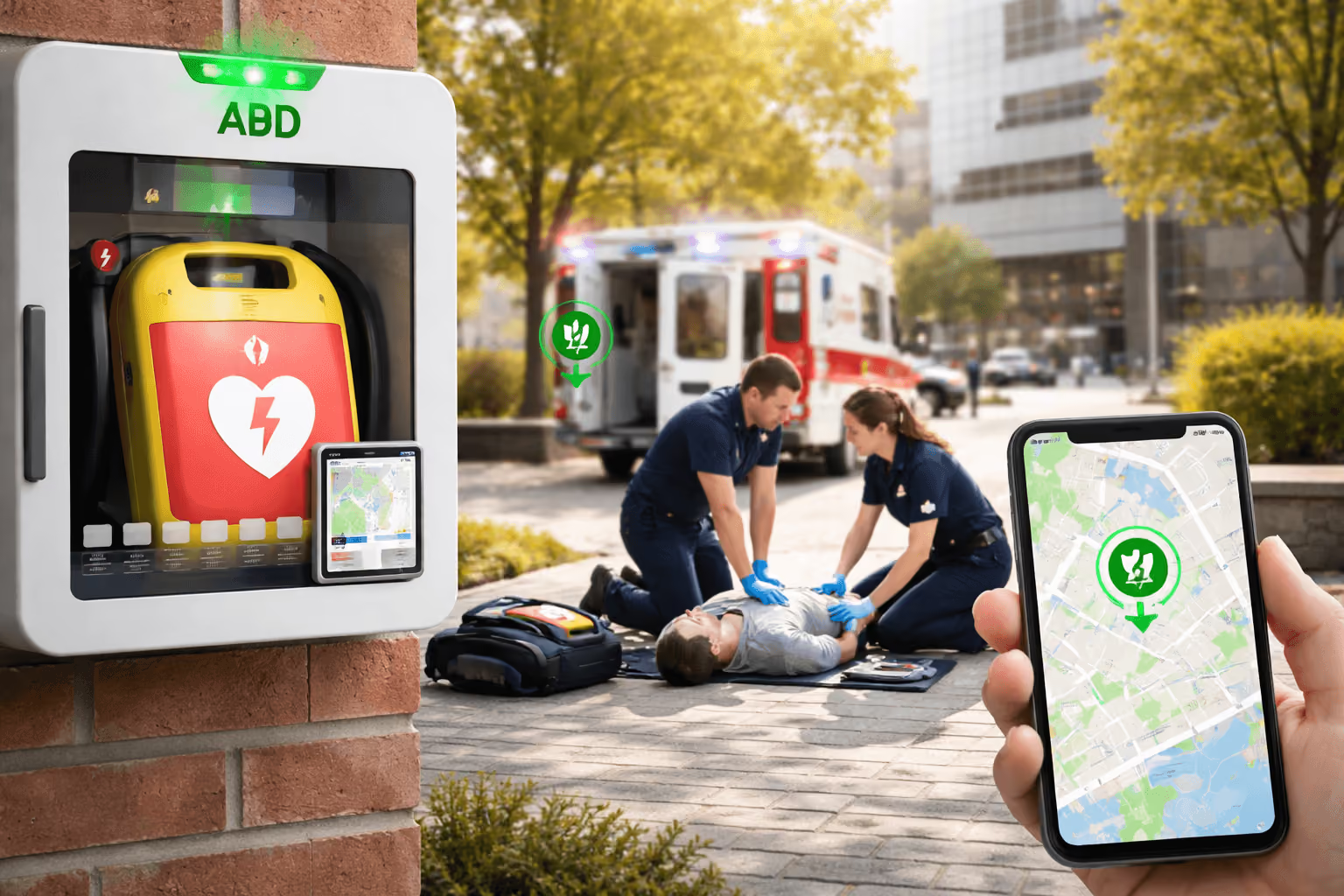
Understand how to safely and effectively operate an Automated External Defibrillator (AED) for adults, children, and infants.
Learn how to perform the Heimlich maneuver and clear airway obstructions caused by choking in both adults and infants.
Gain experience working as part of a team when more than one rescuer is available during an emergency.
Receive your AHA CPR Certification E-Card on the same day you complete the class and pass the exam.

CPR Certification Labs provides professional CPR and emergency training courses based on recognized industry standards.