Offer ends October 18.
This is some text inside of a div block.
Restart a Heart BLS Sale
RESTART99
Copy code


Periodic abstinence, often referred to as fertility awareness, natural family planning, or the rhythm method, involves avoiding sexual intercourse during the days in a woman's menstrual cycle when pregnancy is possible. Alternatively, a barrier method like a condom or diaphragm might be used on those days. Given that sperm can survive in the female reproductive tract for up to seven days and an egg is viable for around 24 hours, a woman has a significant fertile window—from seven days before ovulation to three days after. Estimating a woman's fertile period typically relies on tracking her menstrual cycle, observing changes in cervical mucus, or monitoring shifts in body temperature. However, this method of birth control carries a high risk of failure, potentially leading to pregnancy.
Our technology delivers immediate, actionable feedback that refines your skills in real time.
Understand how to safely and effectively operate an Automated External Defibrillator (AED) for adults, children, and infants.
Learn how to perform the Heimlich maneuver and clear airway obstructions caused by choking in both adults and infants.
Gain experience working as part of a team when more than one rescuer is available during an emergency.
Receive your AHA CPR Certification E-Card on the same day you complete the class and pass the exam.
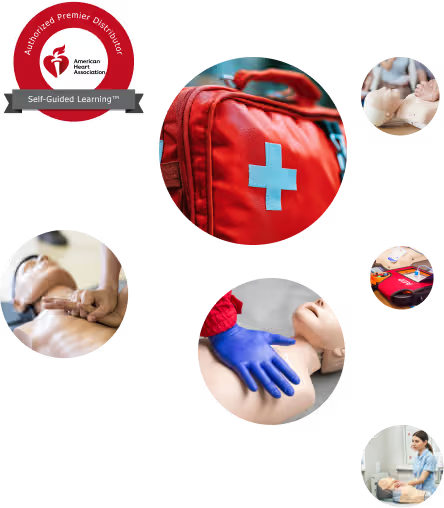

CPR Certification Labs provides professional CPR and emergency training courses based on recognized industry standards.