Offer ends October 18.
This is some text inside of a div block.
Restart a Heart BLS Sale
RESTART99
Copy code


Bipolar disorder, also referred to as a mood disorder or depressive illness, is characterized by alternating periods of depression and elevated mood, or mania. These mood shifts may occur rapidly and dramatically, though they often develop more slowly, with periods of stable mood appearing between the manic and depressive episodes. The symptoms associated with both phases can be intense, frequently leading to difficulties in daily functioning.Both manic and depressive states have detrimental effects. During manic episodes, individuals may experience impaired thinking, judgment, and social behavior, potentially resulting in problematic situations, such as making poor business or financial choices. On the other hand, depressive episodes can also negatively impact thinking, judgment, and social interactions, significantly increasing the risk of suicide. Approximately 5.7 million American adults, or about 2.6% of those aged 18 and older, are affected by this disorder.Without treatment, bipolar disorder often worsens over time. However, with appropriate care, most individuals can manage their mood fluctuations and alleviate symptoms. Treatment typically involves medications called "mood stabilizers." For more information, see: Manic-depression.
Our technology delivers immediate, actionable feedback that refines your skills in real time.
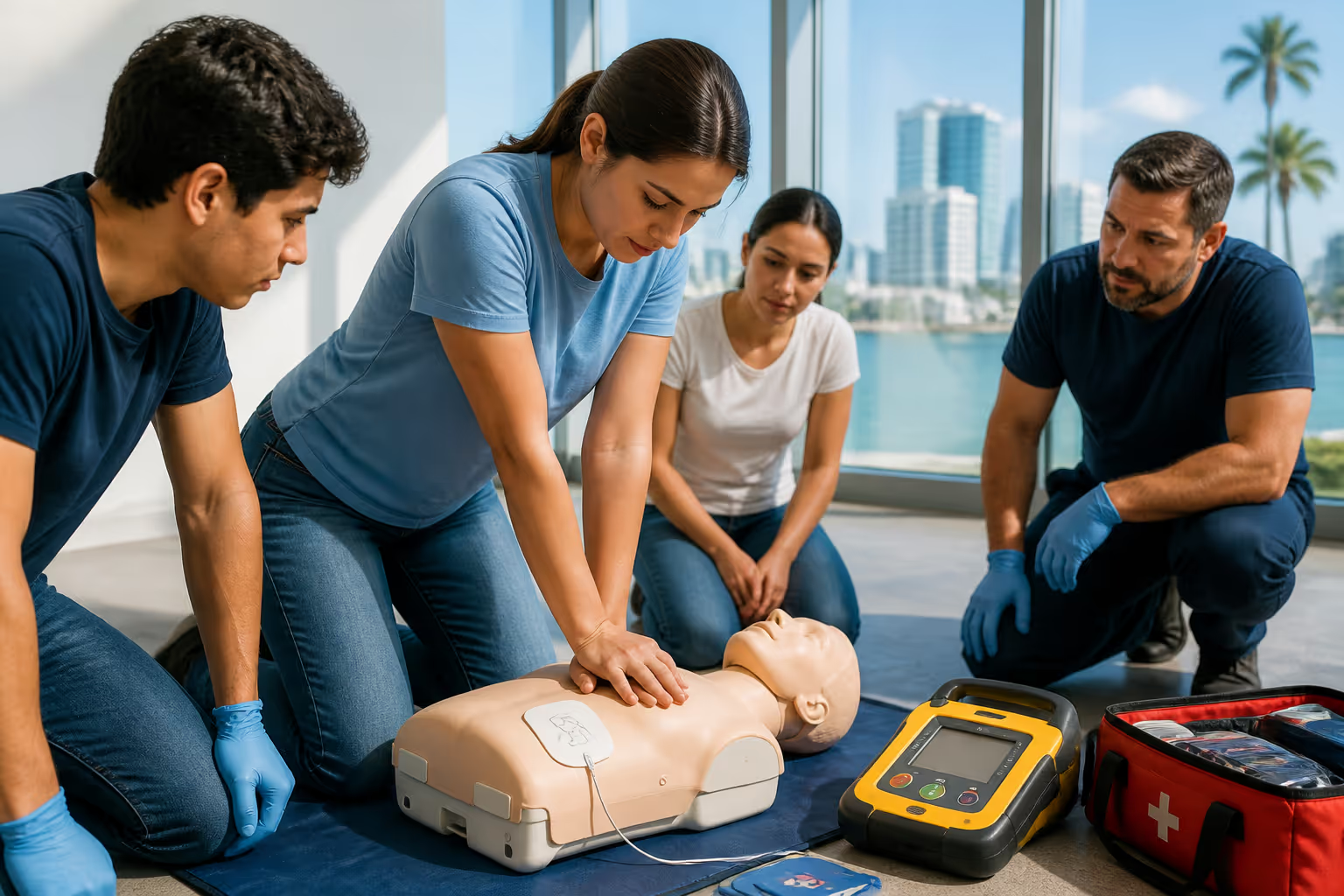
Understand how to safely and effectively operate an Automated External Defibrillator (AED) for adults, children, and infants.
Learn how to perform the Heimlich maneuver and clear airway obstructions caused by choking in both adults and infants.
Gain experience working as part of a team when more than one rescuer is available during an emergency.
Receive your AHA CPR Certification E-Card on the same day you complete the class and pass the exam.

CPR Certification Labs provides professional CPR and emergency training courses based on recognized industry standards.