Houston AED training and the lesson from Landon Payton’s case
Houston AED training matters because a school cardiac emergency can unfold in seconds, and the first response often determines whether help arrives in time. In the case of Houston ISD student Landon Payton, reporting by Houston Public Media and later records raised urgent questions about AED readiness, CPR response, and what schools should have in place before an emergency happens.
For Houston families, educators, and healthcare professionals, the main takeaway is direct: a school needs more than a device on the wall. It needs a working AED, staff who know how to use it, a plan for CPR, and a clear path to call 911 without delay.
What the reporting and records show
According to Houston Public Media, Landon Payton collapsed during P.E. class at Marshall Middle School and later died. His family still does not have a definitive cause of death, and an autopsy reviewed by the Harris County Institute of Forensic Sciences did not settle the question. That uncertainty has kept attention on whether emergency response at the campus was fast and effective enough.
Reporting also noted concerns about AED maintenance in Houston ISD. The district acknowledged that some AEDs were not working, and records obtained by Houston Public Media showed the gym AED at Marshall Middle School had expired electrode pads in an inspection months before Payton’s death. Those details do not answer every question about the case, but they do show why inspection logs and equipment checks matter.
For readers following this story, the relevant issue is not speculation. It is readiness. If an AED is required on campus, it must actually be usable when a student, staff member, or visitor collapses.
Houston AED training for school emergency response
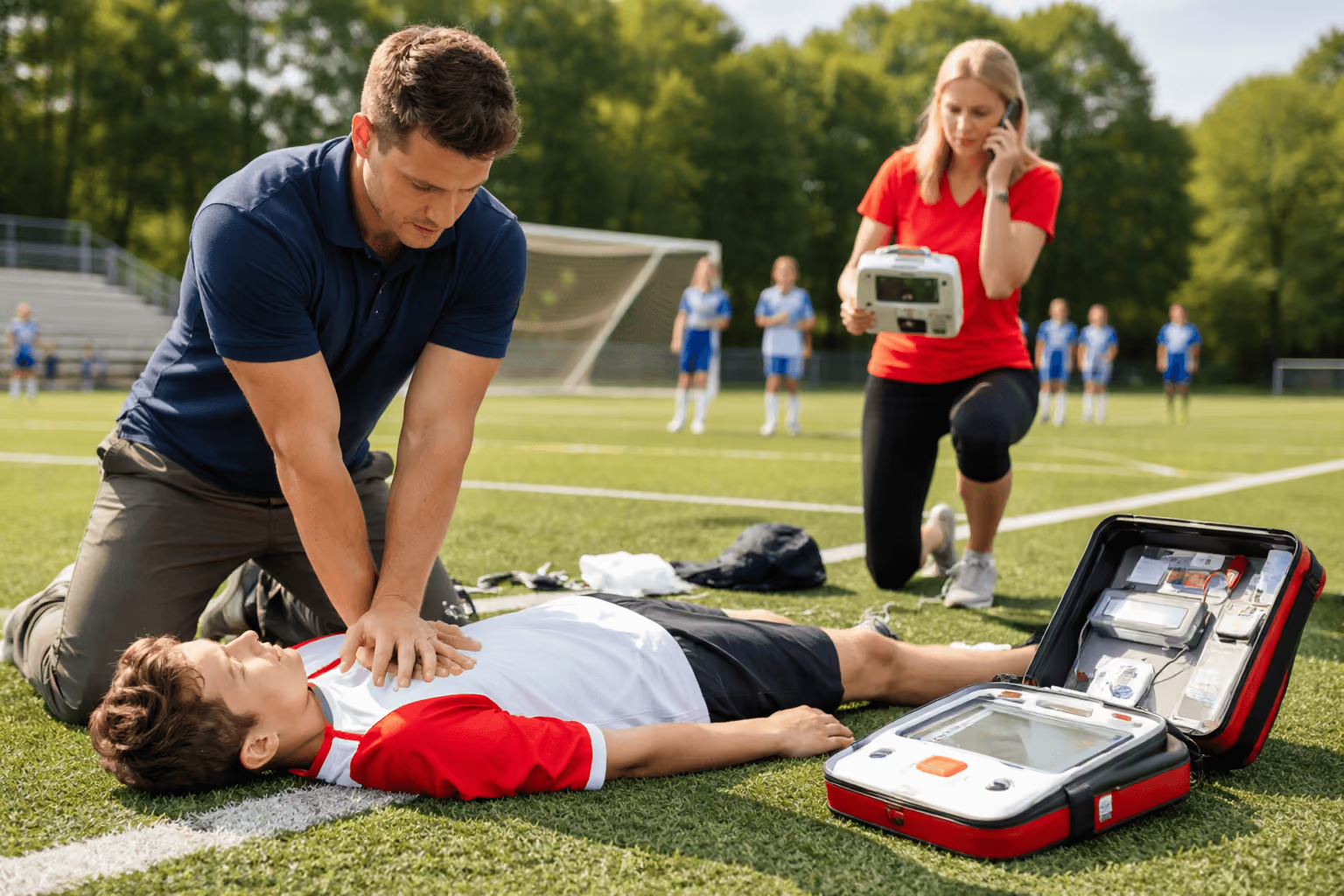
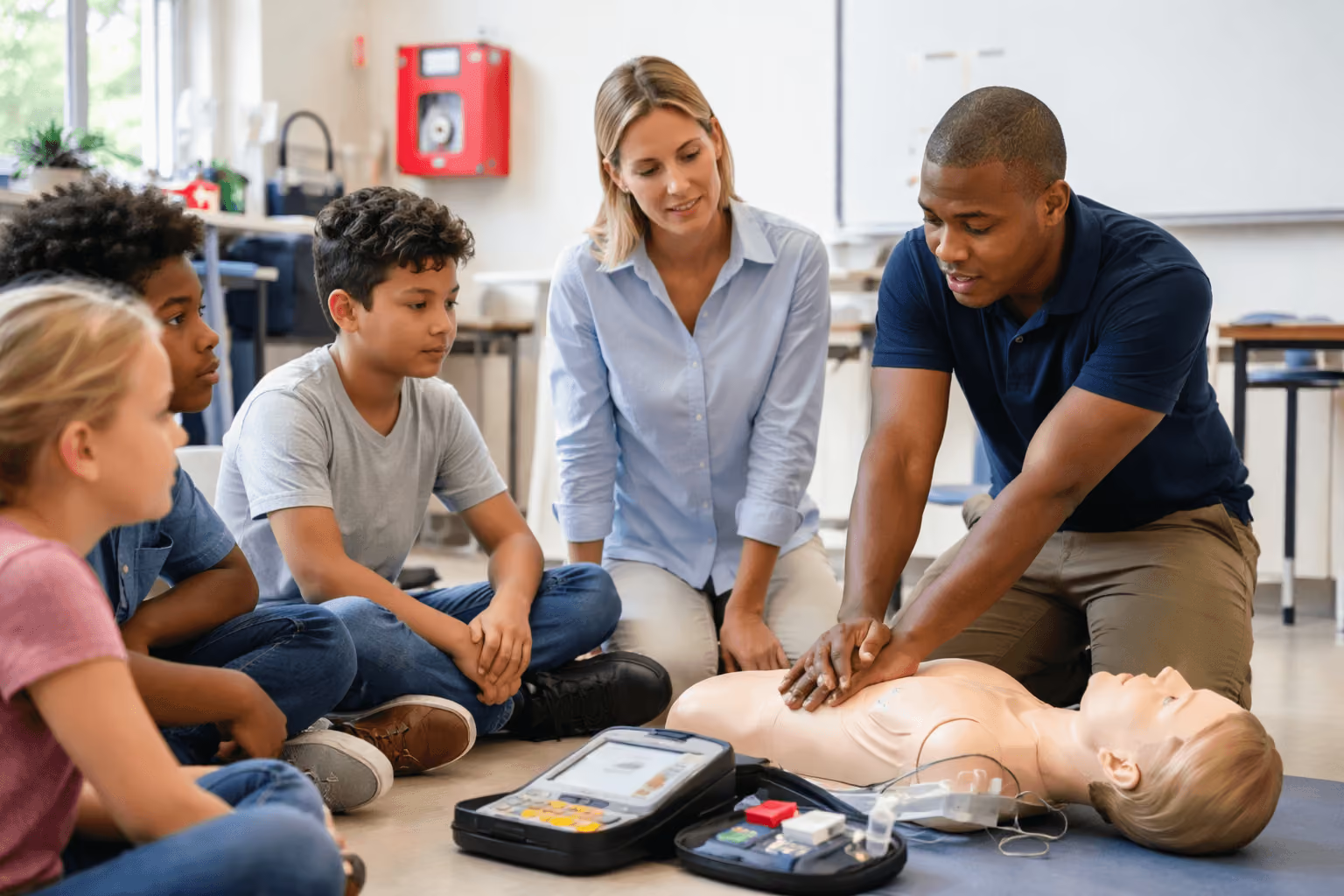
Houston AED training helps staff understand how to respond when someone suddenly becomes unresponsive. In a school environment, that response should be simple and practiced: recognize the emergency, start CPR if the person is not breathing normally, send someone to retrieve the AED, and call 911 immediately.
Here is a practical checklist for a school cardiac emergency:
- Check for responsiveness and normal breathing.
- Call 911 or direct someone else to call 911.
- Begin CPR if the person is not breathing normally.
- Bring the nearest AED to the scene as quickly as possible.
- Follow the device prompts and continue care until emergency responders arrive.
This checklist is simple on purpose. In a real emergency, people do not need complicated instructions first. They need a calm sequence that supports CPR, AED use, and fast communication.
How AEDs fit into the chain of survival
An AED is designed to analyze the heart rhythm and deliver a shock if the device identifies a shockable rhythm. It is used alongside CPR, not instead of it. That is why trained responders matter as much as the equipment itself. A device in the building is only helpful if someone can find it, use it, and trust that it works.
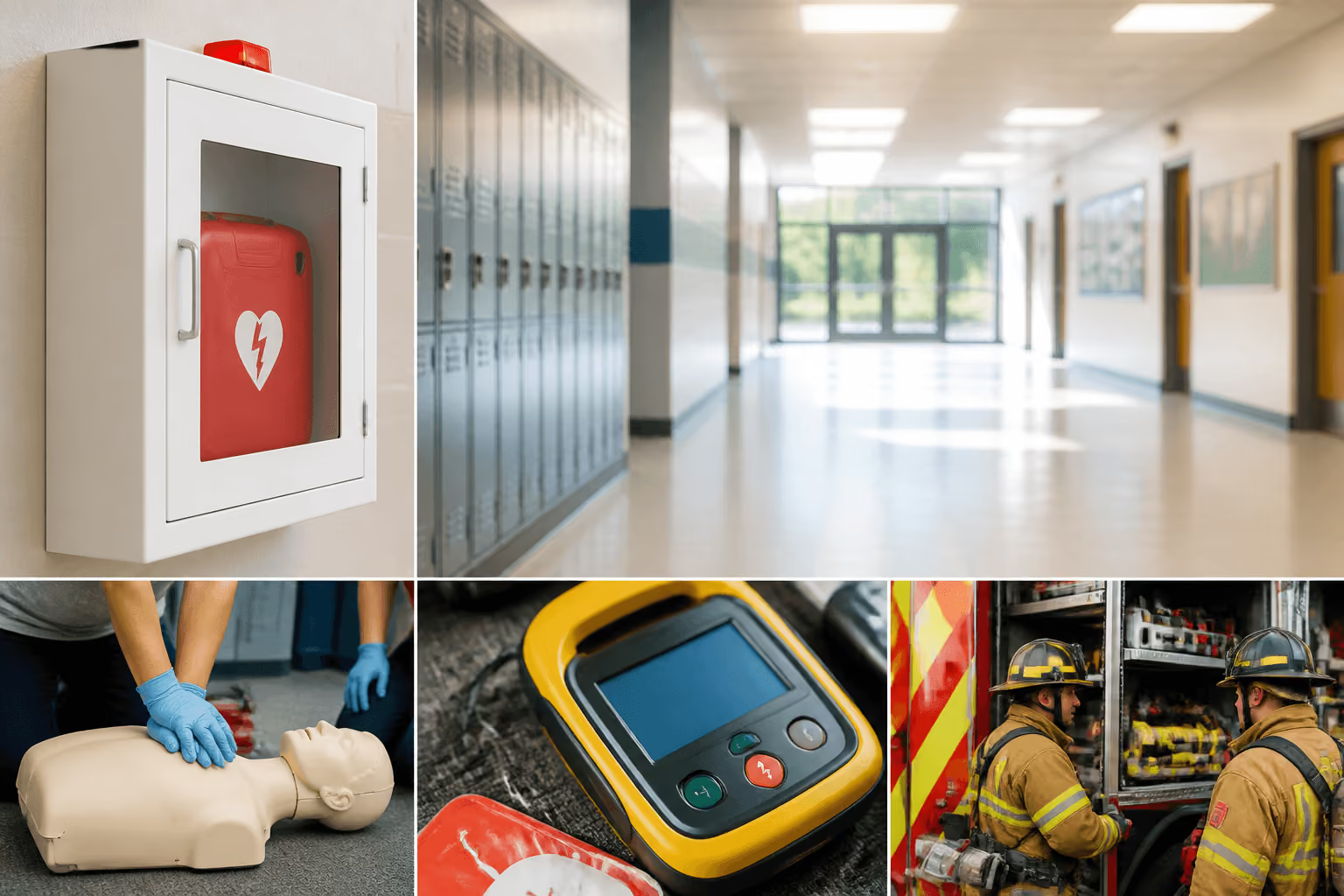
In schools, coaches, teachers, office staff, and athletic personnel may all be part of the emergency response. When more people know where the AED is located and how to operate it, the response can begin sooner and with less confusion.
Why this case is a local reminder for Houston schools
Houston is a large city with busy campuses, sports programs, after-school activities, and community events. Those settings bring people together, but they also mean emergencies can happen in front of many witnesses who may not know what to do. That is why local preparedness is so important.
Payton’s case has also been linked in public discussion to the broader push for stronger school safety standards in Texas, including more AED and CPR training in schools. For Houston readers, the lesson is practical: emergency response planning should be reviewed before a crisis, not after one.
This article is for general educational purposes only and is not a substitute for professional medical advice, diagnosis, treatment, or certified CPR training. In an emergency, call 911 immediately.
Who should take CPR and AED training
Houston AED training is useful for a wide range of people, especially those who may be first on scene during a medical emergency. That includes:
- Teachers and school administrators
- Coaches and athletic staff
- School nurses and support staff
- Childcare providers
- Office teams and workplace responders
- Healthcare professionals who want a refresher in emergency response
Training is also valuable for parents and community members who want to be ready in everyday settings. A sudden cardiac arrest can happen at school, in a gym, at a field trip, or in a public building. CPR and AED skills help ordinary bystanders become prepared responders.
What better AED readiness looks like
Based on the concerns raised in this case, schools can strengthen readiness by making sure AEDs are inspected on schedule, replacement parts are current, and staff know exactly where equipment is stored. Clear documentation matters because it shows whether a campus is maintaining its devices instead of assuming they are ready.
Schools should also make sure response roles are clear. If one person calls 911, another should bring the AED, and another should begin CPR. That kind of coordination reduces delays and helps keep the emergency response organized.
For readers who want a broader overview of training options, CPR Certification Labs also offers information on North Houston CPR and AED training for local learners. You can also review our North Houston office page for location details and scheduling information.
Why CPR Certification Labs is a practical local choice
CPR Certification Labs focuses on clear instruction that helps people respond with confidence during CPR, AED, and first aid situations. For Houston-area learners, that means local access, straightforward training, and a format that supports busy professionals who need real-world skills.
Our training is designed for people who want to be ready at work, in school settings, or in the community. The goal is not complexity. The goal is preparedness: knowing what to do, when to do it, and how to work with emergency services when every second matters.
Nearby local relevance
For Houston-area families and staff near North Houston, emergency readiness is especially relevant in schools, gyms, recreation centers, and offices where many people gather each day. When a cardiac emergency happens, the fastest help often comes from the people already nearby.
That is why stories like Landon Payton’s continue to resonate locally. They remind us that AED maintenance, CPR practice, and emergency planning are not abstract requirements. They are part of everyday safety in Houston.
FAQ
What should schools do first in a cardiac emergency?
They should call 911, start CPR if the person is not breathing normally, and bring an AED to the scene as quickly as possible.
Why is AED maintenance so important?
An AED must be ready to use during an emergency. Regular checks help confirm the battery, pads, and device are working as intended.
Who benefits most from Houston AED training?
Teachers, coaches, school staff, childcare workers, office teams, and healthcare professionals all benefit because they may be first to respond.
Is CPR enough without an AED?
CPR is essential, but AED use can also be important in sudden cardiac arrest. The two work together as part of emergency response.
About our North Houston office
- Address: 2930 Cypress Grove Meadows Dr
- Phone: (346) 353 2291
- Email: houstonnorth@cprcertificationlabs.com
- Hours:
Monday – Sunday: 7am - 8pm