Houston AED failure and why school emergency response matters
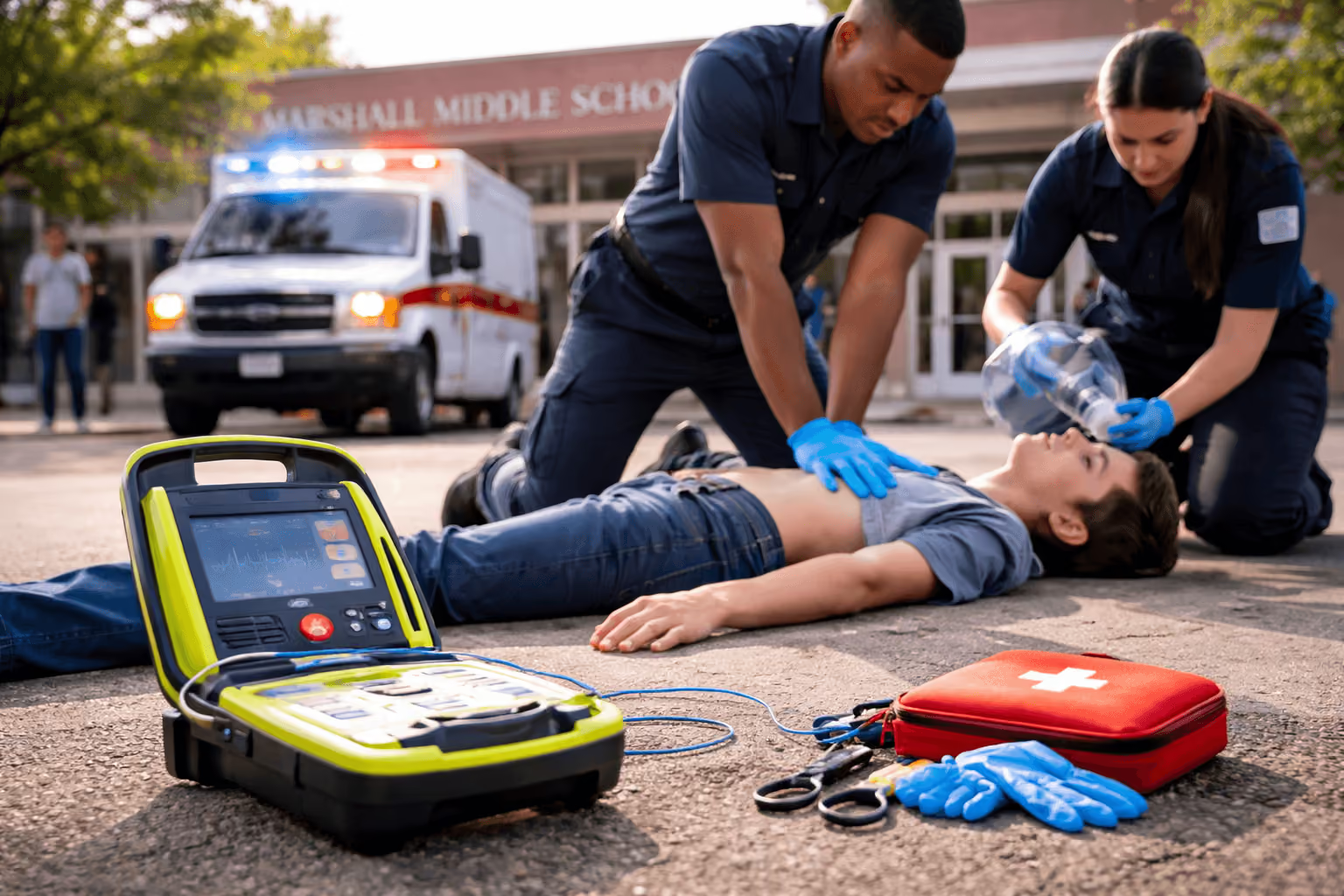
The reported Houston AED failure at Marshall Middle School has prompted new questions about how schools prepare for sudden medical emergencies. In a serious incident like this, the difference between confusion and a coordinated response can come down to training, equipment checks, and how quickly someone calls 911.
Local reporting said an eighth-grade student collapsed during gym class and staff attempted to help before paramedics were called. Houston ISD later confirmed the student died, and the district said a crisis response team remained on campus. The Houston Federation of Teachers also said staff were told the school defibrillator was not working, though the full details of the equipment issue have not been publicly confirmed.
This article is for general educational purposes only and is not a substitute for professional medical advice, diagnosis, treatment, or certified CPR training. In an emergency, call 911 immediately.
Verified details from the Houston AED failure report
Based on the reported incident, the following points are clear: a student medical emergency happened at Marshall Middle School, staff and students responded, emergency medical services were dispatched, and the student later died. Officials have not publicly explained what caused the collapse. Questions also remain about whether the AED on campus was functioning at the time or whether a backup unit had to be located.
That uncertainty is important because schools depend on fast access to CPR equipment and clear emergency roles. When a person collapses, responders should not spend valuable time searching for a device, waiting for a confirmation step, or debating who should make the next move.
For readers who want to review official guidance on cardiac arrest response, the American Heart Association provides a general overview of CPR and AED use at heart.org. The Red Cross also offers public information on first aid and emergency preparedness at redcross.org.
What a Houston AED failure teaches about CPR and AED readiness
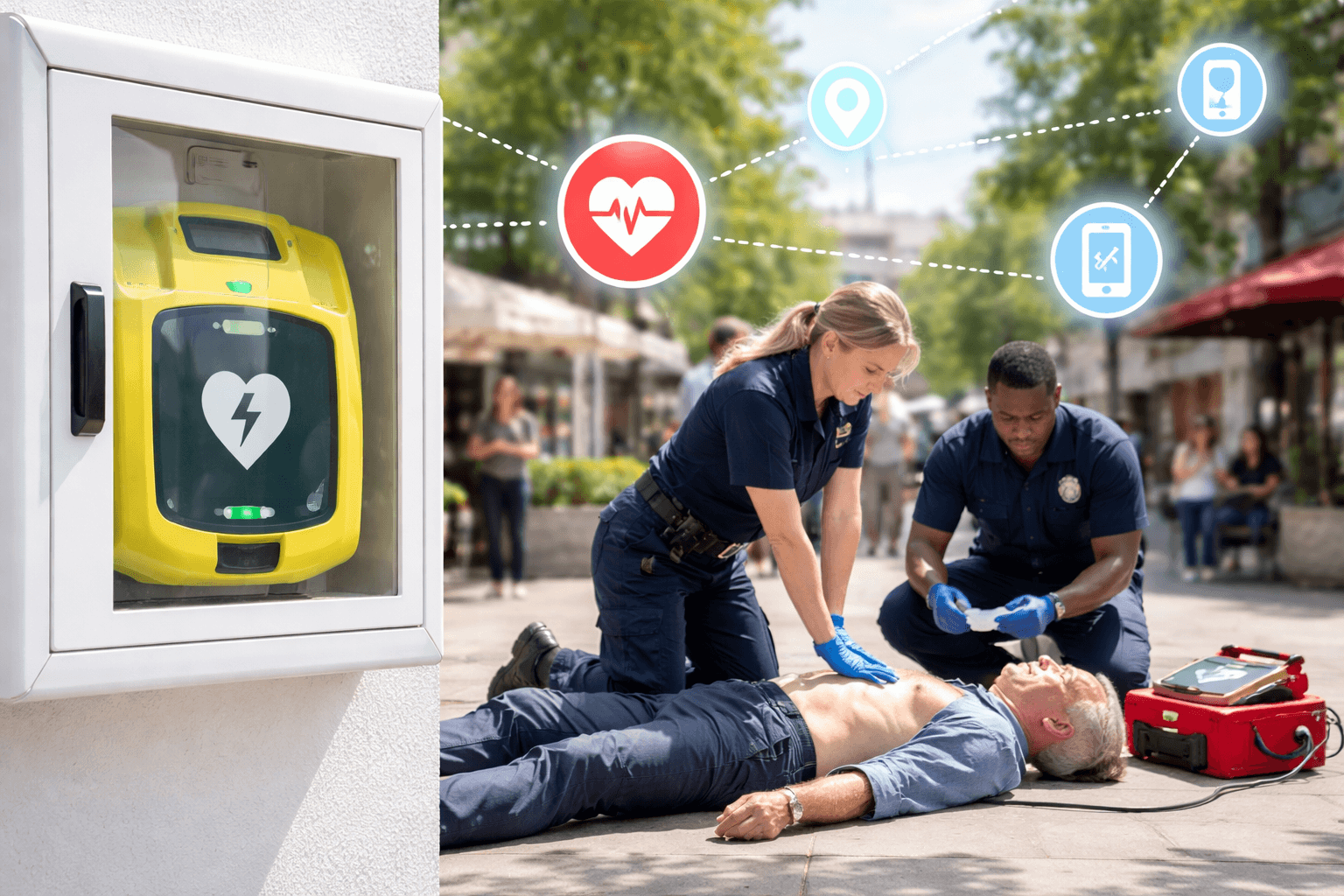
An AED is meant to support the response to certain sudden cardiac emergencies. It works best when staff know where it is, when it was last checked, and who is responsible for bringing it to the scene. If a device is missing, poorly maintained, or not functioning, the response can slow down at the exact moment speed matters most.
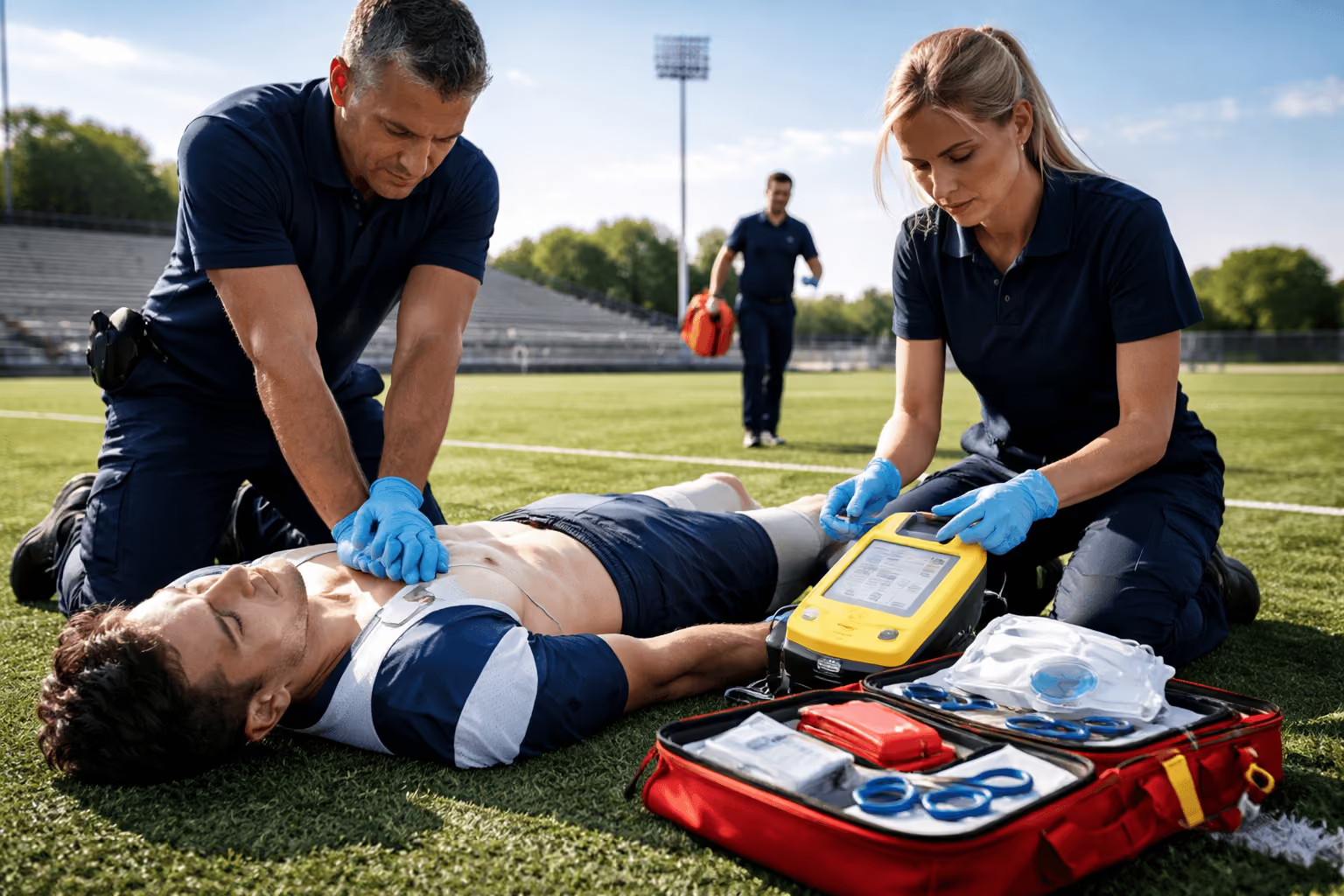
That is why CPR, AED access, and first aid planning should be treated as part of the same system. CPR helps maintain circulation while emergency responders are on the way. An AED can provide a shock when appropriate. Both depend on a calm, practiced response.
Practical readiness steps for schools and workplaces
- Post the exact location of each AED in hallways, offices, gyms, and common areas.
- Check battery status, pads, and readiness indicators on a regular schedule.
- Assign clear roles so one person calls 911, another starts CPR, and another retrieves the AED.
- Train multiple staff members in CPR, AED use, and basic first aid.
- Review emergency drills so the response is familiar before a real crisis happens.
Who should pay attention to a Houston AED failure
This issue matters to principals, teachers, coaches, school nurses, parents, athletic staff, and district leaders. It also matters to employers, church leaders, and community organizers who supervise groups where a sudden collapse could happen. If the AED is unavailable or not ready, the entire emergency response chain becomes weaker.
For healthcare professionals, the case reinforces a basic lesson: bystander response still matters before EMS arrives. For parents and families, it is a reminder to ask how schools maintain AEDs, how often staff train, and what happens if a child or adult stops responding in a hallway, classroom, or gym.
Why CPR and AED training remain important in Houston
Houston is a large city with busy schools, sports programs, workplaces, and public spaces. In any setting where many people gather, emergency response depends on preparation. CPR training helps people recognize an emergency and act without freezing. AED training helps them use the device correctly if one is needed.
Learning first aid, CPR, and AED basics can make a difference in how a team responds during a crisis. The goal is not to create alarm. The goal is to reduce delay, reduce confusion, and help people move from uncertainty to action.
For those looking for local training options, CPR Certification Labs offers classes for healthcare professionals and other adults who need practical instruction in CPR, AED, first aid, and BLS. You can review the North Houston office details here: North Houston office page.
Local relevance for Houston schools and nearby facilities
Incidents like this affect more than one campus. They shape how nearby schools, recreation centers, childcare programs, and offices think about emergency readiness. In Houston, every site that serves students or the public should know whether AEDs are accessible, whether staff can use them, and whether emergency contact steps are clear.
Marshall Middle School is a reminder that preparedness is not just about equipment on the wall. It is also about training, maintenance, and response discipline. A working AED, a person who knows CPR, and a fast call to 911 are all part of the same safety plan.
If your school or workplace needs a refresher on CPR, AED, or first aid, starting with a structured class can help staff build confidence and respond more effectively in a real emergency.
FAQ
What should happen first when someone collapses?
Check for responsiveness, call 911, begin CPR if the person is not breathing normally, and send someone to bring the nearest AED.
Why does AED maintenance matter?
An AED must be ready to use when needed. Regular checks help confirm that pads, batteries, and status indicators are in working order.
Is CPR still needed if an AED is available?
Yes. CPR and AED use work together. CPR helps maintain blood flow while the AED is retrieved and prepared.
Who benefits from CPR and first aid training?
School staff, coaches, office teams, healthcare workers, parents, and community leaders all benefit from knowing how to respond in an emergency.
About our North Houston office
- Address: 2930 Cypress Grove Meadows Dr
- Phone: (346) 353 2291
- Email: houstonnorth@cprcertificationlabs.com
- Hours:
Monday – Sunday: 7am - 8pm