Houston AED emergency at Marshall Middle School
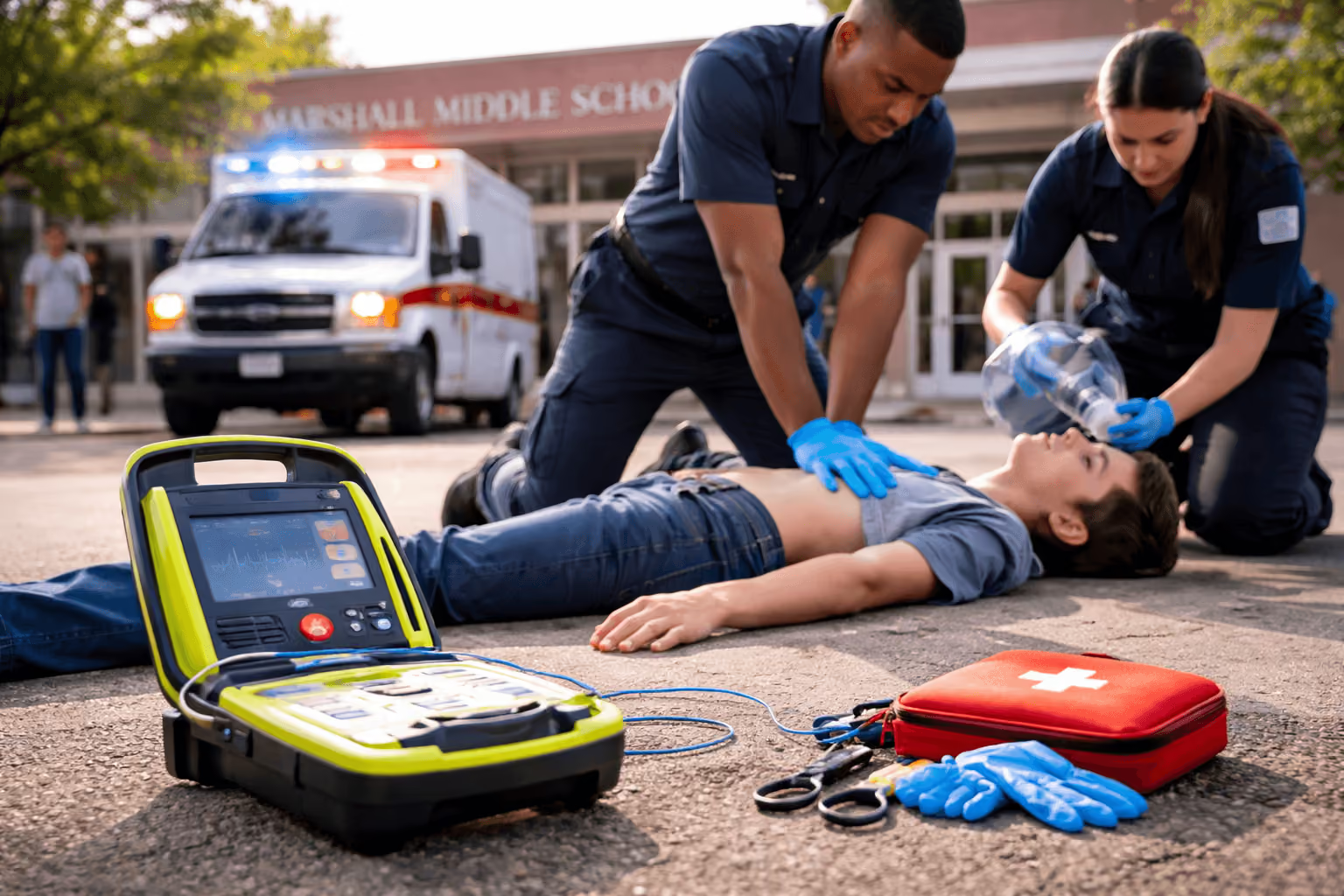
A Houston AED emergency at a school can become life-threatening in seconds, which is why the recent student collapse at Marshall Middle School has raised serious questions about readiness, response time, and equipment checks. When a young person suddenly becomes unresponsive, every second matters for CPR, AED access, and emergency response.
According to reports from the campus community, an eighth-grade student collapsed during gym class and staff attempted to help before paramedics arrived. The student was later reported dead, and the situation has prompted concern about whether the school’s defibrillator was working at the time it was needed.
Why AED readiness matters in a school setting
An AED, or automated external defibrillator, is designed to deliver a shock if a person is in a shockable cardiac rhythm. It is one part of a broader emergency response plan, and it is most effective when it is available quickly and used by trained responders. In a school, that means equipment should be checked, staff should know where it is located, and teams should be ready to move fast if someone collapses.
Schools are busy environments with students, coaches, teachers, and office staff all moving through the same spaces. A collapse in the gym, on a field, or in a hallway may look sudden and confusing. That is why CPR training and clear emergency procedures are so important. Staff do not need to diagnose the cause in the moment; they need to recognize the emergency, start appropriate response steps, and bring in the AED as quickly as possible.
What this Houston case teaches about emergency response
This incident is a reminder that emergency planning is not only about having a device on campus. It is also about making sure the device works, backups are accessible, and people know the chain of response. If an AED is unavailable or not functioning, staff may lose valuable time while waiting for another unit or for EMS to arrive.
That is why schools, workplaces, and public facilities should treat AED checks like essential safety tasks. In any Houston AED emergency, the response should be immediate, organized, and practiced. Clear access to first aid supplies, a working defibrillator, and trained personnel can support faster action while professional responders are on the way.
When to call 911
If someone collapses, is not breathing normally, or does not respond, call 911 right away. Do not wait to see if the person improves. Start CPR if you are trained, send someone for the AED, and follow the device prompts until EMS takes over. In a true emergency, the fastest response is the most important response.
This article is for general educational purposes only and is not a substitute for professional medical advice, diagnosis, treatment, or certified CPR training. In an emergency, call 911 immediately.
Who should think about CPR and AED training
Teachers, coaches, school nurses, administrators, office staff, and after-school program leaders can all benefit from CPR and AED training. Parents and volunteers may also want to understand basic first aid and emergency response steps, especially if they spend time around children or athletic activities.
Training is useful because emergencies do not always happen near a nurse’s office or front desk. A collapse may happen on a field, in the cafeteria, or during a class transition. People who are nearby may be the first to act, and that first action can matter.
Local relevance for Houston schools and families
Houston school communities often rely on multiple layers of support during an emergency: campus staff, district protocols, 911 dispatch, and paramedics. Events like this one show why AED maintenance and CPR readiness should be part of everyday safety planning, not only during annual reviews. When families ask about school safety, it is reasonable to ask where the AED is kept, who is trained to use it, and how often equipment is tested.
For Houston-area professionals who want to strengthen readiness, CPR Certification Labs serves the North Houston area from our North Houston office. We help healthcare workers and other professionals build confidence in CPR, AED use, and first aid skills that support a stronger emergency response culture.
Benefits of choosing CPR Certification Labs
CPR Certification Labs provides practical training for people who need clear, workplace-ready instruction. Our courses are designed to help participants understand core response steps, use an AED with confidence, and recognize when to activate EMS. We focus on straightforward instruction that supports real-world performance in schools, clinics, offices, and community settings.
- CPR training that supports fast action in emergencies
- AED instruction for school, workplace, and public settings
- First aid awareness for everyday incidents and urgent events
- Simple, professional instruction for healthcare and non-healthcare learners
- Convenient North Houston location for local professionals
Nearby facilities and local context
Marshall Middle School is part of the broader Houston ISD community, where school leaders, staff, and families all depend on strong emergency planning. In a city as large as Houston, responders may be managing multiple calls at once, so the first minutes on campus can be critical. That makes campus readiness, device maintenance, and staff training especially important in local schools and athletic programs.
When a student emergency happens, the focus should stay on immediate care, rapid communication, and support for the family and campus community. The larger lesson for Houston is simple: a working AED and trained responders should be part of every school’s safety foundation.
FAQ
What is an AED?
An AED is a device that analyzes a person’s heart rhythm and may deliver a shock if needed. It is used alongside CPR and emergency response efforts.
Why does AED maintenance matter?
If an AED is not working when needed, responders may lose time during a time-sensitive emergency. Regular checks help confirm the device is ready.
Who should learn CPR?
Anyone who works around children, patients, students, or large groups should consider CPR and AED training, including teachers, coaches, and healthcare staff.