Head-up CPR and why this study matters
Head-up CPR is drawing attention because new research suggests it may improve the chances that a patient survives cardiac arrest with better neurological outcomes. For clinicians, EMS teams, and healthcare facilities, that matters as much as restoring a heartbeat: protecting brain function during resuscitation is a major goal of modern emergency response.
The idea behind head-up CPR is straightforward. Instead of keeping the patient completely flat, responders use a controlled head and thorax elevation approach during CPR. The study discussed here found that this method was associated with better survival to discharge with neurologic intactness, especially when the intervention began early after the emergency call. It is an important reminder that CPR techniques continue to evolve as researchers look for ways to improve both survival and recovery.
Local context in Dallas-Oak Cliff
In Dallas and the Oak Cliff area, emergency response depends on fast recognition, early CPR, and rapid access to an AED. Whether the setting is a clinic, school, workplace, senior center, or community event, the first few minutes after a collapse often decide how much damage can be prevented before EMS arrives.
That is why local CPR and first aid training remain essential. In a city as active and spread out as Dallas, bystanders and healthcare professionals alike may be the first link in the chain of survival. When someone knows how to start CPR, use an AED, and work with emergency dispatch instructions, the patient has a better chance of receiving timely care.
What the study suggests about head-up CPR
The research behind head-up CPR combines several resuscitation tools. It uses controlled elevation of the head and chest along with active compression-decompression CPR and an impedance threshold device. The goal is to improve circulation to the brain while reducing pressure inside the skull during cardiac arrest care.
According to the study, this approach was linked with improved neurologic survival compared with conventional flat CPR. That does not mean every emergency scene can immediately switch to this method, but it does show where resuscitation science is heading: toward techniques that focus not only on getting the heart restarted, but also on protecting the brain during the process.
For CPR training programs, this is a good teaching moment. Rescuers should understand standard high-quality CPR first, including effective compressions, minimal interruptions, and rapid AED use. Newer methods such as head-up CPR belong in the broader conversation about advanced emergency response and resuscitation innovation.
Who should pay attention to this development
Head-up CPR is especially relevant for paramedics, EMTs, nurses, physicians, respiratory therapists, and other professionals involved in acute care. It is also useful for public safety leaders, workplace safety coordinators, and anyone responsible for emergency preparedness.
- Healthcare professionals who respond to cardiac arrest events
- EMS agencies reviewing resuscitation protocols
- Clinics, hospitals, and outpatient centers that train staff in CPR and AED use
- Employers building first aid and emergency response plans
- Community members who want to recognize cardiac arrest and act quickly
For all of these groups, the lesson is the same: effective CPR training is not static. As evidence changes, responders need current skills, current protocols, and regular refreshers.
Why CPR, AED, and first aid training still come first
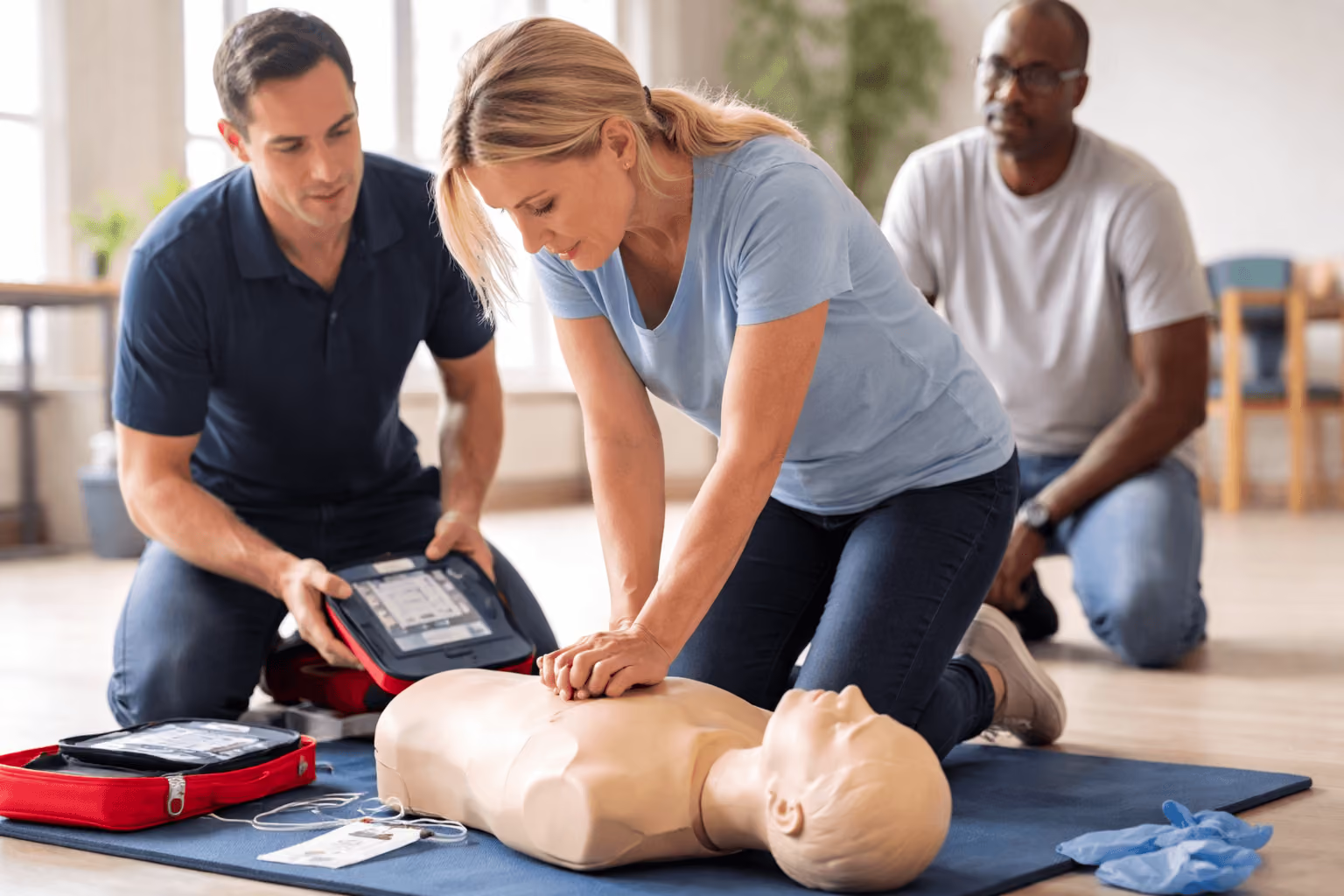
Even as head-up CPR research advances, the basics remain essential. High-quality chest compressions, immediate activation of emergency services, and early AED deployment are still the foundation of resuscitation. A person who collapses needs help right away, and every minute without CPR lowers the chance of a good outcome.
First aid knowledge also supports better emergency response before, during, and after a cardiac event. Recognizing distress, calling for help, bringing an AED, and clearing space for EMS can all save time. In many cases, that time is the difference between a poor outcome and a meaningful recovery.
If you are responsible for staff readiness, make sure your team knows how to respond to sudden collapse, severe choking, unresponsiveness, and other common emergencies. Training builds confidence, and confidence helps people act faster under stress.
Benefits of choosing CPR Certification Labs
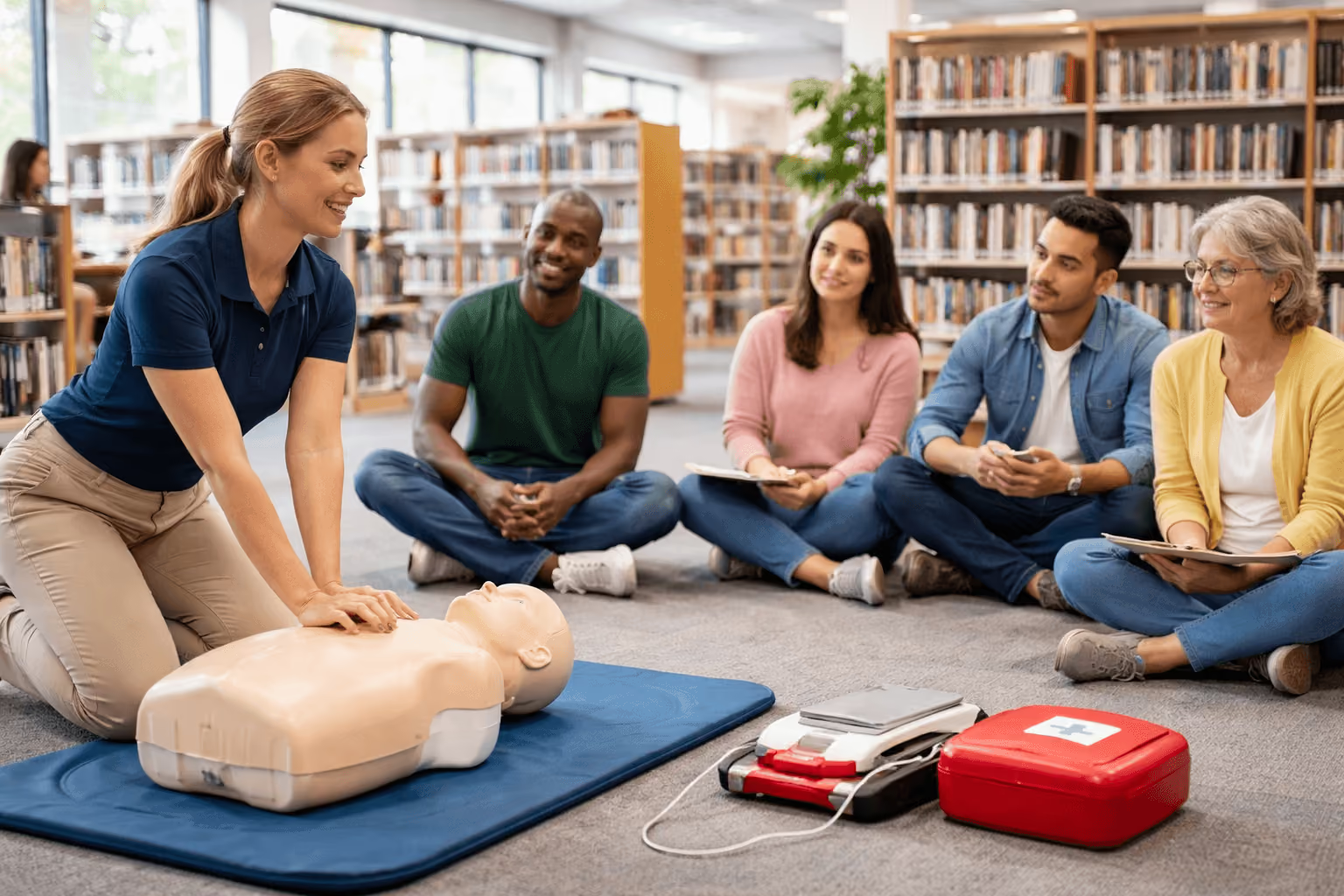
CPR Certification Labs offers practical training designed for healthcare professionals and other adult learners who need clear, current instruction. Courses focus on real-world emergency response skills, including CPR, AED use, and first aid concepts that can be applied in clinical and workplace settings.
For learners in the Dallas area, the Dallas - Oak Cliff office provides convenient access to training support at 5787 S Hampton Rd, Suite 430, Dallas, TX. The office is open 7am - 8pm / 7 Days a Week, making it easier to fit training into a busy schedule. If you are looking for local class options or office information, visit Dallas - Oak Cliff CPR Certification Labs.
Choosing a local training provider can make it easier to stay current, renew skills on time, and keep teams prepared for emergencies. That matters whether your setting is a hospital unit, private practice, rehab center, school health office, or community organization.
Practical emergency response reminders
When a person collapses and does not respond normally, act quickly. Check for safety, assess responsiveness, and begin CPR if the person is unresponsive and not breathing normally. Ask someone to get an AED immediately and follow the device prompts as soon as it arrives.
If you are in doubt, call 911 and follow dispatcher instructions. Emergency dispatchers can help guide responders through CPR until EMS takes over. In cardiac arrest, speed matters, and waiting for symptoms to get worse can cost valuable time.
This article is for general educational purposes only and is not a substitute for professional medical advice, diagnosis, treatment, or certified CPR training. In an emergency, call 911 immediately.
Why the study matters for the future of resuscitation
Head-up CPR is a reminder that resuscitation science continues to improve. Researchers are looking for ways to increase survival while also protecting neurologic function, which is especially important after prolonged cardiac arrest. While conventional CPR remains the standard starting point for most responders, innovations like this may shape future protocols and equipment.
For now, the most practical step is to keep training current, practice CPR and AED skills regularly, and make sure emergency response plans are ready before an event happens. Strong fundamentals remain the best defense in the first minutes of cardiac arrest.
Healthcare teams, employers, and community leaders in Dallas can prepare now by reviewing their emergency procedures and scheduling training before a crisis occurs.