AED use in Dallas: what this North Texas soccer emergency teaches
AED use in Dallas and across North Texas can make a critical difference when someone suddenly collapses during sports. A recent high school soccer emergency in the Dallas area showed how a trained athletic trainer, quick bystanders, and an automated external defibrillator can work together while waiting for EMS.
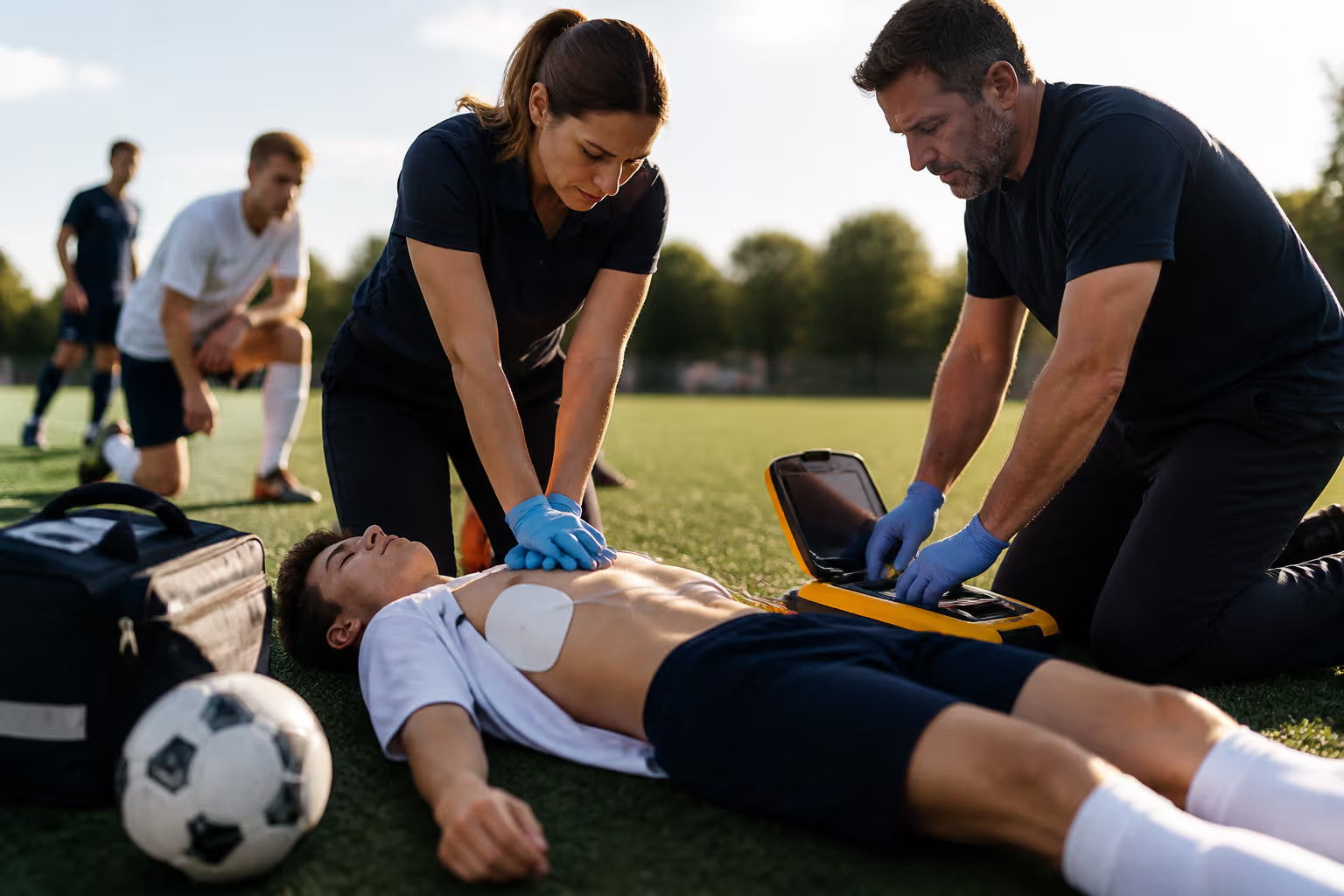
In the incident, a Jesuit Dallas player collapsed during a match in Richardson. Teammates noticed he was dizzy before he became unresponsive. The opposing team’s athletic trainer recognized the emergency, asked for an AED, and helped care for the student until ambulance crews took over. The player later said he was grateful to be alive and thankful for everyone who responded quickly.
Why AED response matters during school sports
Sudden collapse on the field is not something coaches, parents, or athletes want to imagine, but it is exactly why AED access and emergency response planning matter. In a cardiac emergency, every minute counts. A person who is not responding, has abnormal breathing, or collapses unexpectedly needs immediate attention.
An AED is designed to analyze the heart rhythm and guide the rescuer through each step with clear voice prompts. It does not replace CPR, but it can be a key part of the response when the heart is in a shockable rhythm. In many school settings, the fastest help comes from the people already on site: trainers, coaches, teachers, parents, and teammates.
This article is for general educational purposes only and is not a substitute for professional medical advice, diagnosis, treatment, or certified CPR training. In an emergency, call 911 immediately.
What happened at the game
The player first told teammates that he felt dizzy. After sitting down, he lost awareness and the situation changed quickly. The athletic trainer on the sideline saw that he was not responding normally and that his breathing looked labored. She immediately asked for the AED and began following the device’s instructions while others helped support the response.
The AED voice prompts are meant to keep rescuers focused. They guide the user to stay calm, attach the pads, and make sure emergency help is contacted. That matters in a high-pressure moment, especially on a crowded sideline where people may be scared or unsure what to do next.
CPR, AED, and emergency response in plain language
CPR and AED use are often taught together because they serve different purposes. CPR helps circulate blood to the brain and other vital organs while waiting for further treatment. An AED checks the heart rhythm and may advise a shock if it detects one that can be treated that way. Together, they support the chain of survival.
Good emergency response also includes clear communication. Someone should call 911 right away, another person should get the AED, and others should make space for responders. If a person is unresponsive and not breathing normally, do not wait for symptoms to “pass.” Start the emergency process immediately.
Who should learn AED use in Dallas
This story is important for a wide group of people in Dallas and nearby communities. It is relevant for:
- High school and youth sports coaches
- Athletic trainers and school staff
- Parents who attend games and practices
- Teachers, office staff, and volunteers
- Healthcare professionals who want a practical refresher
- Anyone who may be first on scene during a collapse
Families often assume emergency care will always arrive before they need to act. In reality, the first few minutes may depend on the people standing nearby. That is why CPR and AED training are worth taking seriously, especially in schools, gyms, and recreation centers.
Benefits of choosing CPR Certification Labs
CPR Certification Labs helps Dallas-area learners build confidence with CPR, AED, and first aid skills for real-world emergencies. Our training is designed to be clear, practical, and relevant for healthcare professionals and community members who need dependable instruction.
If you are looking for training in the Oak Cliff area, our Dallas office is located at 5787 S Hampton Rd, Suite 430, Dallas, TX 7am - 8pm / 7 Days a Week. You can learn more and plan your visit through our Dallas - Oak Cliff office page.
We focus on simple instruction that helps learners understand when to use CPR, how an AED supports the response, and why quick action matters. Whether you work in healthcare or support youth sports, the goal is the same: be ready to respond with confidence.
Nearby Dallas context and local relevance
This event also resonates in the Dallas area because school athletics bring together students, families, trainers, and coaches in one place. Games in cities like Dallas and Richardson often draw large sideline crowds, which means more people may need to know what to do in an emergency. Having an AED nearby and people trained to use it can make the difference between confusion and coordinated action.
For Dallas residents, the lesson is straightforward: know where the AED is, know who can retrieve it, and know that emergency response should begin without delay. If someone collapses and is not responding normally, start CPR if trained, use the AED as directed, and call 911 right away.
Why this story matters
The student athlete’s recovery is a reminder that a calm, trained response can matter just as much as the equipment itself. The athletic trainer, the AED, and the people who stepped in all played a role in the outcome. For schools and sports programs, the message is practical: preparation saves time, and time saves lives.
Training does not remove the fear of an emergency, but it can help turn fear into action. That is the real value of AED use in Dallas and beyond: being ready when seconds count.
FAQ
What is an AED used for?
An AED is used to analyze a person’s heart rhythm and provide voice-guided steps during certain cardiac emergencies. It works alongside CPR and emergency medical services.
Should someone call 911 before using an AED?
Yes. Emergency care should begin immediately. Get help on the way, call 911, and follow the AED instructions while waiting for responders.
Who can learn CPR and AED skills?
Many people can benefit from CPR and AED training, including coaches, parents, school staff, fitness workers, and healthcare professionals.
About our Dallas - Oak Cliff office
- Address: 5787 S Hampton Rd, Suite 430
- Phone: (972) 362-5542
- Email: dallas@cprcertificationlabs.com
- Hours:
7am - 8pm / 7 Days a Week!