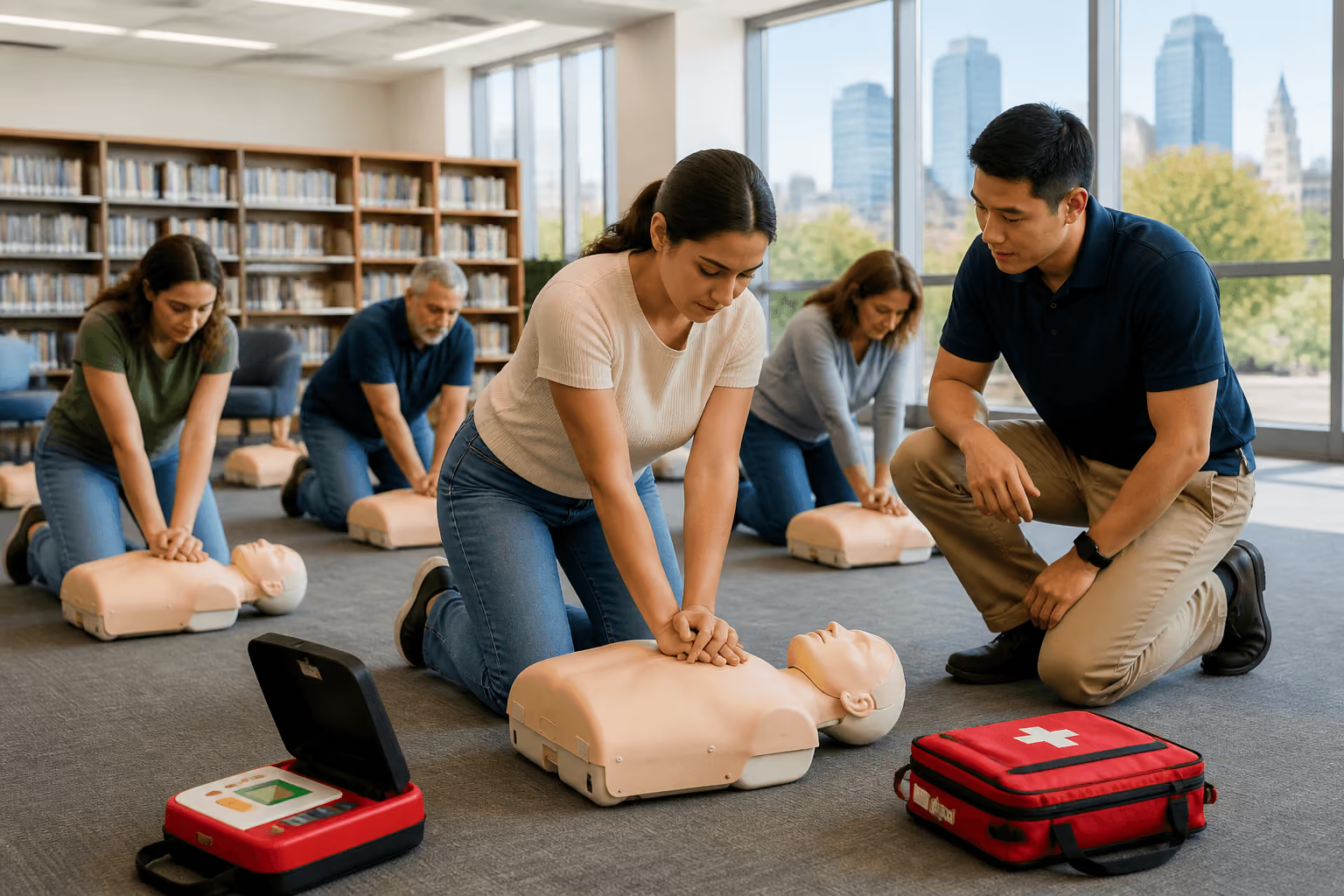
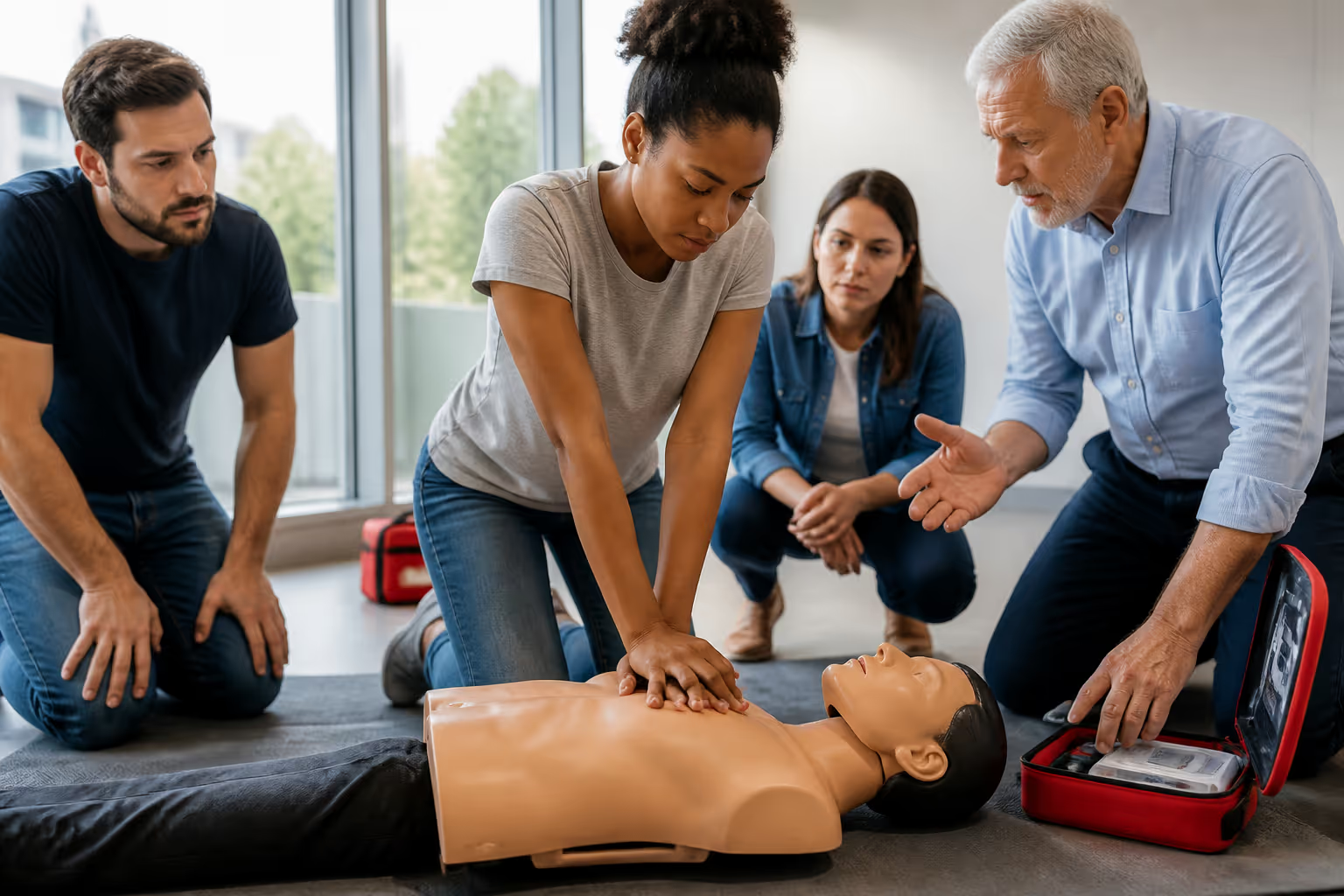
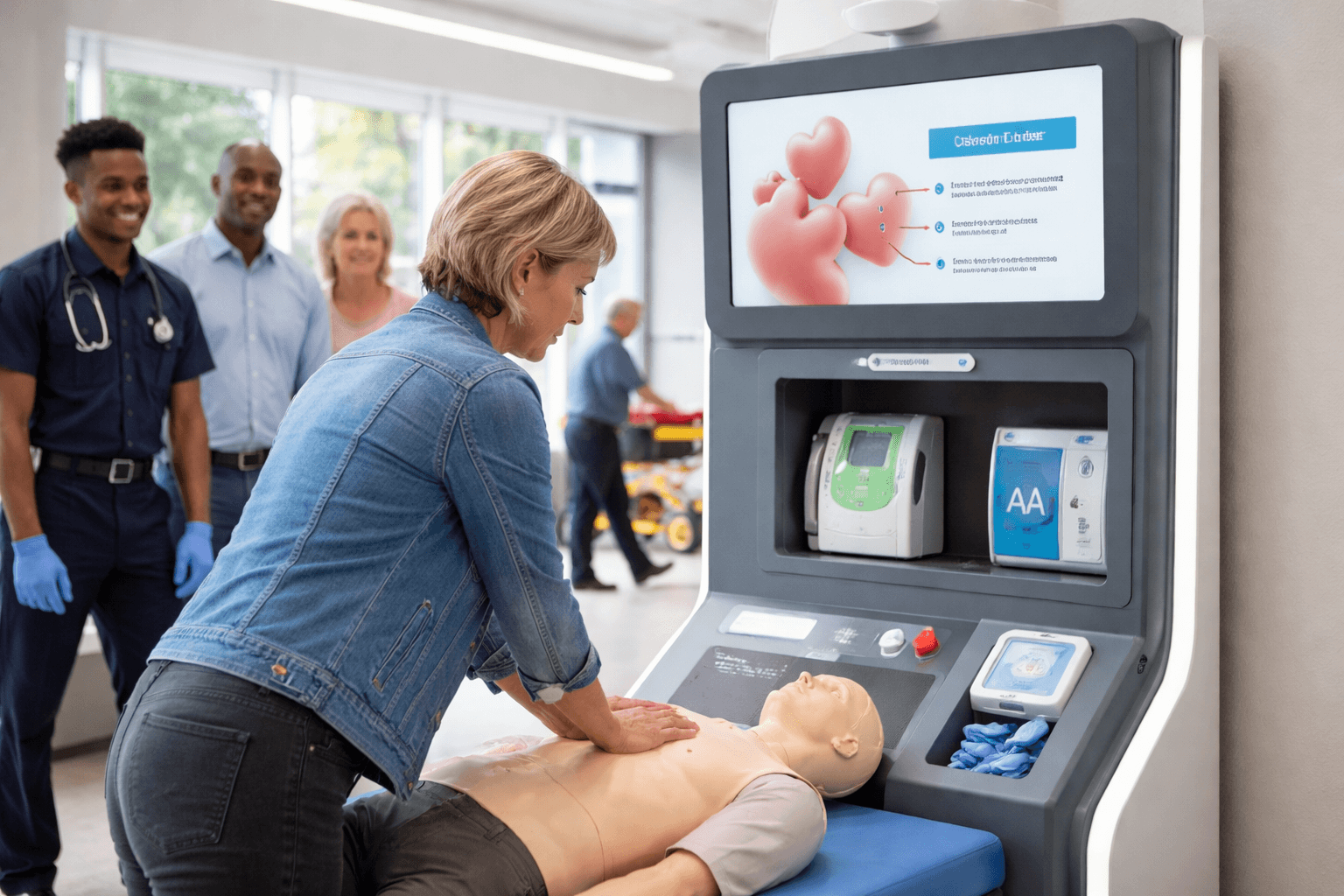
CPR training in Houston can help save a life in minutes
CPR training in Houston is more than a workplace or school requirement. It is a practical skill that can make the difference when a child or adult suddenly collapses from cardiac arrest. A recent school emergency in the Houston area showed how fast action, CPR, and an AED can support survival while EMS is on the way.
In that case, a 6-year-old student experienced sudden cardiac arrest at an elementary school in Katy ISD. Staff members who had been trained through Project ADAM recognized the emergency, began CPR, and used an AED before paramedics arrived. That response helped keep the child stable long enough to receive advanced cardiac care.
Why this matters for Houston schools
Houston-area schools serve large numbers of children, teachers, coaches, and visitors every day. That makes emergency response planning essential. Cardiac arrest is not limited to older adults, and it can happen even in younger patients with known heart conditions. When seconds matter, staff who know how to act can help preserve circulation and improve the chance of survival until emergency crews take over.
This is one reason school-based CPR and AED training continues to be important across Houston. Fire drills and evacuation plans are routine in schools, and cardiac emergency drills should receive the same attention. A prepared campus can respond more confidently when a student, staff member, or parent suddenly needs help.
What Project ADAM is designed to do
Project ADAM stands for Automated Defibrillation in Adam’s Memory. It was created after the sudden cardiac death of a teenager and has since grown into a school-focused effort to improve readiness for sudden cardiac arrest. The goal is straightforward: help schools build a stronger chain of survival through awareness, training, AED access, and coordinated response.
For schools, that means teaching staff to identify warning signs, activate the emergency plan, perform CPR, retrieve and use an AED, and work smoothly with EMS. For families, it means a school environment where people are more likely to respond quickly and correctly in a crisis.
How CPR, AED use, and emergency response work together
When sudden cardiac arrest occurs, the heart stops pumping blood effectively. CPR helps maintain limited blood flow to the brain and other organs. An AED checks the heart rhythm and may advise a shock if needed. These steps are not separate ideas; they work together as part of emergency response.
Training matters because the first few minutes are often the most important. In a school setting, trained personnel can begin care before EMS arrives, which may help bridge the time between collapse and hospital treatment. That is why CPR training, AED readiness, and a clear response plan should all be part of school safety planning.
What a school response should include
- Recognize sudden collapse or unresponsiveness quickly.
- Call 911 right away.
- Start CPR without delay.
- Use an AED as soon as it is available.
- Follow the school’s emergency response plan until EMS arrives.
This article is for general educational purposes only and is not a substitute for professional medical advice, diagnosis, treatment, or certified CPR training. In an emergency, call 911 immediately.
Who should consider CPR training in Houston
CPR training in Houston is valuable for teachers, principals, school nurses, coaches, daycare staff, office teams, parents, and community volunteers. It is also helpful for healthcare professionals who want to stay ready for pediatric and adult emergencies. Anyone who spends time around children or works in a public setting can benefit from learning CPR, AED use, and basic first aid.
Families of children with known heart conditions may also feel more confident when school staff are trained and AEDs are accessible. Preparedness does not remove risk, but it can improve response time and coordination in a crisis.
Benefits of choosing CPR Certification Labs
CPR Certification Labs offers training designed for healthcare professionals and other learners who need a clear, practical path to CPR, BLS, ACLS, and first aid knowledge. Our classes focus on real-world emergency response skills so participants understand what to do before EMS arrives.
We keep the process direct and easy to follow, with instruction that supports confidence in high-stress situations. Whether you are updating your skills for work or building readiness for school or community settings, our training is built around practical application.
Houston-area learning and care resources
Houston residents often turn to large medical centers for advanced cardiac care, including Texas Children’s Hospital and its Emergency Center. Schools in Katy ISD and throughout the Houston area also continue to place more attention on AED access and staff readiness. These local examples show how coordinated emergency response can connect school training with hospital care.
For anyone seeking CPR training in Houston, the message is clear: preparedness belongs everywhere people gather, especially in schools, youth programs, and healthcare settings.
Learn more and get started
If you are looking for CPR training in Houston, explore our local office page here: Houston CPR Certification Labs. Training in CPR, AED use, first aid, and emergency response can help you be ready when every second counts.
Schools, caregivers, and healthcare teams all play a role in protecting children and adults from sudden cardiac arrest. The more people who are trained, the stronger the chain of survival becomes.
FAQ
Why is CPR important in schools?
CPR can help maintain blood flow during sudden cardiac arrest until an AED and EMS can take over. In schools, a trained response can buy critical time.
Do schools need AEDs?
AEDs are an important part of emergency response because they can analyze heart rhythms and deliver a shock when appropriate. Fast access matters during cardiac arrest.
Who should take CPR training in Houston?
Teachers, school staff, coaches, parents, and healthcare professionals should consider training so they can respond more confidently in an emergency.