CPR in Midland and a Home Safety Wake-Up Call
CPR in Midland is an important skill for parents, caregivers, and anyone who spends time around children or pools. A recent Midland family story shows how quickly a routine afternoon at home can turn into a life-threatening emergency when a young child reaches water unsupervised.
In that case, a baby crawled through a dog door, entered the backyard, and fell into the family pool. The child was out of sight for only a short time, but that was enough to create a true emergency. Family members pulled him from the water and started CPR right away while waiting for EMS. The boy was taken to Midland Memorial Hospital and later transferred for higher-level care.
This story is difficult, but it also carries a practical message for local families: drowning can happen fast, even when adults are nearby. A fence, door barriers, alarms, and CPR skills are not optional extras around a pool. They are part of emergency preparedness.
What This Means for Midland Families
Midland homes often have backyards, pets, and pools that seem familiar and safe. But familiarity can create false confidence. A child can move through a dog door, slip through a gate, or reach water in seconds. That is why pool safety should be treated as part of everyday home planning, not just summer planning.
For families in Midland and nearby West Texas communities, the lesson is straightforward: secure the pool area, know who is watching children at all times, and be ready to respond if an emergency happens. Water emergencies do not wait for a convenient moment, and they often require immediate action.
Why CPR Matters After a Near-Drowning
When a person is pulled from water and is unresponsive, CPR can help support blood flow and oxygen delivery while emergency responders are on the way. In a water-related emergency, seconds matter. Even when someone seems to recover, professional evaluation is still critical because complications can develop later.
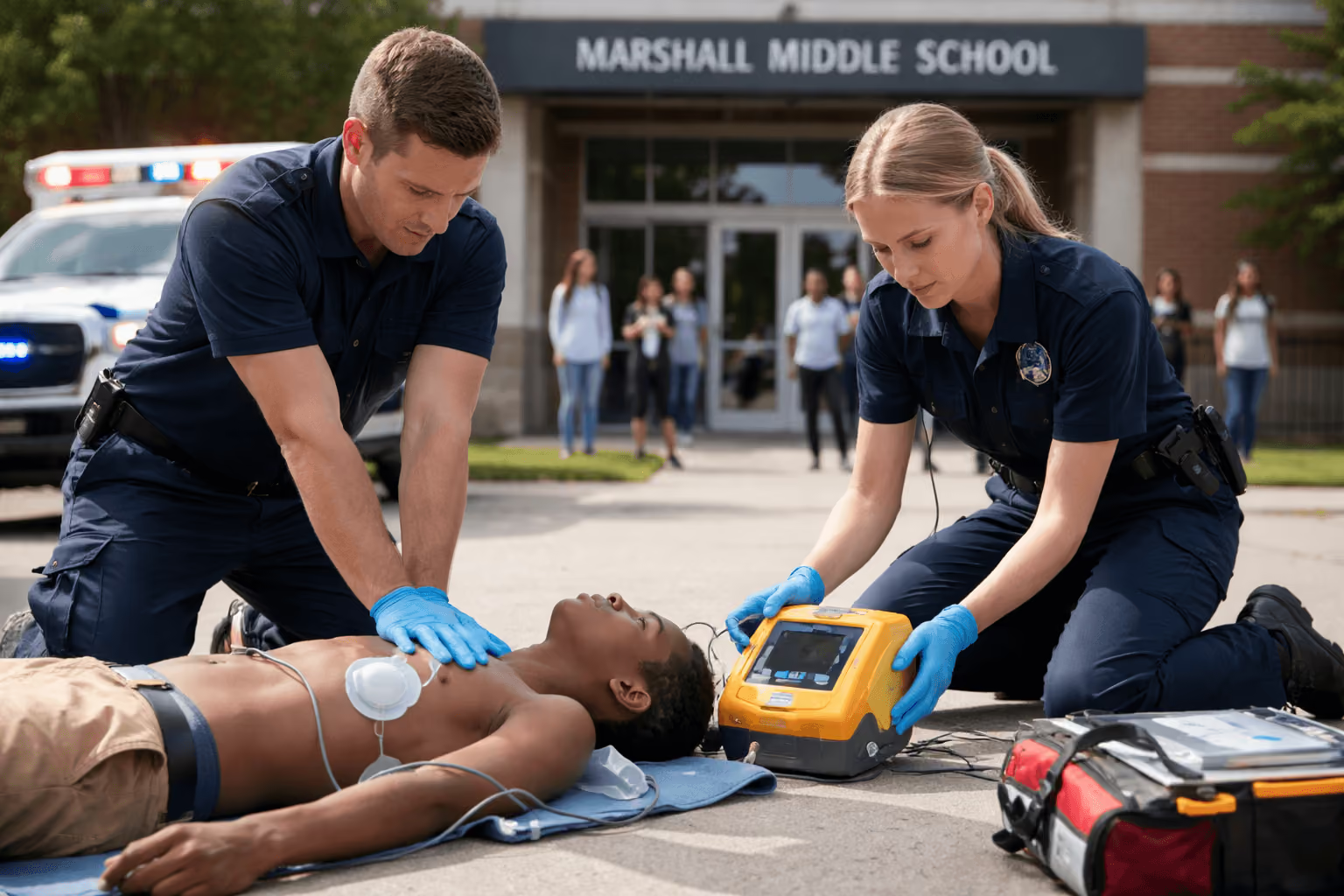
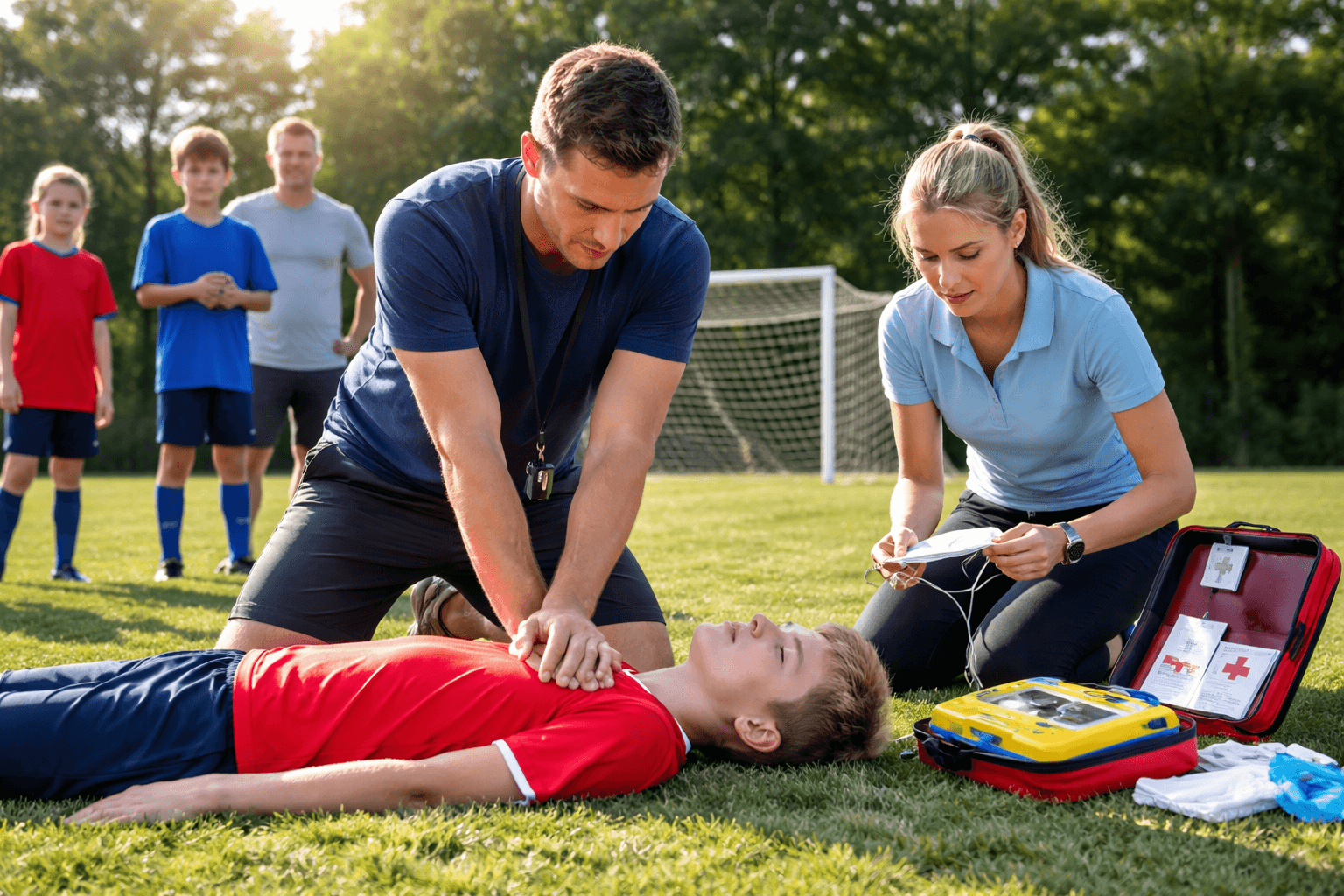
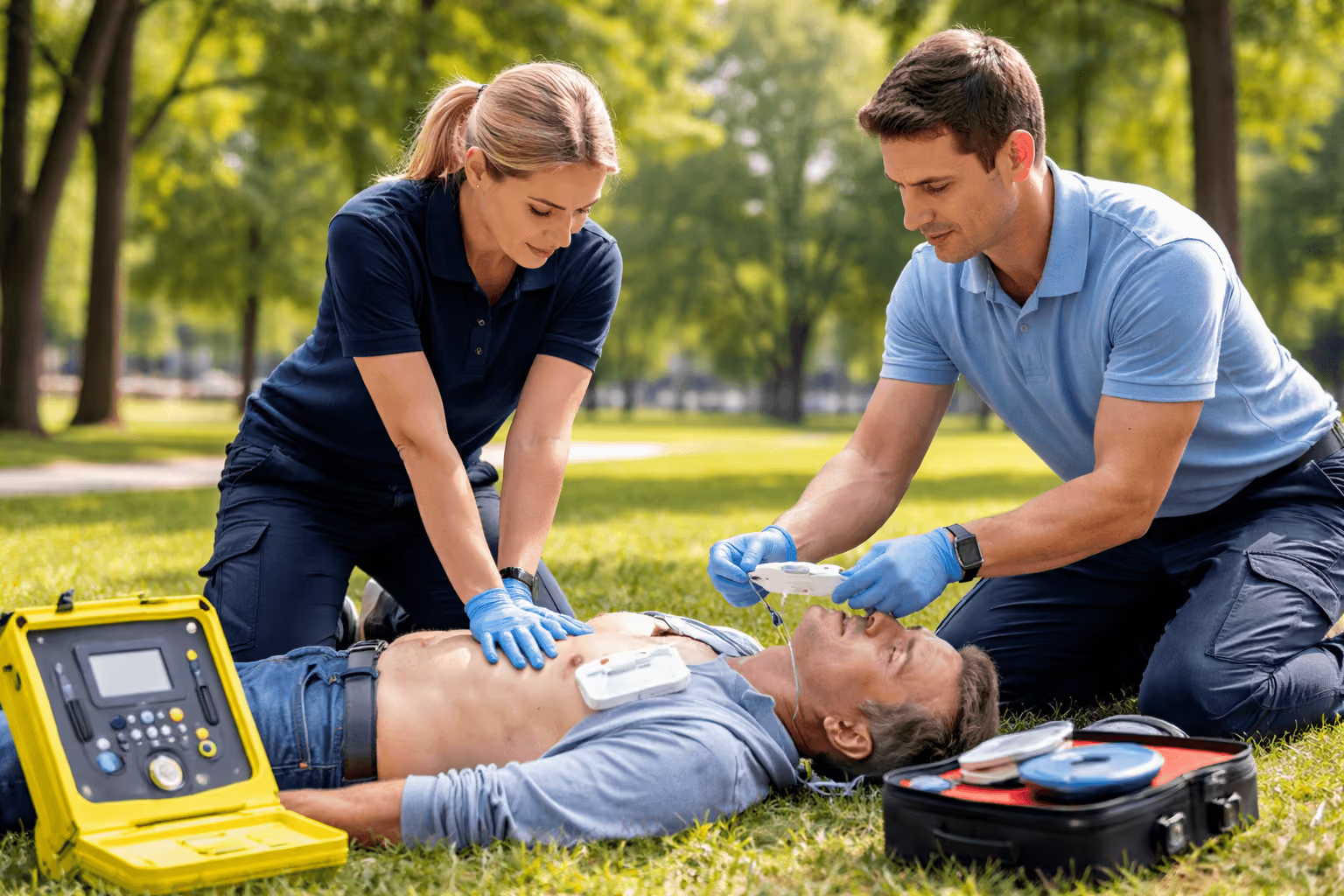
Basic CPR training helps people recognize when to begin compressions, how to call for help, and how to work with an AED if one is available. CPR and AED use are core parts of emergency response, especially in homes, neighborhoods, pools, parks, and childcare settings.
First aid knowledge also helps with the practical details that follow a rescue. A calm response can reduce confusion and help families focus on the steps that matter most: remove the person from danger, assess responsiveness, get help, and begin CPR if needed while waiting for emergency crews.
When to Call 911
If a child or adult is pulled from water and is not breathing normally, is not responsive, or you are unsure what to do, call 911 immediately. Do not delay while looking for more information or waiting to see if the person improves. If another adult is present, send that person to get an AED or meet emergency responders.
If the person starts breathing again, they still need urgent medical evaluation after a drowning event. A fast emergency response is important because symptoms can change after the initial rescue.
This article is for general educational purposes only and is not a substitute for professional medical advice, diagnosis, treatment, or certified CPR training. In an emergency, call 911 immediately.
Who Should Learn CPR in Midland
CPR training is valuable for:
- Parents and grandparents
- Babysitters and nannies
- Pool owners and apartment residents
- Coaches and youth program volunteers
- Teachers, daycare staff, and camp leaders
- Healthcare workers and office staff
Anyone who cares for children or spends time around water should consider learning CPR and first aid. Skills fade over time, so regular refreshers are helpful for staying prepared.
Benefits of Training With CPR Certification Labs
CPR Certification Labs offers training designed for people who need practical, workplace-ready skills. Classes are built to be clear and direct, with instruction that supports real-world emergency response. That matters for healthcare professionals, caregivers, and community members who want to respond with confidence during a crisis.
Local learners can find the McKinney - Tucker Hill office at 7200 W University Dr, Suite 218 in McKinney, TX. The office hours are Monday to Friday from 6am to 8pm, and Saturday to Sunday from 7am to 5pm. If you are looking for a convenient nearby training option, you can visit the office page here: CPR Certification Labs McKinney - Tucker Hill.
Training can help you understand how CPR, AED use, and first aid fit together during an emergency. It can also make it easier to act quickly instead of freezing when every second counts.
Pool Safety Steps to Review at Home
Families can reduce risk by reviewing a few simple precautions:
- Keep pools fenced with secure access points
- Lock or alarm dog doors and other openings a child could use
- Never assume someone else is watching the water
- Store rescue equipment where it is easy to reach
- Learn CPR and review it regularly
These steps do not replace supervision, but they can add important layers of protection. In many homes, the safest approach is to assume a child can move faster and farther than expected.
Nearby Local Reference for CPR Training
For residents in Midland, McKinney, and surrounding North Texas communities, a nearby office page can help you explore class options, schedules, and contact details. The McKinney - Tucker Hill location serves as a practical reference point for anyone who wants to build stronger emergency response skills.
Preparing before an emergency is one of the most helpful things a family can do. CPR, AED awareness, and first aid knowledge can make a real difference in a home, at a pool, or anywhere children are present.
FAQ
Why is CPR important after drowning?
CPR helps support circulation and oxygen delivery when someone is not breathing normally after a water emergency. It can bridge the time until EMS arrives.
Should I wait to see if a child recovers on their own?
No. If a person is unresponsive or not breathing normally after a drowning event, call 911 right away and begin CPR if you are trained and it is appropriate to do so.
Do I need AED training too?
Yes. AED knowledge is a key part of emergency response and can be useful in many cardiac emergencies, including in public places and some home settings.