AED network in Carrollton and why this funding matters
The conversation around the AED network in Carrollton is changing as connected emergency technology becomes more common. A recent capital raise for Avive Solutions highlights a growing focus on linking AEDs, software, and 911 workflows so people can find and use a defibrillator faster during a cardiac emergency.
For healthcare professionals, first responders, and community leaders, the message is simple: equipment alone is not enough. An AED is most useful when people know where it is, can reach it quickly, and are trained to respond with CPR and clear emergency communication.
What the new connected AED approach is trying to solve
Sudden cardiac arrest remains one of the most time-sensitive emergencies in public safety. When a person collapses, the first few minutes matter most. If a shock is needed, every delay can reduce the chance of survival. That is why modern AED programs are moving beyond storage cabinets and wall mounts toward connected systems that can help locate devices and alert nearby responders.
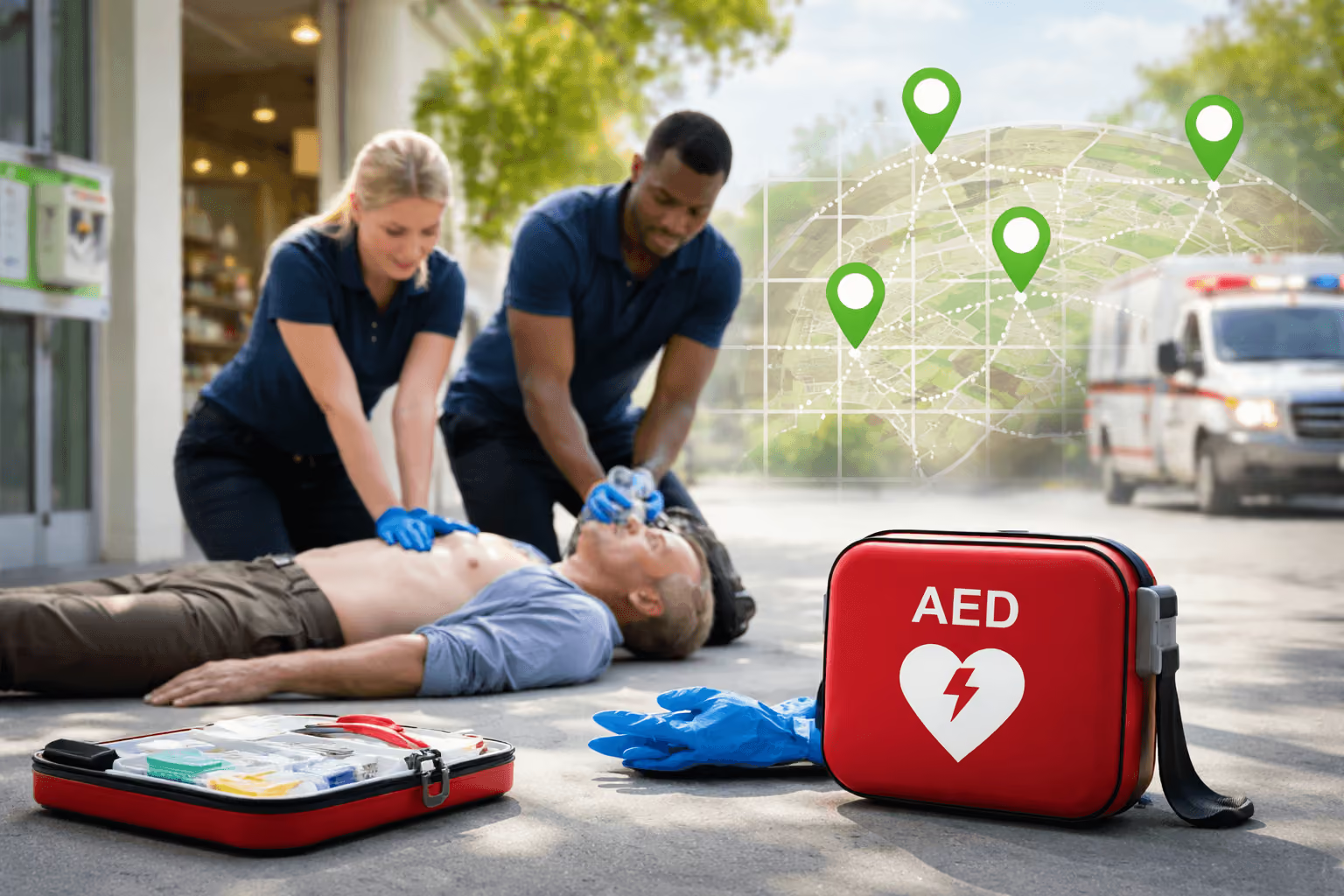
Avive’s approach centers on a portable AED that can communicate through cellular, WiFi, GPS, and Bluetooth connections. The broader idea is to make AEDs easier to track, easier to manage, and easier to deploy when an emergency happens. In a connected response model, software can help bridge the gap between the person who needs help and the people closest to the device.
Local context for Carrollton and nearby communities
In Carrollton and the surrounding North Houston region, the need for faster emergency response is familiar to anyone who works in schools, fitness centers, offices, municipal buildings, or large campuses. A well-placed AED can matter, but a connected system can add another layer of readiness by helping responders identify nearby devices more quickly.
That is especially important in places where many people move through shared spaces every day. A connected AED network can support emergency response planning, but it still depends on practical readiness: clear signage, maintained devices, and staff who know what to do in the first moments of an emergency.
How CPR and AED training fit into the bigger picture
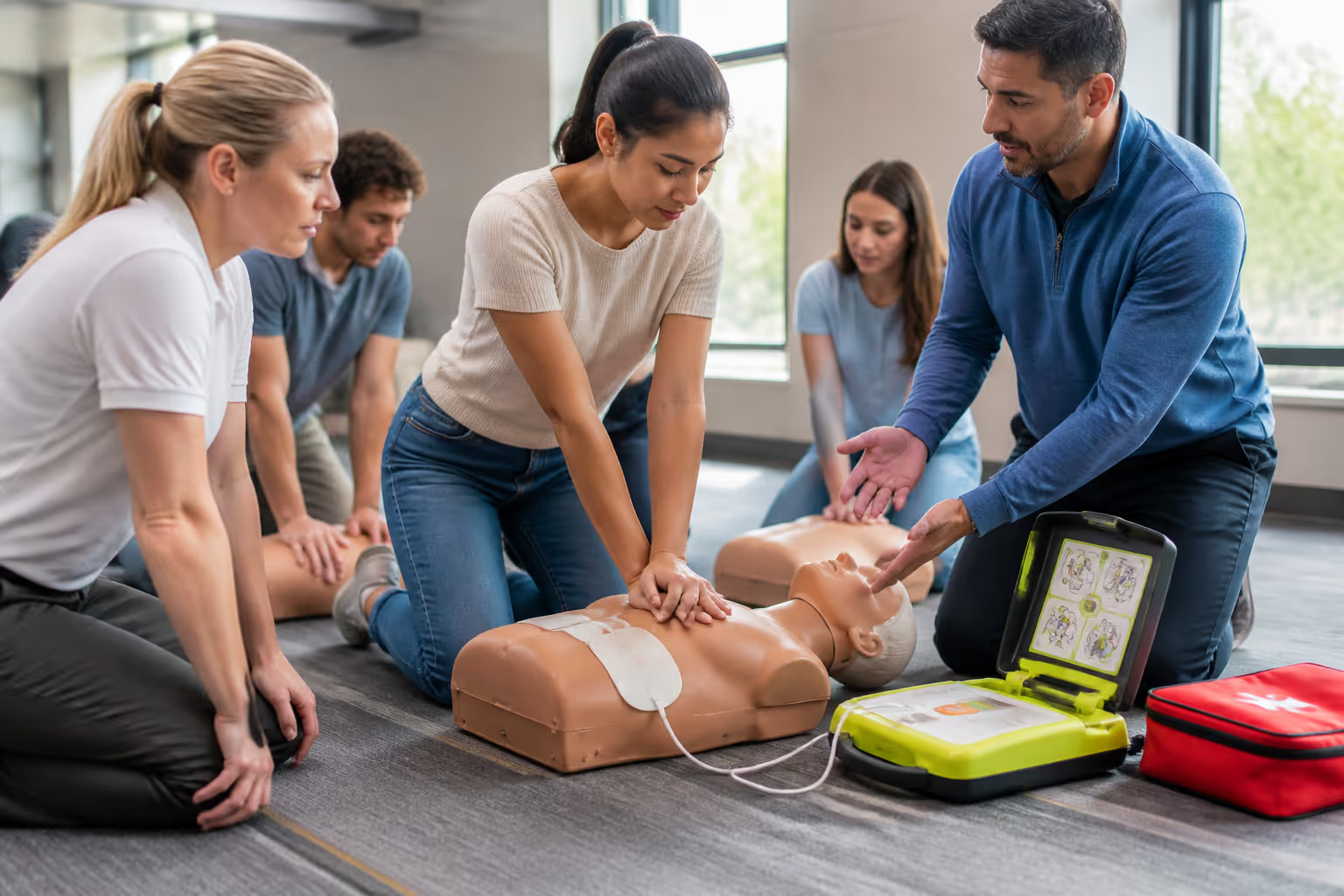
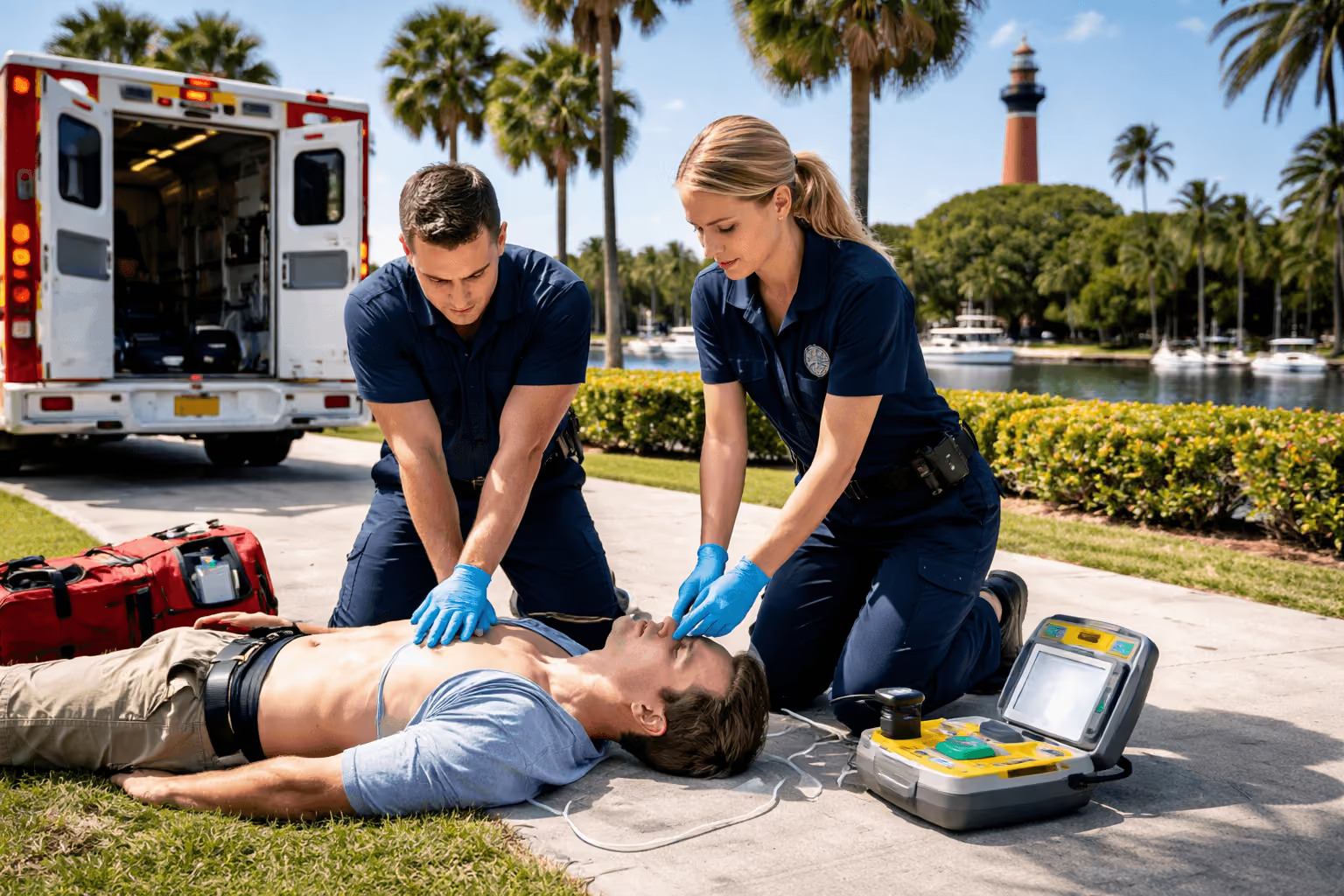
Even the smartest AED platform cannot replace trained action. CPR keeps blood moving while someone waits for an AED or EMS to arrive. A device can deliver a shock when needed, but bystanders still have to recognize the emergency, start compressions, and follow the prompts quickly.
Training also helps reduce hesitation. In many emergencies, people freeze because they are unsure whether the collapse is cardiac arrest, where the AED is located, or whether they should wait for help. CPR and first aid instruction build confidence so the first response is faster and more organized.
Who should pay attention to this news
- Healthcare workers who want to stay current on emergency response systems
- School and workplace safety teams responsible for AED placement and response plans
- Facility managers who oversee public-access defibrillators
- Coaches, trainers, and front-office staff who may be first on scene
- Community members who want to support stronger CPR readiness
Why connected AED systems may improve emergency response
Connected AED technology can help address common problems that slow response times. Some devices are hard to find in an urgent moment. Others are not checked often enough. In some cases, a nearby AED exists, but nobody knows it is there when seconds matter most.
By pairing hardware with monitoring tools and response software, organizations may be able to improve device oversight and make deployment more efficient. That is useful for public safety leaders, but it also matters to everyday bystanders who may be the first link in the emergency response chain.
For communities in and around Carrollton, the goal is not simply to own an AED. The goal is to make sure the device is available, visible, and usable when a cardiac emergency happens.
Why CPR Certification Labs is a practical resource
At CPR Certification Labs, we help professionals and community members build real-world readiness for cardiac emergencies. Our CPR, AED, and first aid courses are designed to make emergency response simpler, more confident, and more effective in the moments that matter most.
If your organization is reviewing its AED placement, updating its emergency response plan, or training staff who may be first on scene, proper instruction can make the difference between hesitation and action. We support learners who need clear, direct training that fits healthcare, workplace, and community settings.
For those in the North Houston area, our North Houston office is a nearby option for CPR and AED training support.
Nearby facilities and local readiness considerations
Organizations in Carrollton and nearby Texas communities often depend on shared public spaces such as offices, gyms, schools, and municipal buildings. These locations benefit from a visible AED, a clear emergency plan, and staff who know how to begin CPR immediately.
As connected AED networks grow, local decision-makers should think about more than device purchase. They should consider maintenance, responder training, and how quickly a person can identify the nearest AED in a real emergency. Those basics remain central even as technology improves.
This article is for general educational purposes only and is not a substitute for professional medical advice, diagnosis, treatment, or certified CPR training. In an emergency, call 911 immediately.
Take the next step in emergency preparedness
Whether you manage a workplace, support a clinical team, or want to improve readiness in your community, CPR and AED training are important parts of a stronger emergency response plan. A connected AED network in Carrollton may help shorten the path to a lifesaving shock, but trained people still make the first critical difference.
Build confidence before an emergency happens. Learn CPR, understand AED use, and make sure your team knows how to respond fast.
FAQ
What is a connected AED network?
It is a system that uses connected devices and software to help monitor AEDs, locate them faster, and support emergency response.
Why does CPR still matter if an AED is available?
CPR helps maintain blood flow while the AED is being located, brought to the patient, and used.
Who should get CPR and AED training?
Healthcare staff, school employees, office teams, fitness staff, and anyone likely to be first on scene should consider training.
About our Dallas - Carrollton office
- Address: 1406 Halsey Way Suite 110
- Phone: (972) 440-0527
- Email: carrollton@cprcertificationlabs.com
- Hours:
Monday – Sunday: 7am - 8pm