AED mapping in Allen and why this story matters
AED mapping in Allen is part of a larger public safety conversation that affects schools, workplaces, sports venues, and neighborhoods across North Texas. When someone collapses from sudden cardiac arrest, the first few minutes are critical. The difference often comes down to whether nearby people recognize the emergency, start CPR, and locate an AED quickly.
That message feels especially real after a North Texas mother survived a sudden collapse at a high school and turned her experience into a national effort to help others find defibrillators faster. Her work reminds families, coaches, staff members, and community leaders that emergency response is not only about waiting for help to arrive. It is also about knowing what to do while help is on the way.
What happened in Plano and what it taught bystanders
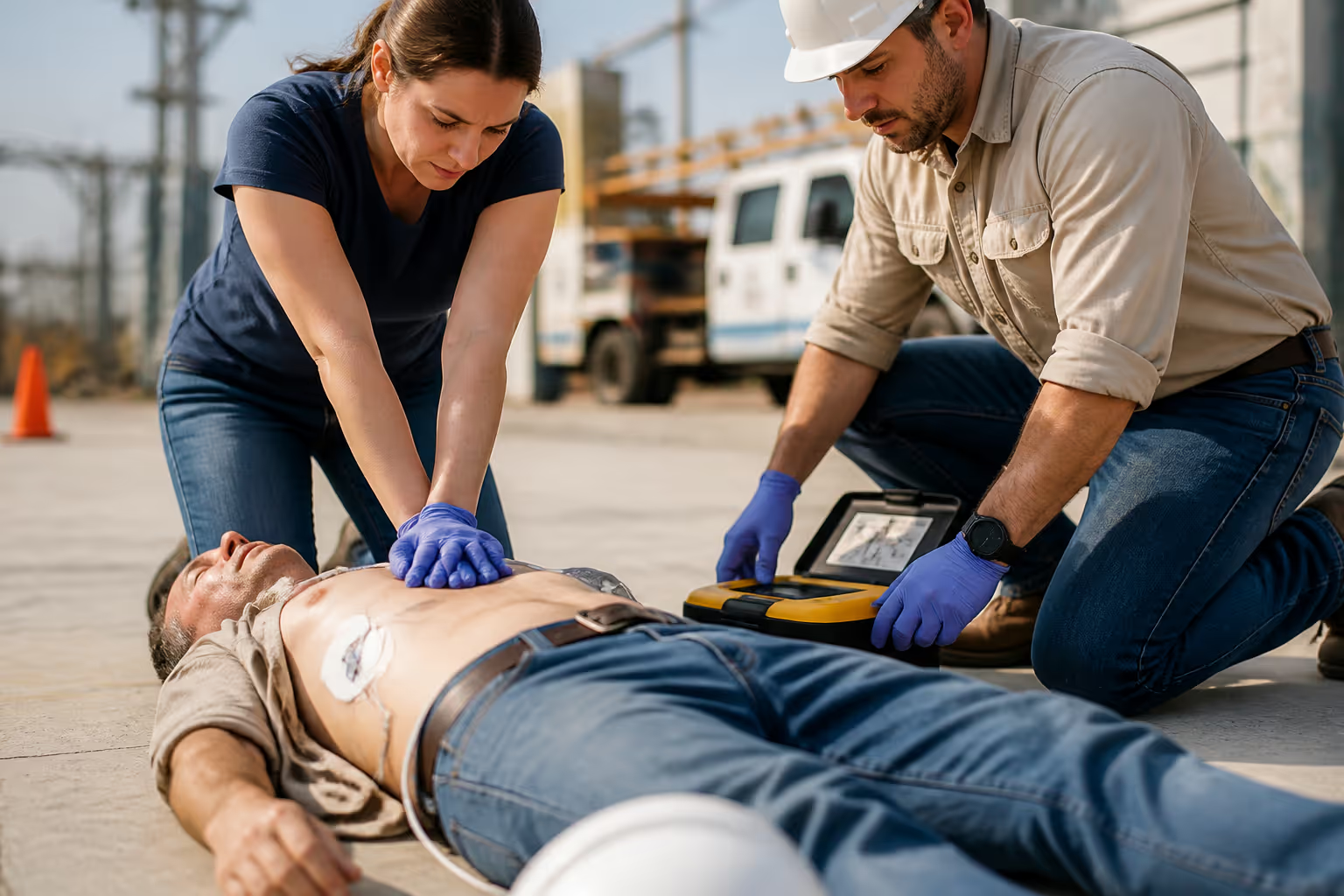
During a volunteer event outside a Plano high school, Julie Coon suddenly collapsed. Students nearby noticed immediately, alerted adults, and helped bring the right resources to the scene. Trained responders started CPR, and an AED was used to restore a normal rhythm. Her survival became a powerful example of how fast action, teamwork, and preparation can save a life.
Her family later turned that experience into Cardiac Crusade, a nonprofit focused on making AED locations easier to find. The goal is simple: if someone needs a defibrillator, the location should not be a mystery. That is the same public safety principle behind AED mapping in Allen and other communities that want stronger emergency response systems.
Why AED mapping in Allen supports faster emergency response
In a cardiac arrest, every second counts. A well-mapped AED network can help bystanders, school staff, and dispatchers identify the nearest device without losing time searching hallways, parking lots, or unfamiliar buildings. When an AED is easy to locate, it can support a stronger chain of survival alongside CPR and 911 activation.
That is why AED mapping in Allen matters for local organizations, especially places with frequent visitors or larger campuses. Schools, gyms, faith centers, office buildings, and event spaces all benefit when AED access is documented, verified, and shared with the people most likely to need it.
Who should pay attention to this message
This topic is relevant for several groups in the Allen and Dallas area:
- Parents who attend school activities and sports events
- Coaches, athletic trainers, and teachers
- Business owners and office managers
- Faith leaders and volunteers
- Community members who want to improve emergency response readiness
Anyone who may be present during a medical emergency should know where the nearest AED is stored, who can retrieve it, and who is trained in CPR. Clear planning can reduce confusion when a real emergency happens.
What CPR and AED training add to real-world readiness
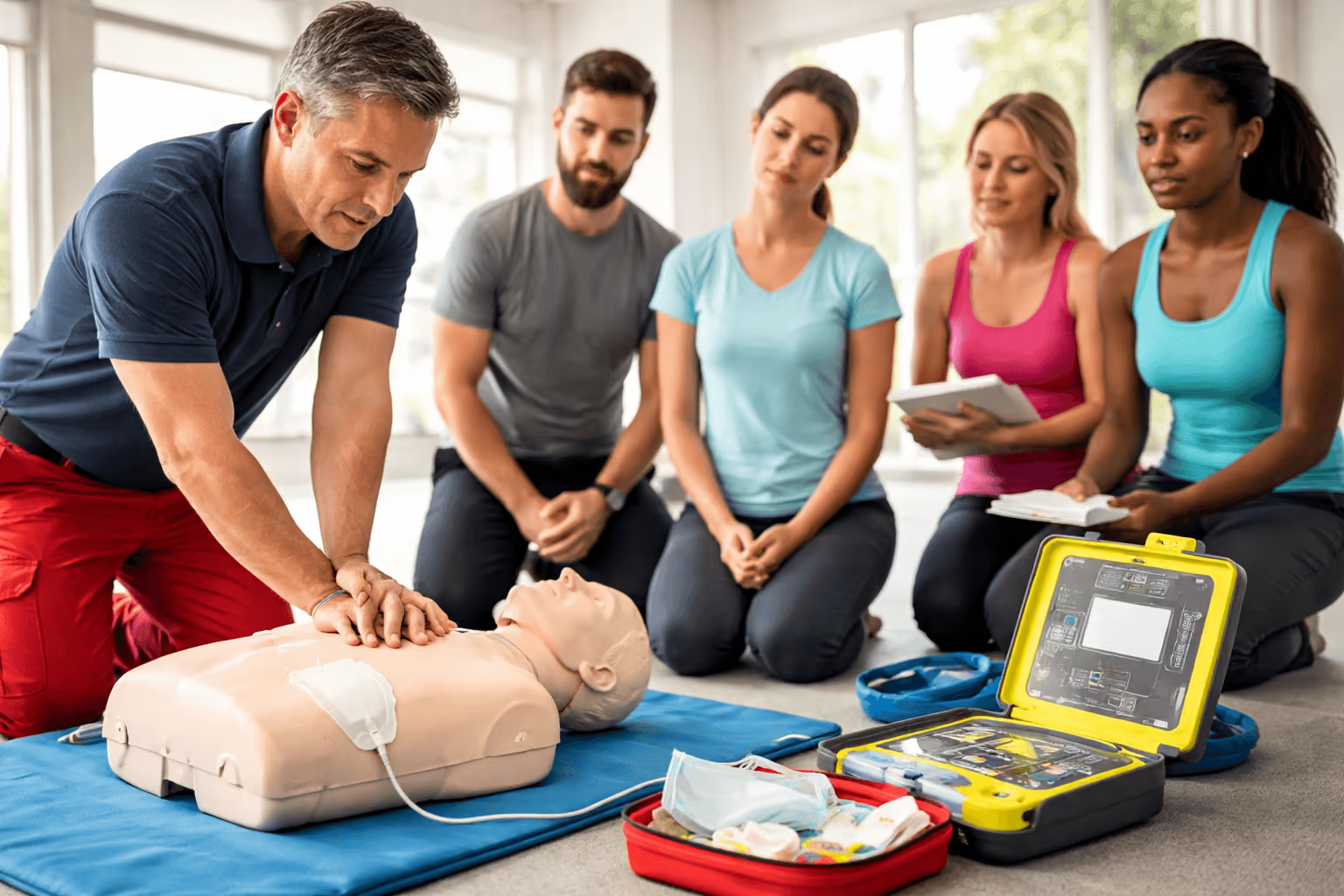
CPR training teaches people how to respond when a person is unresponsive and not breathing normally. AED training adds the next step: using a defibrillator safely and quickly when the device is available. Together, CPR, AED awareness, and first aid knowledge give everyday people the confidence to act before emergency crews arrive.
Training also helps reduce hesitation. In many emergencies, the person with the best chance to help is the one already standing nearby. That is why communities often pair AED mapping with regular CPR classes and refreshers for staff, volunteers, and families.
Why local training still matters in North Texas
North Texas has many schools, sports programs, churches, and busy commercial corridors where large groups gather every day. A strong emergency response plan should include not just equipment, but also people who know how to use it. Clear AED locations, current contact information, and trained responders can all improve readiness.
For residents in southern Dallas and nearby communities, CPR Certification Labs helps people build that confidence through practical instruction. If you are looking for CPR, AED, or first aid training in the area, you can find local support at Dallas - Oak Cliff.
Nearby places where preparedness matters
Public spaces such as schools, recreation centers, shopping areas, and event venues are all places where an AED may be needed without warning. Communities like Allen, Plano, and greater Dallas benefit when AED mapping is updated and easy to use. The point is not only to own a defibrillator, but to make sure people can reach it quickly when seconds matter.
That is also why practical first aid and emergency response education should be treated as part of community planning. A visible AED, a trained responder, and a quick call for help can work together to improve the chance of survival.
Learn CPR and AED skills before an emergency happens
Stories like Julie Coon’s show how much can happen in a matter of moments. They also show why preparation is worth the effort. If you live or work in North Texas, learning CPR and understanding how AED mapping in Allen supports emergency response can help you be ready when someone nearby needs help.
For local CPR, AED, and first aid instruction, CPR Certification Labs offers convenient training in Dallas-Oak Cliff for healthcare professionals, workplaces, and community members who want to be better prepared.
FAQ
What is AED mapping?
AED mapping is the process of identifying, verifying, and organizing the locations of automated external defibrillators so they can be found quickly during an emergency.
Why does AED access matter so much?
When someone is in cardiac arrest, immediate CPR and rapid AED use can improve the chances that emergency responders can help before it is too late.
Should people still call 911 if an AED is nearby?
Yes. An AED is a helpful tool, but it does not replace emergency medical services. In a true emergency, call 911 right away and follow dispatcher instructions.
This article is for general educational purposes only and is not a substitute for professional medical advice, diagnosis, treatment, or certified CPR training. In an emergency, call 911 immediately.
About our Allen office
- Address: 700 Central Expy S, Suite 400, Office 68
- Phone: (940) 326-4802
- Email: allen@cprcertificationlabs.com
- Hours:
Monday to Friday: 6am to 9pm
Saturday: 6am to 4pm
Sunday: Closed