Houston CPR training and a real local emergency response
Houston CPR training can make a meaningful difference in the first minutes of a cardiac emergency. A recent Houston-area survival story showed how a wife’s quick action, dispatcher coaching, and emergency response helped buy time until hospital care was available.
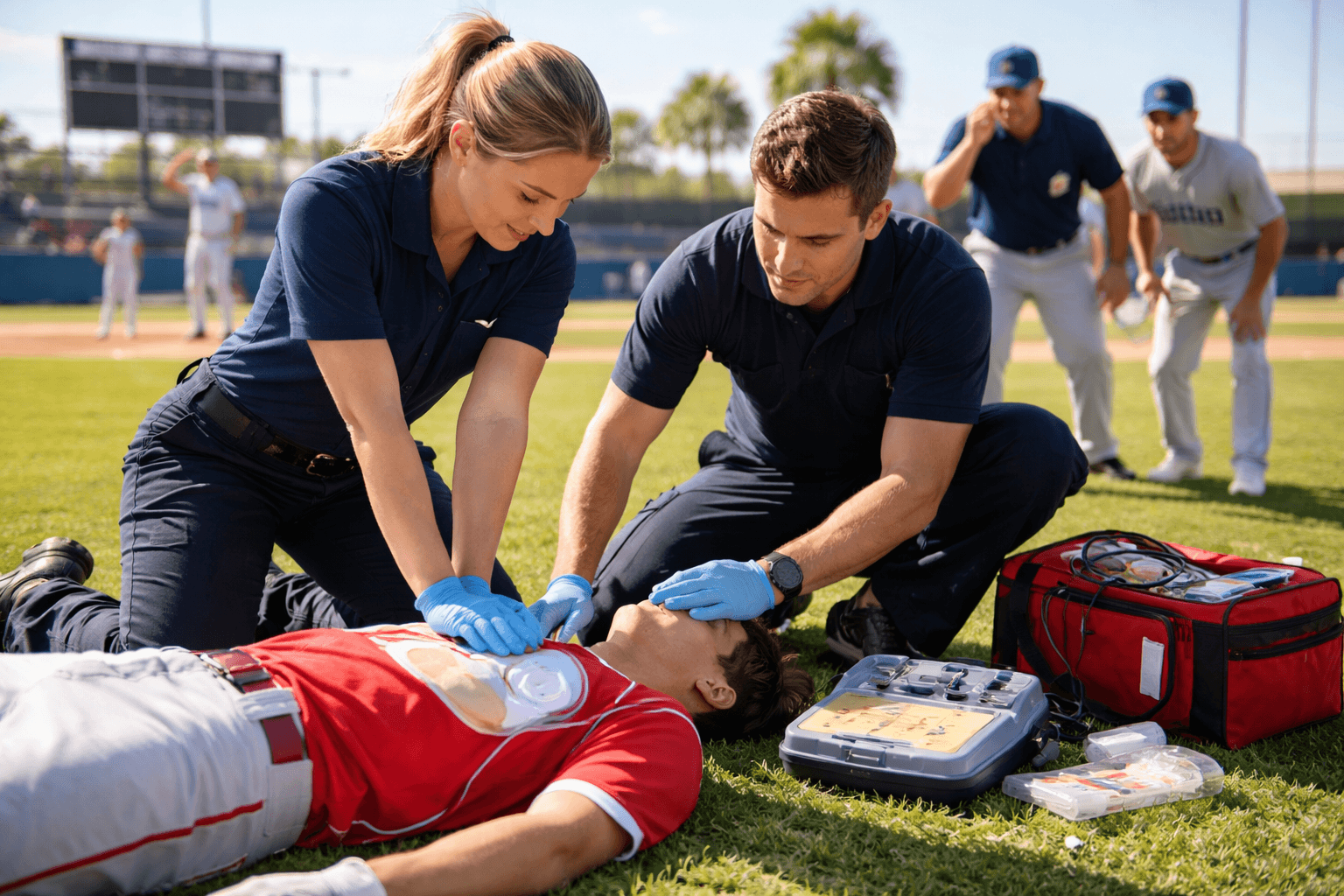
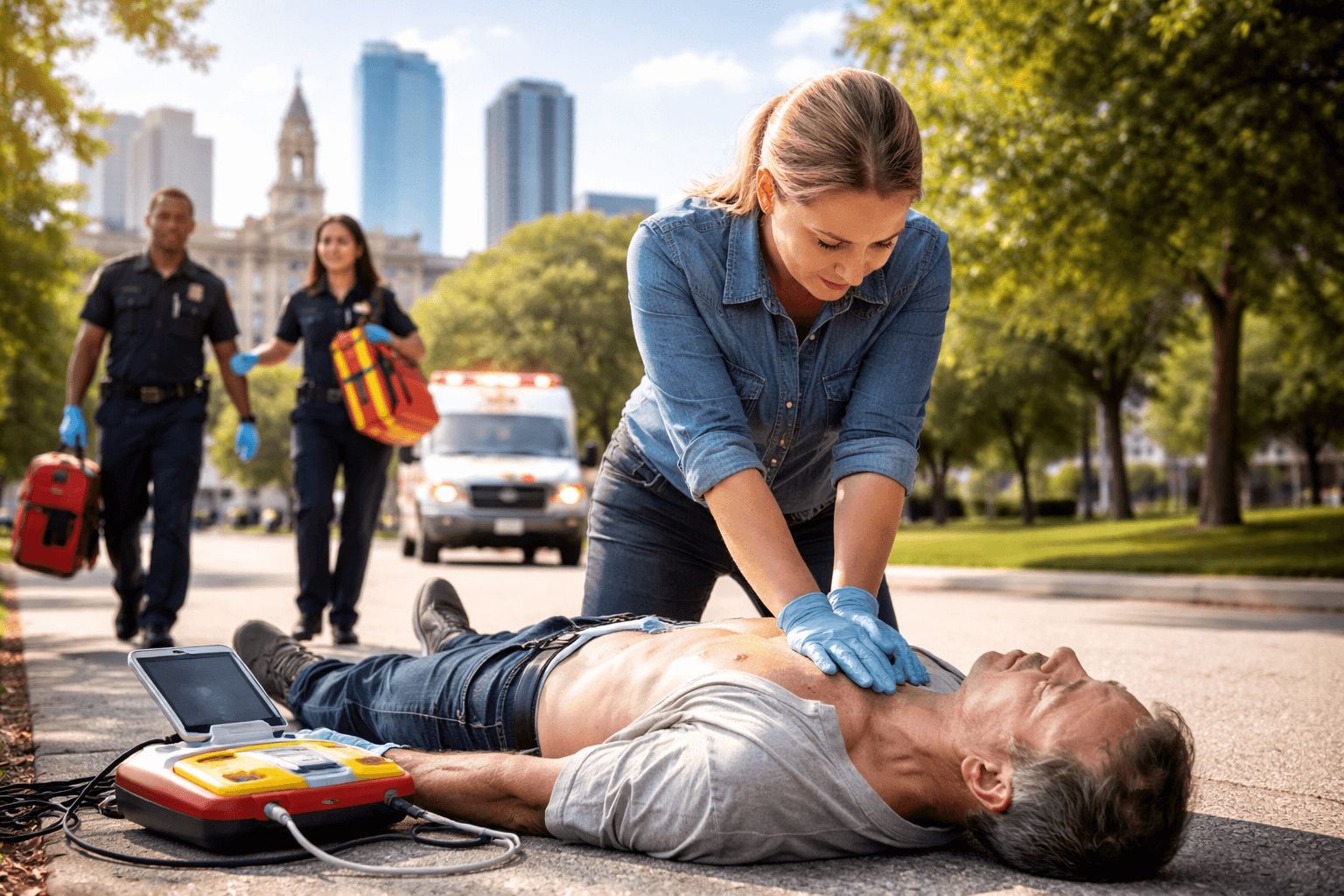
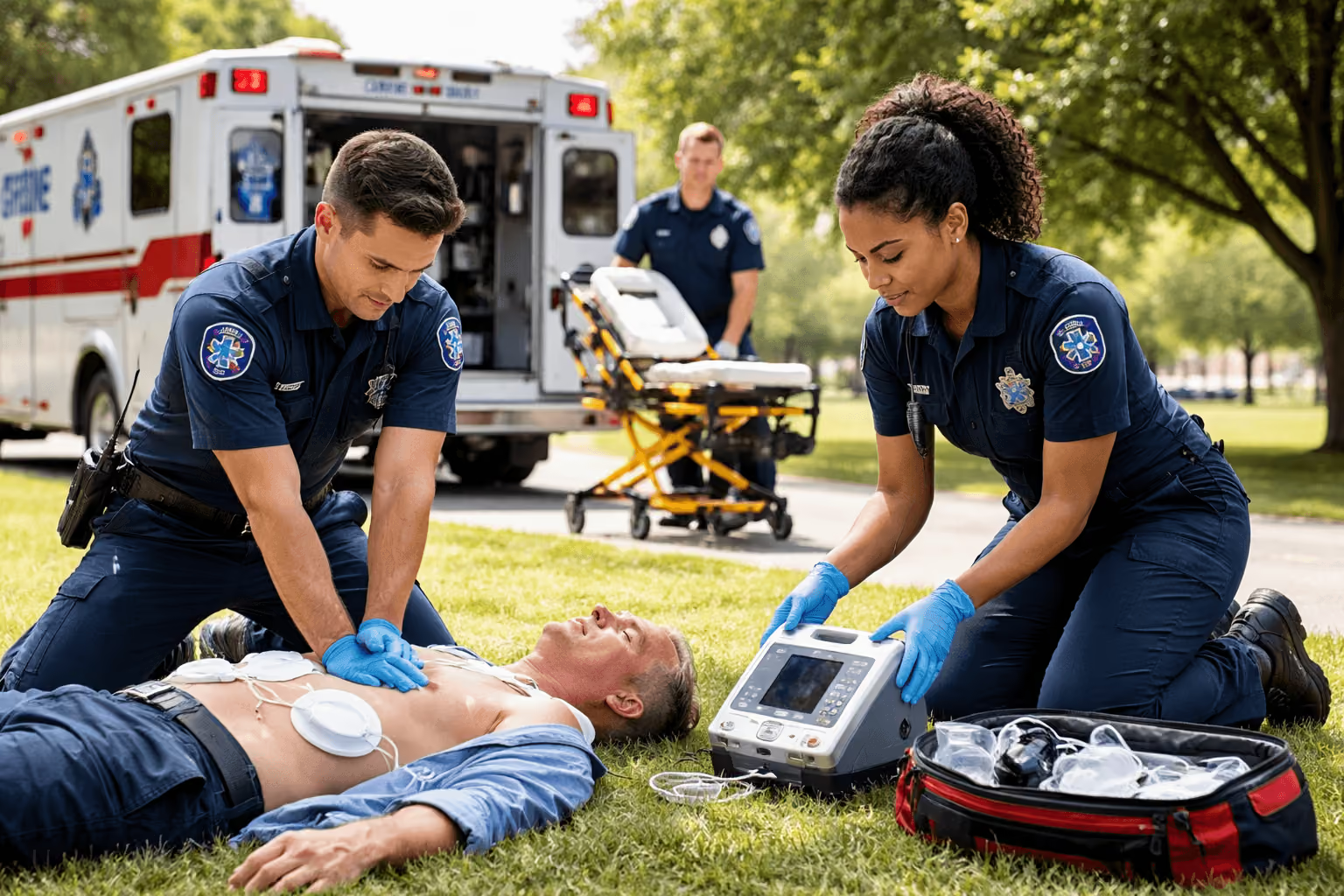
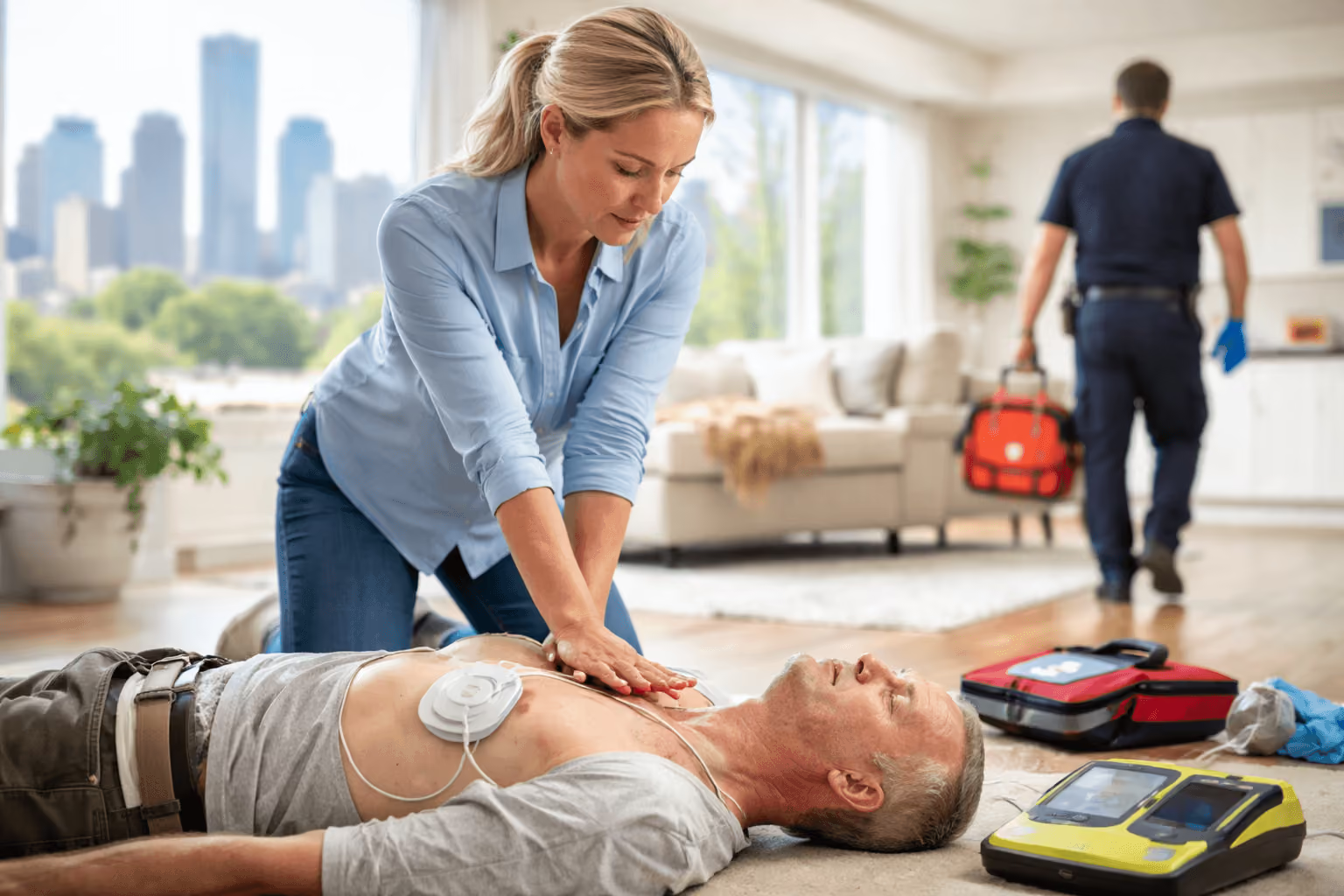
In the story, a man collapsed after a workout, and his wife immediately called for help and started chest compressions. That quick response helped keep blood moving until paramedics arrived and used a defibrillator before transport to the hospital.
This article is for general educational purposes only and is not a substitute for professional medical advice, diagnosis, treatment, or certified CPR training. In an emergency, call 911 immediately.
What this kind of emergency teaches
When someone suddenly becomes unresponsive, the first few minutes matter. CPR, AED use, and fast communication with dispatchers are all part of a strong emergency response. In many real-world situations, the person closest to the event is the one who can start help right away.
That is why CPR classes emphasize simple, repeatable skills. The goal is not to replace emergency responders. The goal is to keep circulation going until professional help arrives.
Why Houston CPR training matters for families and workers
Houston CPR training is relevant for more than hospital staff. It matters for parents, fitness partners, office teams, teachers, coaches, and anyone who may be near a sudden collapse. In a city as active and spread out as Houston, fast action from a bystander can make a major difference in the time before EMS arrives.
For healthcare professionals, CPR renewal and BLS skills are also part of staying ready for patient care. For nonclinical learners, the same core ideas still apply: recognize an emergency, call 911, and begin the steps you were trained to perform.
What CPR certification covers
CPR certification focuses on practical skills that support emergency response. Depending on the course, learners may review adult CPR, AED use, first aid basics, and team response in a workplace or clinical setting. BLS courses are typically designed for healthcare professionals who need a deeper level of readiness.
At CPR Certification Labs, the training process is designed to be straightforward:
- Schedule online
- Complete the online course portion
- Attend the in-person skills session at the office
This format helps busy professionals fit training into a demanding schedule while still completing the hands-on component required for certification.
Who should consider CPR certification
CPR certification is a practical step for nurses, medical assistants, dental teams, childcare workers, fitness staff, teachers, and anyone responsible for the safety of others. It is also useful for family members who want more confidence in an emergency at home, at work, or in the community.
In a moment of crisis, the person who starts CPR first may be a spouse, coworker, neighbor, or teammate. Training helps prepare people to respond with calm and purpose.
Why choose CPR Certification Labs in North Houston
CPR Certification Labs offers a simple path to CPR, BLS, ACLS, and first aid training for learners in the North Houston area. The office is located at 2930 Cypress Grove Meadows Dr in Houston, TX, and the office page provides location details and contact information for planning your visit.
The North Houston office is a convenient option for local healthcare workers and other professionals who need an accessible training location. With hours Monday through Sunday, 7am - 8pm, it is easier to choose a session that fits work and family responsibilities.
For directions and office details, visit North Houston.
Nearby local relevance
North Houston learners often need training that works around real schedules, commute times, and job demands. A nearby office can make it more practical to complete CPR renewal or a new certification without unnecessary travel. For many students, that convenience matters as much as the course content.
If you work in healthcare, education, fitness, or another role where emergency response readiness matters, staying current with CPR and AED training is a smart professional habit.
Frequently asked questions
What is the main lesson from this Houston survival story?
The main lesson is that early CPR, clear 911 communication, and defibrillation can help create enough time for advanced hospital care.
Who benefits from CPR training?
Healthcare professionals, workplace teams, caregivers, teachers, coaches, and family members can all benefit from CPR training.
Is CPR training only for clinical staff?
No. CPR and first aid training can help many different people feel more prepared to respond in an emergency.