CPR response in Midland after a basketball practice emergency
The recent loss of a Midland Lee senior after basketball practice is a painful reminder that a medical emergency can happen without warning. In moments like this, a strong CPR response in Midland depends on fast action, clear communication, and people who know what to do before EMS arrives.
According to school district information, the student athlete fainted during practice, EMS was called right away, and the student was taken to Midland Memorial Hospital. CPR was attempted before the student was later pronounced deceased. While the outcome was tragic, the sequence shows why emergency response training matters in every school, gym, and athletic setting.
What this means for CPR, AED, and emergency response
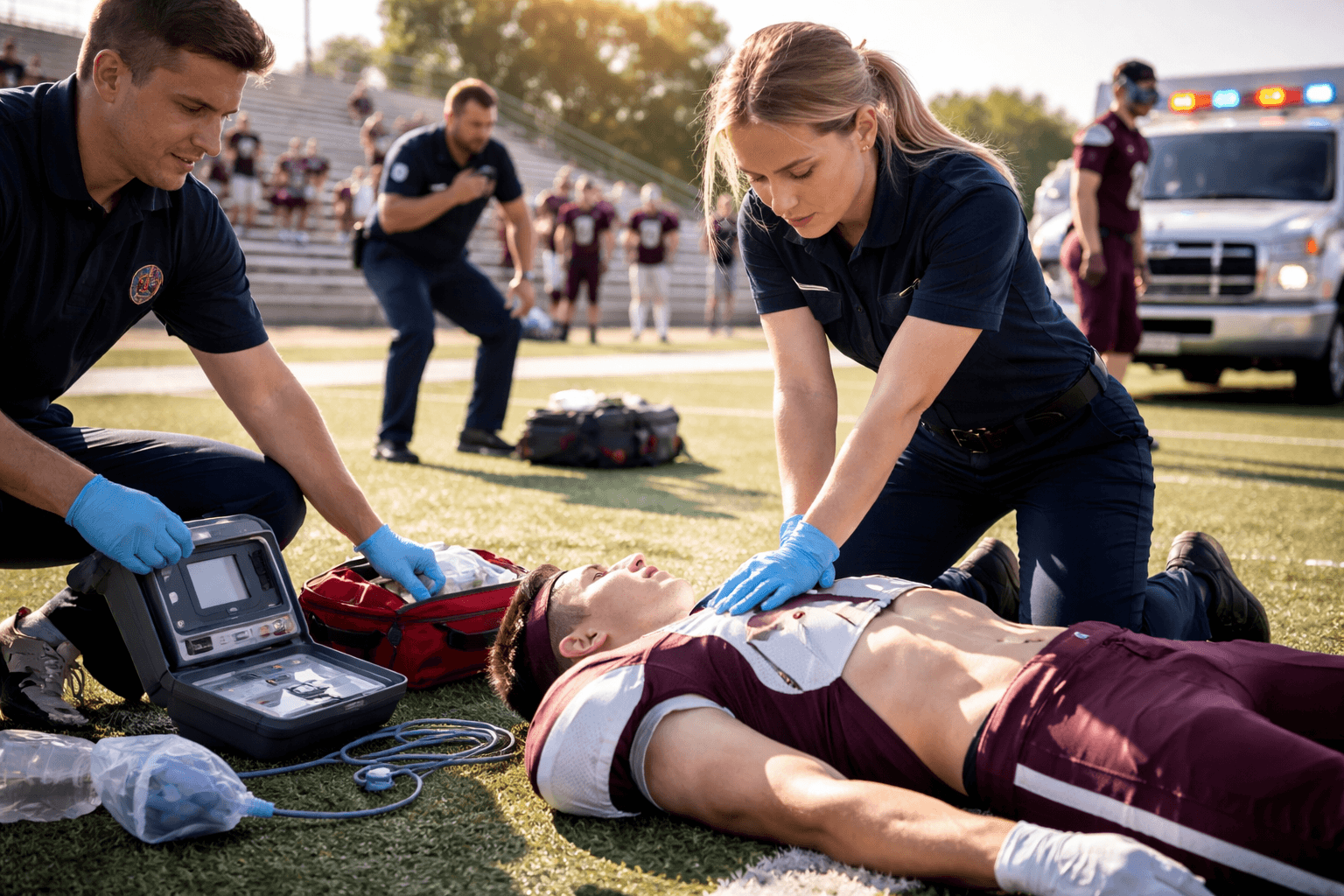
When a collapse happens during sports, every second matters. Coaches, staff members, teammates, and bystanders may be the first people on scene. The best response is to recognize the emergency quickly, call 911, begin CPR if the person is unresponsive and not breathing normally, and use an AED as soon as one is available.
CPR and AED use are not only for hospitals or paramedics. They are core emergency response skills that can support a person while professional responders are on the way. In school athletics, where intense activity is part of daily routine, that readiness can make a critical difference.
CPR response in Midland for schools, teams, and staff
For schools and youth sports programs in Midland, preparedness should include more than a phone tree. Staff should know where the AED is kept, how to access it quickly, and how to start first aid steps while waiting for EMS. Clear roles help reduce confusion when an emergency unfolds.
It is also important for athletic departments and campus leaders to review emergency action plans before the season begins. These plans should be practical, simple, and rehearsed so that CPR response in Midland is faster and more coordinated when it is needed most.
Who this article is for
This information is helpful for coaches, teachers, school nurses, athletic trainers, parents, students, and workplace safety leaders. It is also relevant to anyone in Midland who wants to be ready for cardiac arrest, fainting, choking, or other urgent situations where first aid and CPR skills may be needed.
Even outside sports, emergency response training helps people act with confidence in offices, churches, community centers, and public events. Prepared people are more likely to stay calm, call 911, and begin the right steps quickly.
Why CPR and AED training matters in Midland
CPR classes teach more than technique. They help people understand how to assess a scene, how to respond to a collapse, and how to support life until advanced care arrives. AED training adds another layer of readiness by showing teams how to use a device that may be available in a school, fitness center, or public building.
In a community like Midland, where athletics are a major part of school life and families often gather around local games, CPR education can strengthen overall safety. Training does not replace EMS, but it can bridge the gap between the emergency and the ambulance.
This article is for general educational purposes only and is not a substitute for professional medical advice, diagnosis, treatment, or certified CPR training. In an emergency, call 911 immediately.
Local support and nearby resources
As Midland families, students, and staff grieve, many people also look for ways to support one another and prepare for the future. Local CPR, first aid, and BLS training can help school employees, sports volunteers, and community members build confidence for real emergencies. CPR Certification Labs serves the Midland area from our Midland - Odessa office at 4214 Andrews Highway, Suite 202, in Midland.
If you are looking to learn CPR response in Midland, review class options, or help your team prepare for an emergency, visit our local office page here: Midland - Odessa office.
Practical reminders for emergency situations
- Call 911 immediately if someone collapses and does not respond normally.
- Start CPR if the person is unresponsive and not breathing normally.
- Use an AED as soon as it is available and follow the device prompts.
- Keep emergency equipment visible, accessible, and checked regularly.
- Practice your response plan so coaches and staff know their roles before an emergency occurs.
FAQ
When should CPR begin?
CPR should begin as soon as a person is unresponsive and not breathing normally, while someone else calls 911 and brings an AED if one is available.
Why is AED access important in schools?
An AED can provide important support during certain cardiac emergencies. Fast access helps teams respond more effectively while waiting for EMS.
Who should take CPR training?
Coaches, teachers, parents, athletic staff, security teams, and community volunteers can all benefit from CPR and first aid training.
About our Midland - Odessa office
- Address: 4214 Andrews Highway, Suite 202
- Phone: (432) 315-0921
- Email: midland@cprcertificationlabs.com
- Hours:
8am - 6pm - Monday through Friday