AED Maintenance Houston and School Emergency Readiness
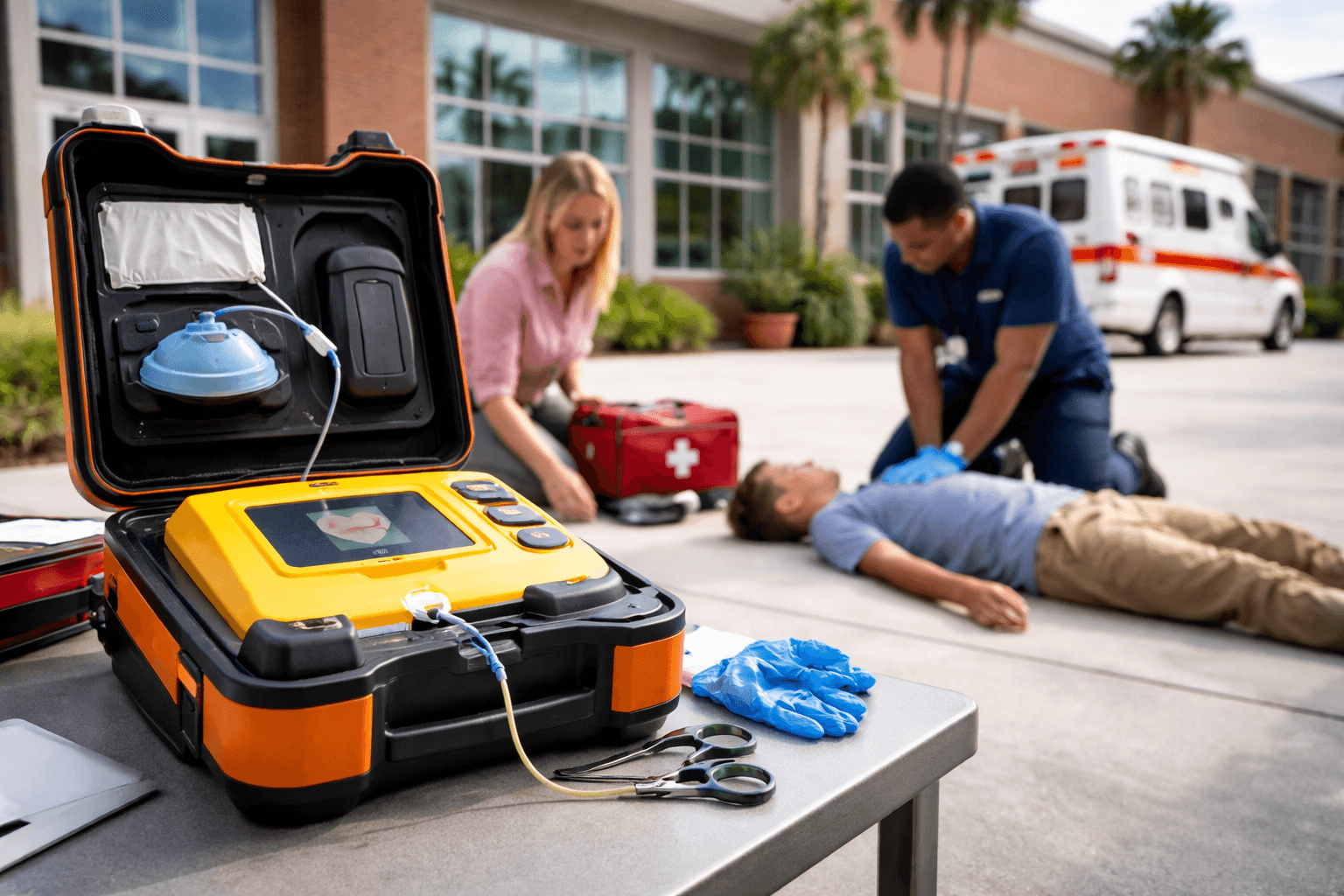
AED maintenance Houston is a serious topic for schools, workplaces, and healthcare settings because a defibrillator must be ready when an emergency happens. After a recent Houston ISD campus death, many in the community are paying closer attention to how AEDs are checked, stored, and used during cardiac emergencies.
Local Context in Houston
In Houston, schools, athletic spaces, and public buildings often depend on fast response when someone collapses or loses consciousness. In those moments, staff members may be the first people on scene, which makes CPR, AED access, and emergency response planning especially important.
For schools in particular, device readiness is not just a policy issue. It is a practical safety issue that affects students, teachers, coaches, and visitors every day. When an AED is needed, the team responding must know where it is, how to reach it, and whether it has been inspected and kept ready for use.
What AED Maintenance Means
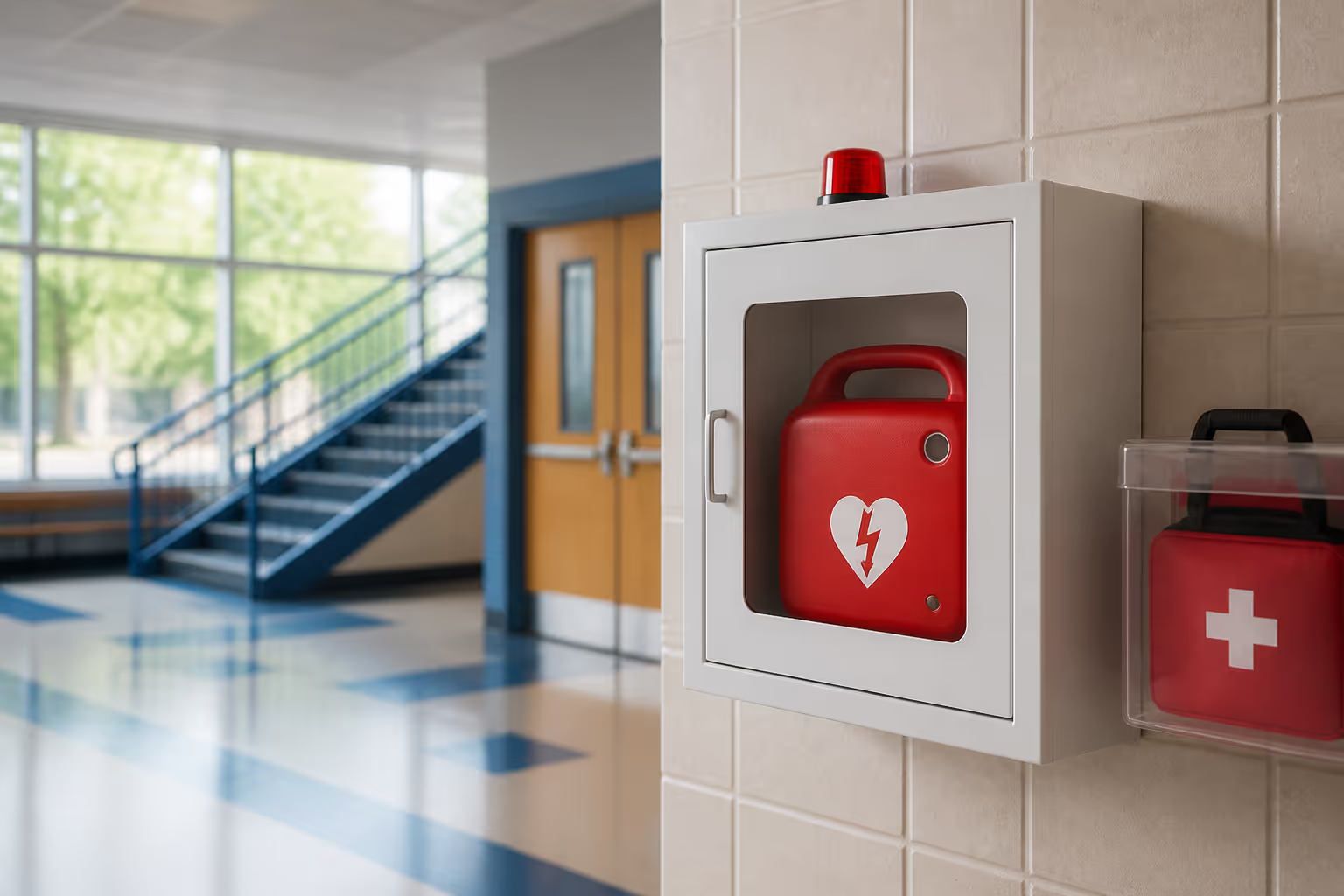
AED maintenance Houston involves the routine steps that keep a device available for use. That includes checking the unit, confirming the battery and pads are current, and making sure the cabinet or carrying case is accessible. It also means documenting inspections so staff know the device has been reviewed on schedule.
For schools and offices, AED maintenance is part of a broader emergency response plan. A device can only help if people can find it quickly and if trained responders know how to use it confidently. That is why AED checks should be paired with CPR training and regular practice.
Who This Matters For
This topic matters for teachers, school nurses, coaches, office managers, security staff, and anyone responsible for a shared building. It also matters for parents and community members who want to know that campus emergency equipment is ready if needed.
Healthcare workers and first aid teams benefit from the same basic principle: prepare before the emergency. Whether the setting is a school, clinic, gym, or office, emergency response works best when the equipment is accessible and the team knows the plan.
Why CPR and AED Training Should Work Together
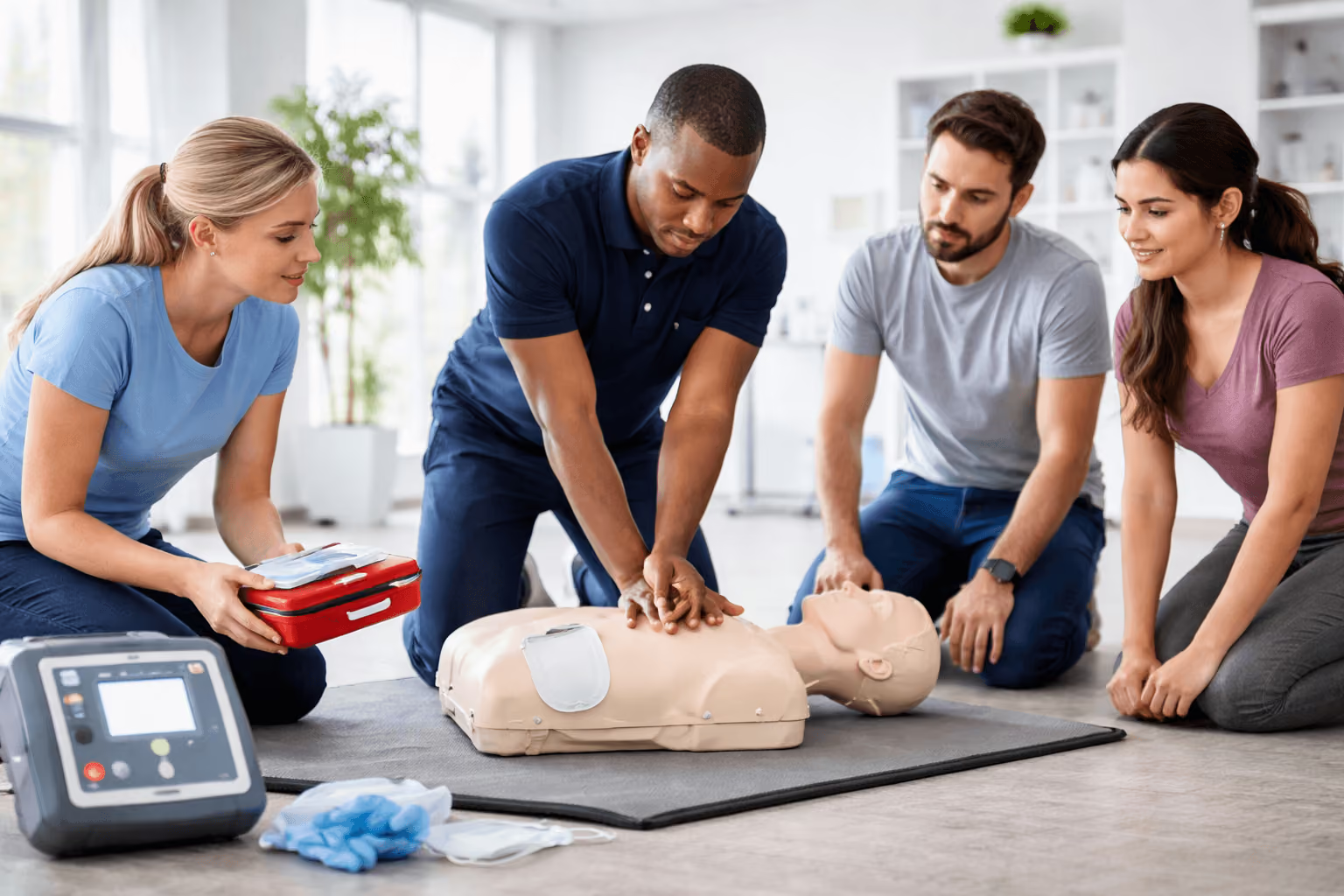
CPR and AED training are most effective when they are taught together. A person responding to a cardiac emergency needs to recognize that immediate action matters, activate the emergency response system, and use the tools available on site. AEDs are designed to support the response, but they do not replace trained action from staff or bystanders.
Texas schools are required to keep AEDs on hand and maintain them. Even when a device is present, regular training helps staff understand the response chain, including who retrieves the device, who calls for help, and who continues CPR until EMS arrives.
How CPR Certification Labs Supports Houston Professionals
CPR Certification Labs helps Houston professionals complete CPR, AED, and first aid training with a simple three-step process: schedule online, complete the online course portion, and attend the in-person skills session at the office. This format is practical for busy healthcare professionals, educators, and workplace teams who need a clear path to stay current.
Our North Houston office serves trainees who want a straightforward local option for certification and renewal. The office is located at 2930 Cypress Grove Meadows Dr in Houston, and it offers convenient hours Monday through Sunday, 7am - 8pm. If you are looking for a nearby training location, you can review details on the North Houston office page.
Nearby References for Local Planning
For Houston-area schools and employers, local planning often includes the main campus, athletic areas, administrative offices, and any shared public spaces. It is helpful to identify where AEDs are placed, who has access to them, and what staff should do if an emergency occurs during class, practice, or a school event.
That kind of preparation supports faster emergency response and helps teams stay focused under pressure. A clear plan also reduces confusion when multiple staff members are trying to help at once.
Practical Takeaways for Schools and Staff
- Know the location of every AED in the building.
- Check the device on a routine schedule.
- Make sure key staff members are trained in CPR and AED use.
- Review how to activate emergency response quickly.
- Practice roles so staff know who calls for help and who retrieves equipment.
If your school, office, or team needs a local CPR, AED, or first aid course in Houston, CPR Certification Labs can help you get started with a convenient training schedule and an in-person skills session.
This article is for general educational purposes only and is not a substitute for professional medical advice, diagnosis, treatment, or certified CPR training. In an emergency, call 911 immediately.
FAQ
Why is AED maintenance important in schools?
AED maintenance helps ensure the device is available, visible, and ready for use when an emergency happens. Regular checks support school safety planning.
Do staff members need CPR training if an AED is on site?
Yes. AEDs are part of the response, but CPR training helps staff take immediate action while waiting for EMS.
Where can Houston teams find local CPR training?
Houston teams can use CPR Certification Labs North Houston for CPR, AED, and first aid training with an online portion and in-person skills session.