AED deployment Ohio and the lesson behind Hamilton County’s patrol car upgrades
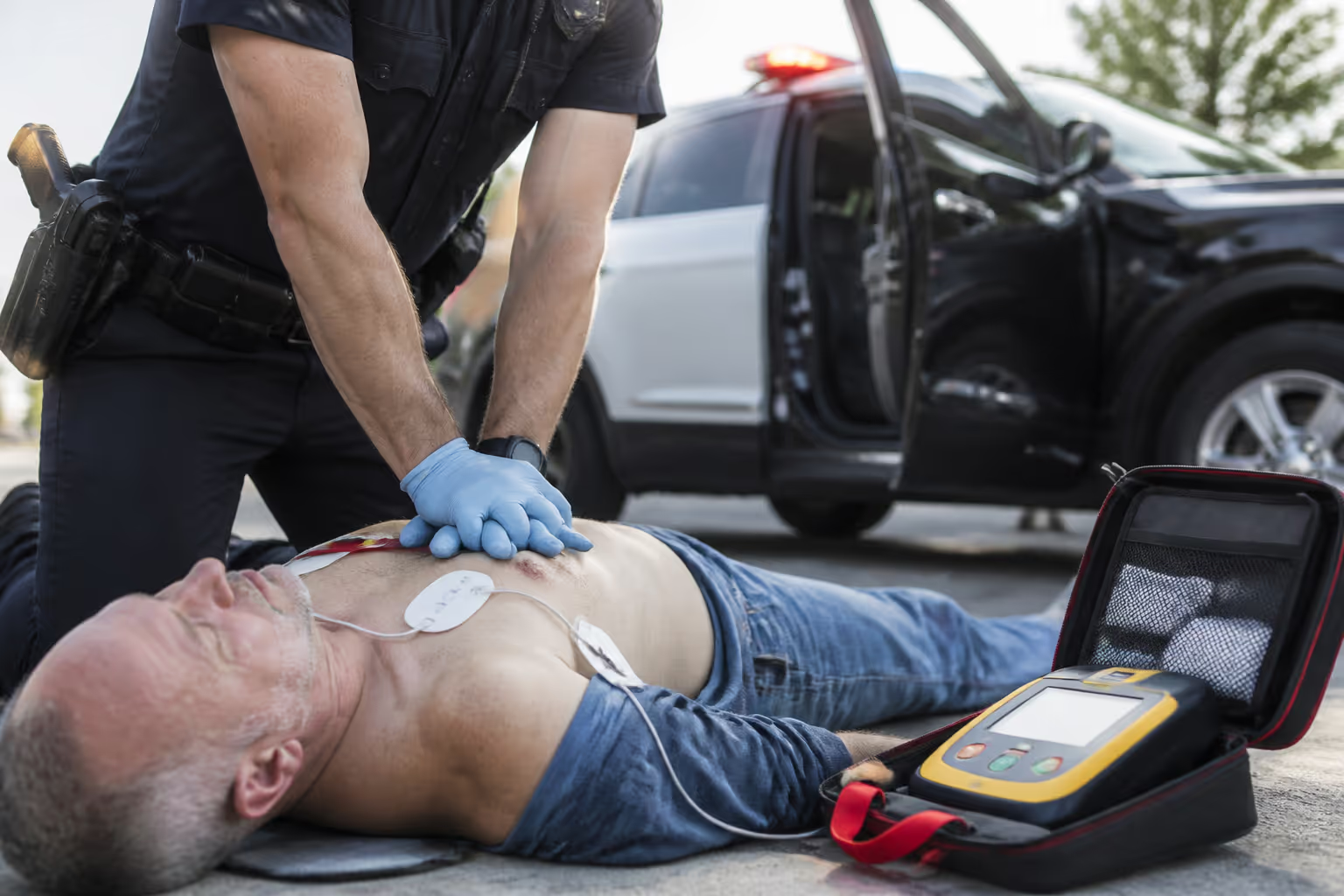
AED deployment Ohio is gaining attention after Damar Hamlin’s collapse and survival showed how fast CPR and AED access can matter during sudden cardiac arrest. In Hamilton County, that moment helped push local crews to place AEDs in patrol cars so officers can respond sooner when every second counts.
This is more than a local equipment update. It is a reminder that cardiac emergencies can happen anywhere, and that emergency response often starts before paramedics arrive. For healthcare professionals, public safety teams, and community members, the message is simple: early CPR, rapid AED use, and a quick call for help can improve the chance of survival.
How the Hamilton County effort came together
After seeing the national response to Hamlin’s collapse in Cincinnati, local leaders, the Rotary Club, and Christ Hospital helped build support for Project Heart Restart. The effort raised funds to place AEDs in 100 patrol cars across the sheriff’s department, making this the first time Hamilton County officers have carried the devices in their vehicles.
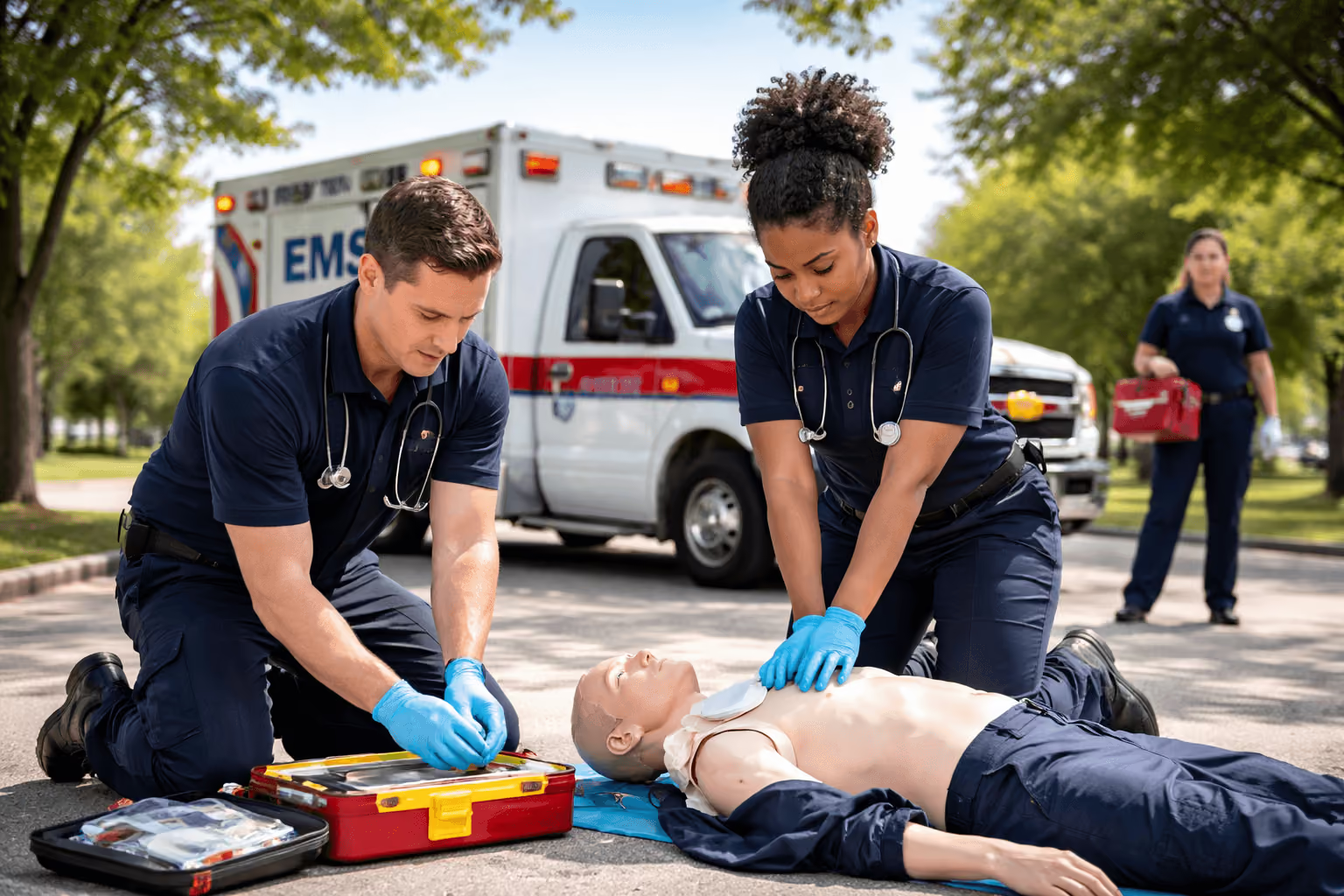
Sheriff Charmaine McGuffey said the devices are designed to guide responders once pads are applied. That matters because an AED can provide clear prompts during a cardiac arrest emergency, helping trained responders act quickly while waiting for advanced care. The initiative also reflects a practical reality: public safety teams may arrive before an ambulance, especially in neighborhoods where minutes matter.
Why AED access matters during sudden cardiac arrest
Sudden cardiac arrest is different from a heart attack. It can happen without warning, and it often leaves a person unresponsive and not breathing normally. In those moments, CPR keeps blood moving, and an AED can help determine whether a shock is needed. The combination is why AED deployment Ohio efforts are important for first responders and the public alike.
Mark Johnston, an emergency coordinator at Christ Hospital involved in the project, noted that no one can predict where collapse will happen. That uncertainty is exactly why placing AEDs in patrol cars, buildings, and other public spaces can help narrow the time between collapse and treatment. The goal is not to replace paramedics; it is to improve the first minutes of emergency response.
Who should pay attention to this news
This story is relevant to law enforcement agencies, EMS teams, hospital staff, workplace safety coordinators, athletic organizations, and anyone responsible for a public gathering space. It also matters to families, coaches, teachers, and fitness workers who may be the first to recognize cardiac arrest and start CPR.
For healthcare professionals, the news reinforces a familiar point: survival often depends on how well bystanders and first responders work together. For employers and community leaders, it is a reminder to review AED placement, device readiness, and staff training on emergency response.
What CPR and AED training can improve
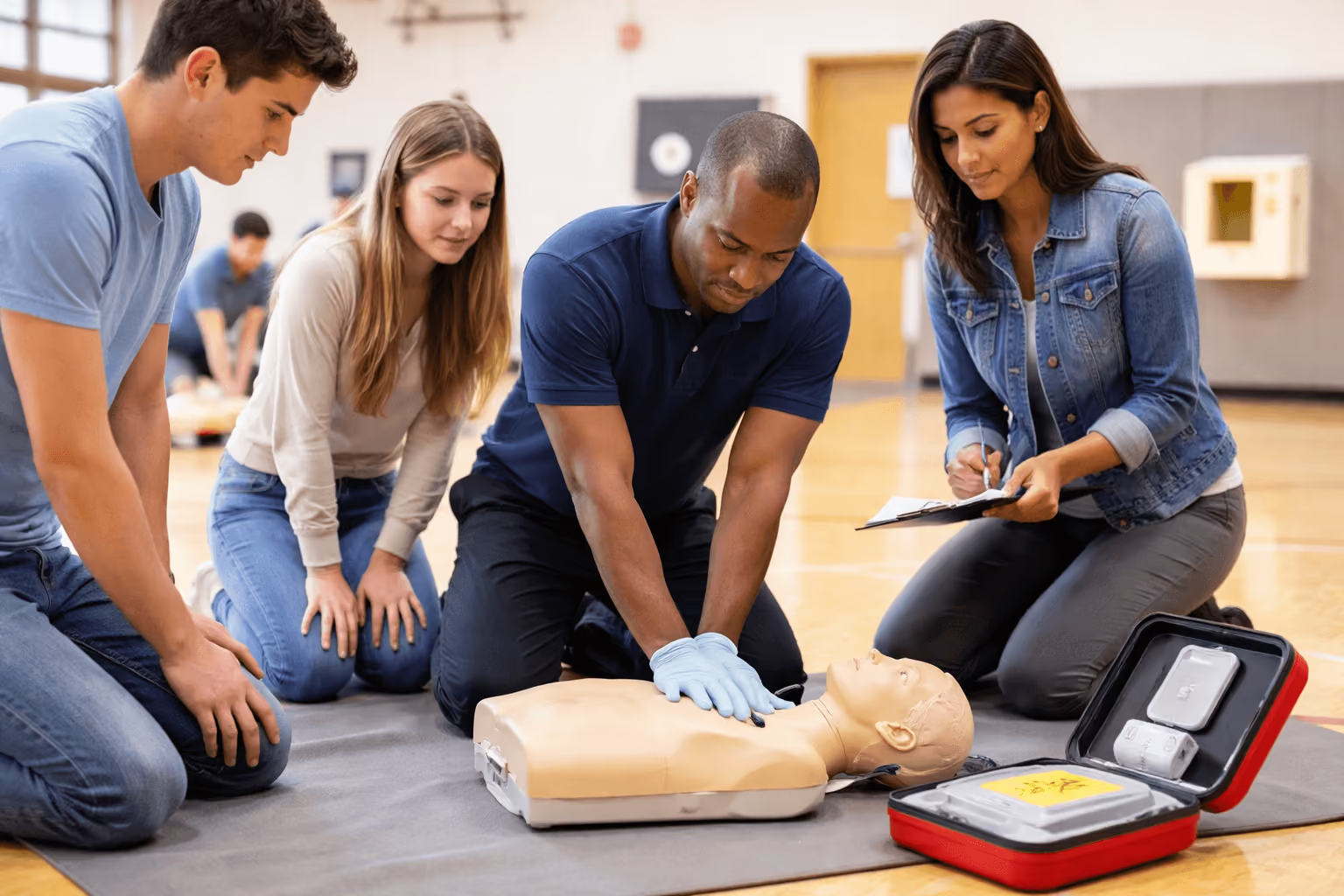
Training helps people recognize when to act. A person who has collapsed, is unresponsive, and is not breathing normally may need immediate CPR and AED support. In those moments, trained responders can follow the device prompts while another person calls 911 and helps direct EMS crews to the scene.
- Learn how to check responsiveness and breathing
- Know where AEDs are stored in your building or vehicle fleet
- Practice CPR and safe AED pad placement
- Review your site’s emergency response plan
- Make sure someone is ready to call 911 right away
This article is for general educational purposes only and is not a substitute for professional medical advice, diagnosis, treatment, or certified CPR training. In an emergency, call 911 immediately.
Why CPR Certification Labs supports local preparedness
CPR Certification Labs helps healthcare professionals and community members build confidence with CPR, AED, first aid, and emergency response skills. Local readiness is especially important when public safety teams, clinics, schools, and workplaces want their staff prepared before an emergency happens. Training can also help teams use an AED more effectively once one is available on site or in a patrol car.
For organizations in Ohio, the larger lesson from Hamilton County is clear: equipment matters, but so does training. An AED is most useful when people know where it is, how to use it, and when to act. That is why routine practice and refreshers are important parts of a strong response plan.
Nearby references and local readiness in Cincinnati and Hamilton County
Hamilton County’s Project Heart Restart shows how local partnerships can expand access to lifesaving tools. The Rotary Club and Christ Hospital helped support the effort, and the county sheriff’s office now has AEDs in patrol cars. That kind of public-private coordination can serve as a model for other departments, community centers, and workplaces in the region.
If your organization is reviewing emergency preparedness, start by checking whether AEDs are available, visible, and maintained. Then confirm that staff know how to respond if someone collapses. In many emergencies, the first person on scene is not a doctor or paramedic; it is a coworker, officer, teacher, or bystander.
Learn more and find the right CPR class
If you want to strengthen your team’s response plan, CPR Certification Labs offers training designed to support CPR, AED, and first aid readiness for healthcare professionals and community groups. To find a convenient local office page, visit CPR Certification Labs.
When a cardiac emergency happens, preparation matters. AED deployment Ohio is one example of how communities can turn a difficult moment into a practical step toward better emergency response.
FAQ
What is the difference between CPR and an AED?
CPR helps keep blood and oxygen moving when the heart stops pumping effectively. An AED analyzes the heart rhythm and may advise a shock if needed. They work together during sudden cardiac arrest.
Why are AEDs being placed in patrol cars?
Patrol cars often arrive quickly and can reach a scene before paramedics. Carrying an AED gives officers another tool for early response during cardiac arrest.
Should someone still call 911 if an AED is available?
Yes. Emergency responders should be contacted immediately. An AED does not replace professional care, and calling 911 helps get advanced medical support to the scene.