Houston AED safety and the push for stronger school readiness
Houston AED safety has become a more urgent topic as Texas lawmakers revisit school safety measures after the death of HISD student Landon Payton brought attention to emergency preparedness. For parents, teachers, coaches, and staff, the discussion is not only about policy. It is also about whether schools have the training, equipment, and response plans needed when seconds matter.
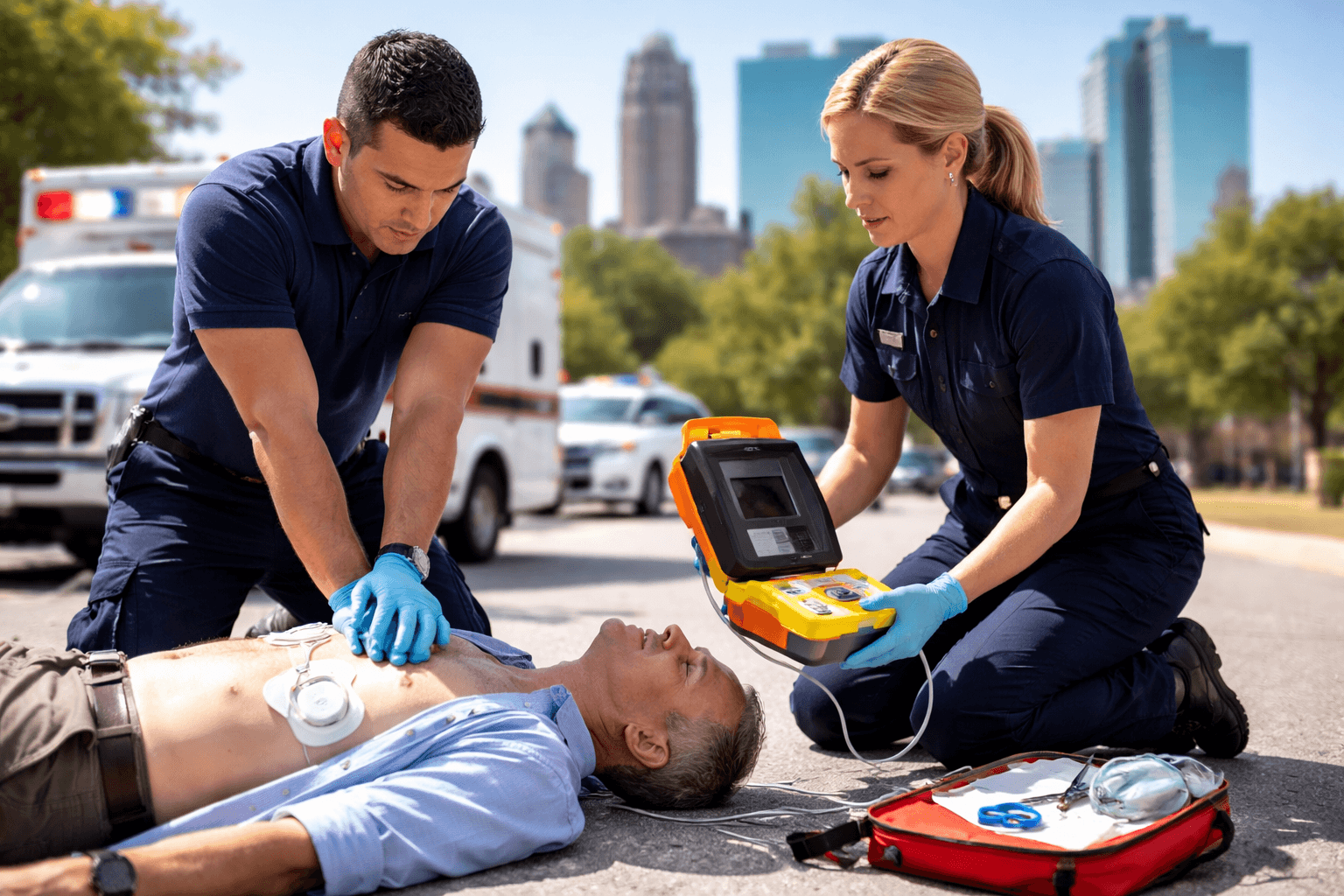
This moment is a reminder that cardiac arrest can happen without warning, including in school settings. When that happens, CPR, an AED, and a fast emergency response can make a critical difference while waiting for paramedics to arrive.
What the school safety discussion is about
In response to the loss of a Houston student, Texas leaders are considering bills that would strengthen school safety planning. A major part of that conversation centers on AED access and whether school personnel are prepared to act quickly in a medical emergency. The goal is straightforward: make sure schools are better equipped to respond before a situation becomes more serious.
For families in Houston, this issue is close to home. School campuses, athletic facilities, and extracurricular programs all rely on staff who may be the first to recognize a problem. Clear procedures, visible AED placement, and CPR-trained adults can improve the chances of a coordinated response.
Why Houston AED safety matters in schools
Houston AED safety is about more than having a device on campus. An AED must be easy to locate, maintained properly, and used without hesitation when cardiac arrest is suspected. Staff members should also know how to activate emergency response, direct others to the device, and begin CPR right away if needed.
In a school environment, that readiness can support:
- Faster response during sports practices and games
- Better coordination during classroom or hallway emergencies
- More confidence among staff and volunteers
- Stronger emergency response planning for large campuses
What CPR and AED training can teach
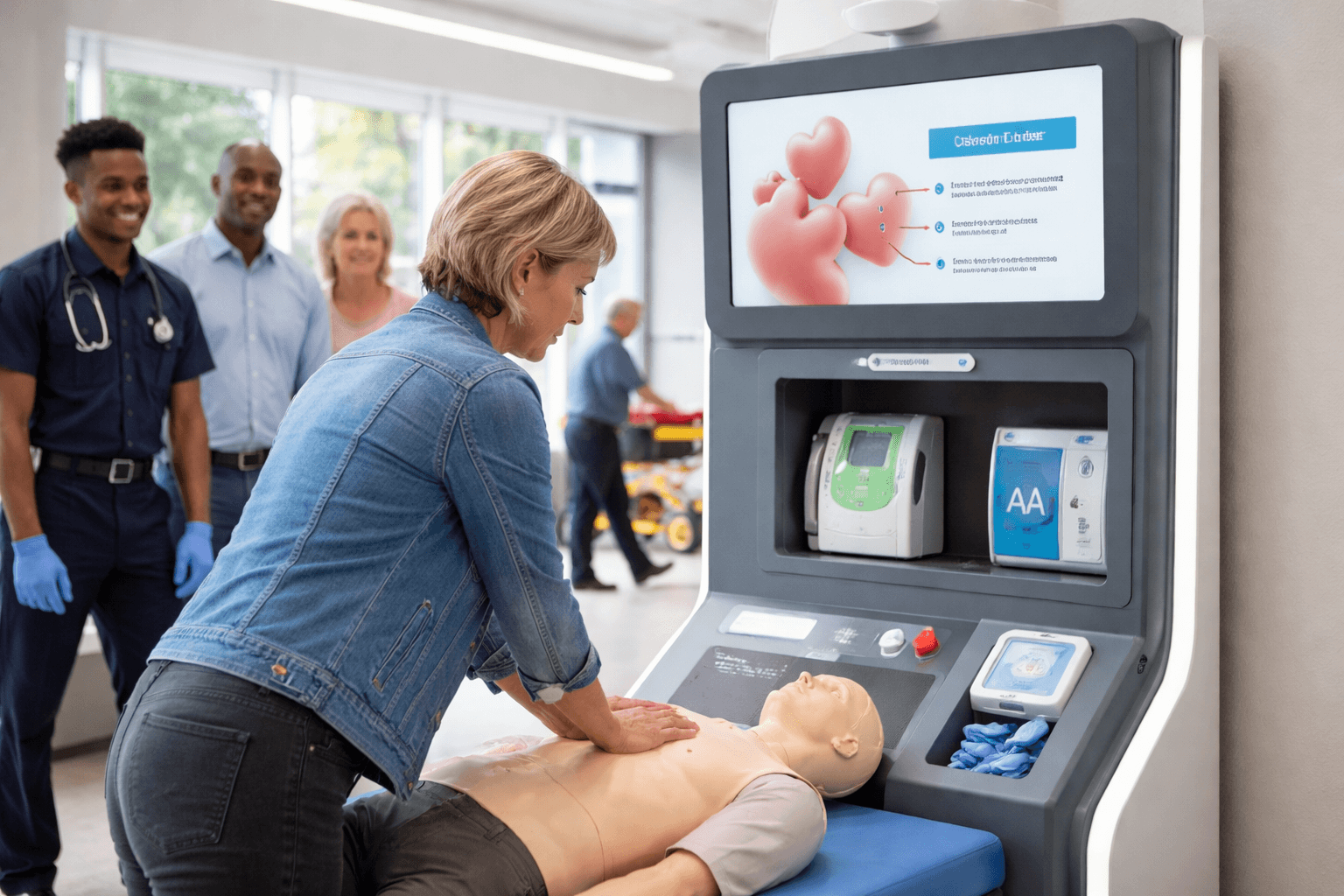
Certified CPR and AED courses give learners a practical framework for responding under pressure. Training typically covers how to recognize cardiac arrest, when to use an AED, how to provide chest compressions, and how to work with other responders until EMS takes over. First aid education can also help staff respond to other urgent situations that may occur at school or in after-school programs.
For healthcare workers, educators, and school employees, this kind of preparation supports calm decision-making. It also helps people understand what their role is during the first few minutes of an emergency response.
Who should think about training now
This topic matters for school administrators, teachers, coaches, athletic trainers, daycare staff, and community members who volunteer around children and teens. It is also relevant for parents who want to understand how schools prepare for emergencies.
Anyone responsible for students or large groups should know where the AED is located, how to summon help, and how to begin CPR if a person collapses and is unresponsive.
Local relevance for Houston families and staff
Houston is a large city with busy campuses, athletic programs, and active youth organizations, so local preparedness matters. Nearby community spaces and school areas can benefit when more adults know basic CPR, first aid, and emergency response steps. That includes workplaces and training environments throughout North Houston, where readiness can help people act with more confidence during a medical emergency.
For those looking to build or refresh their skills, CPR Certification Labs offers training at its North Houston office at 2930 Cypress Grove Meadows Dr, Houston, TX. The office serves learners who want practical instruction in CPR and AED use in a clear, professional setting. You can learn more here: North Houston office.
Why this kind of training matters
When a school community experiences a loss, the response often includes hard questions about prevention, readiness, and equipment. Training does not remove every risk, but it does help adults respond more effectively in the moments that matter most. That is why CPR, AED use, and first aid remain essential parts of school and community safety planning.
This article is for general educational purposes only and is not a substitute for professional medical advice, diagnosis, treatment, or certified CPR training. In an emergency, call 911 immediately.
FAQ
Why is AED access important in schools?
Because an AED can help respond to sudden cardiac arrest before emergency medical services arrive. Quick access and trained users are both important parts of school safety.
Who should receive CPR training for school settings?
Teachers, coaches, administrators, athletic staff, and volunteers who supervise students can all benefit from CPR and AED training.
Does first aid training replace CPR training?
No. First aid and CPR training serve different purposes. First aid helps with a range of injuries and sudden illnesses, while CPR and AED training focus on cardiac emergencies.