AED response in College Station and why it matters
AED response in College Station is an important part of community emergency readiness because sudden cardiac arrest can happen without warning in places where people gather, compete, work, and train. Stories about survival often remind us that preparedness is not abstract; it is practical, immediate, and learned before an emergency starts.
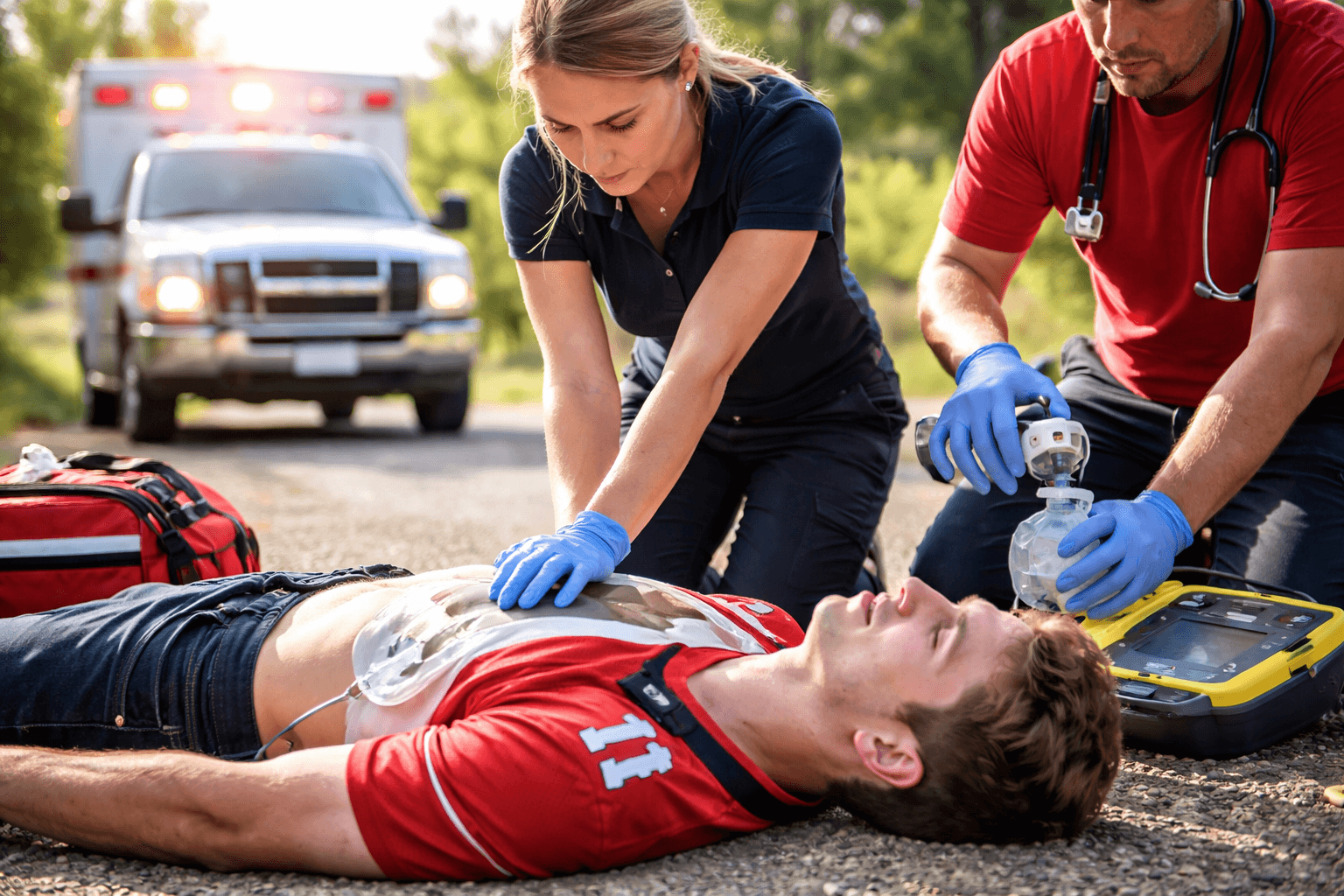
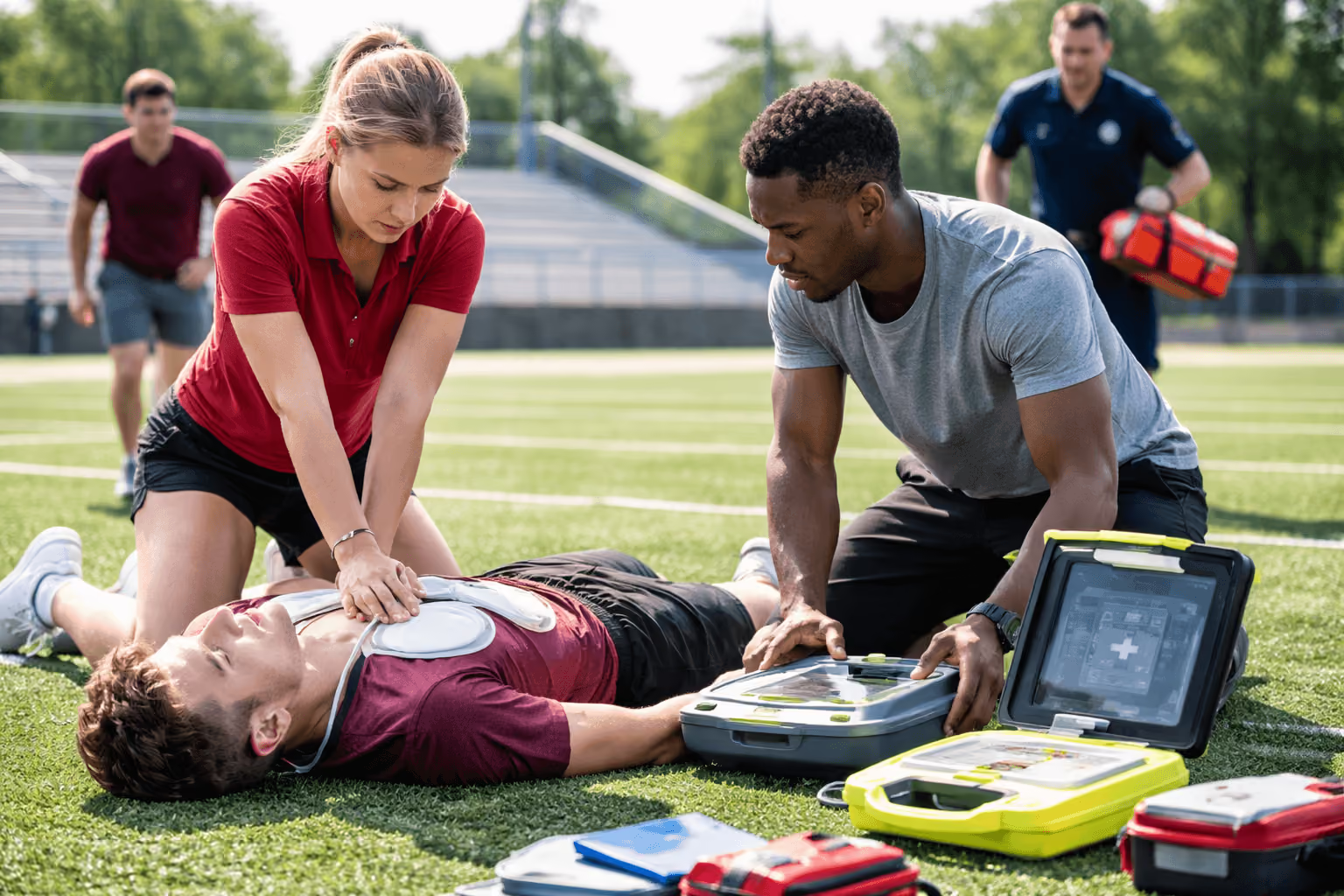
In a recent human-interest sports story, the focus was on how an AED can help turn a frightening moment into a survivable one when bystanders are ready to act. That kind of outcome depends on simple, practiced emergency response steps and a calm plan before help arrives.
What the story teaches about emergency response
One of the biggest lessons from any AED-related story is that speed matters. When someone collapses and is unresponsive, the people nearby are the first link in the emergency response chain. They may need to recognize the situation, get an AED, and begin CPR while emergency help is on the way.
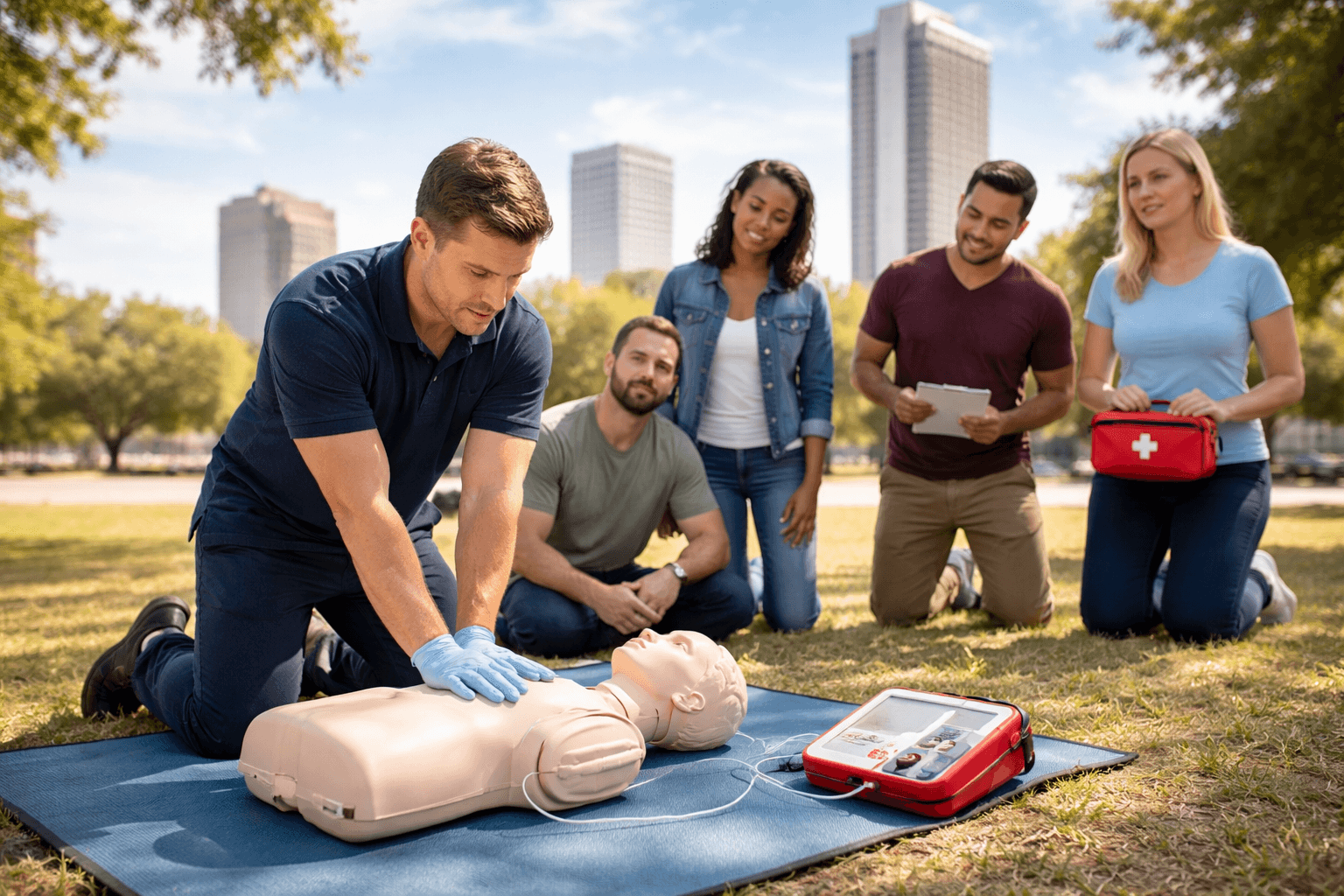
This is why CPR and AED training are so valuable in schools, gyms, offices, athletic programs, and public spaces. The device is designed for quick use, but the person using it still needs confidence, clear steps, and the ability to work as a team under pressure.
Practical lessons for College Station residents
For people in College Station, the lesson is straightforward: prepare before an emergency happens. Whether you coach, teach, manage a workplace, or work in healthcare, CPR and first aid awareness can help you respond with more confidence.
Local teams and organizations can also benefit from a simple response plan:
- Know where the nearest AED is located.
- Assign someone to call 911 right away.
- Use CPR training to practice clear roles during an emergency response.
- Keep your skills current through regular renewal.
These steps do not replace professional help, but they can help bridge the gap until responders arrive.
Who should consider CPR and AED training
CPR, AED, and first aid training can be useful for healthcare workers, coaches, teachers, office staff, personal trainers, camp counselors, and anyone responsible for groups of people. It is also helpful for families who want to be more prepared at home.
In many settings, people are expected to act quickly even if they are not medical professionals. Training helps reduce hesitation and makes emergency response feel more manageable.
Training options at CPR Certification Labs
CPR Certification Labs offers a simple three-step process for busy professionals in the Bryan - College Station area: schedule online, complete the online course portion, and attend the in-person skills session at the office. That structure makes it easier to fit CPR and AED training into a workweek or family schedule.
Our Bryan - College Station office is located at 501 Graham Rd, Suite 16, College Station, TX, with hours from 6am to 12am, 7 days a week. For those coming from nearby neighborhoods or work sites, that flexibility can make renewal and initial training more convenient.
If you want to learn more or book an appointment, visit the Bryan - College Station office page.
AED response in College Station for workplaces and sports settings
AED response in College Station is especially relevant in active environments like athletic facilities, schools, and job sites where people may be far from immediate help. In those settings, the combination of CPR knowledge, AED access, and a practiced response plan can make a real difference in how quickly care begins.
That is why local preparedness matters. When a community understands how to respond, more people are ready to step in before the moment turns into a longer emergency.
Why choose CPR Certification Labs
CPR Certification Labs focuses on clear instruction, local convenience, and practical training for people who need CPR, AED, and first aid skills for work or personal readiness. The goal is to make the process straightforward and accessible for learners who need dependable training without unnecessary complexity.
For College Station residents, nearby access and flexible hours can make it easier to stay current on training requirements and build confidence in emergency response.
This article is for general educational purposes only and is not a substitute for professional medical advice, diagnosis, treatment, or certified CPR training. In an emergency, call 911 immediately.
If you are ready to get started, review the office page, choose a session time that works for you, and complete your CPR and AED training with a local team that understands the needs of College Station professionals.