AED response in Carrollton and why speed matters
AED response in Carrollton is gaining attention because sudden cardiac arrest is a time-sensitive emergency. When a person collapses, the difference between delay and action can shape the next steps for bystanders, first responders, and the person in need.
Recent investment in connected AED technology is part of a broader push to make devices easier to track, maintain, and place where people gather. For Carrollton workplaces, schools, fitness centers, and community spaces, the main lesson is practical: readiness, training, and clear emergency response procedures matter.
What Avive’s expansion suggests about emergency response
Avive’s latest growth round, reported at $56.5 million, is intended to expand the company’s connected defibrillator network and support commercial growth. The company says its devices use cellular, WiFi, GPS, and Bluetooth connectivity to help monitor readiness and location.
That matters because connected AED systems may help organizations keep track of devices more reliably and reduce the chance that an AED is unavailable when needed. In other words, the value is not only the device itself, but also the ability to support faster access and better oversight.
Carrollton’s inclusion in Avive’s “4 minute city” initiative is a reminder that emergency response is increasingly local. The goal is to place AEDs where they can be reached quickly and to connect them to public safety systems so bystanders and responders can act sooner.
Table of contents
- What happened
- How CPR, AED, and first aid work together
- Who should think about AED response in Carrollton
- Why training still matters
- Local Carrollton resources
- FAQ
How CPR, AED, and first aid work together
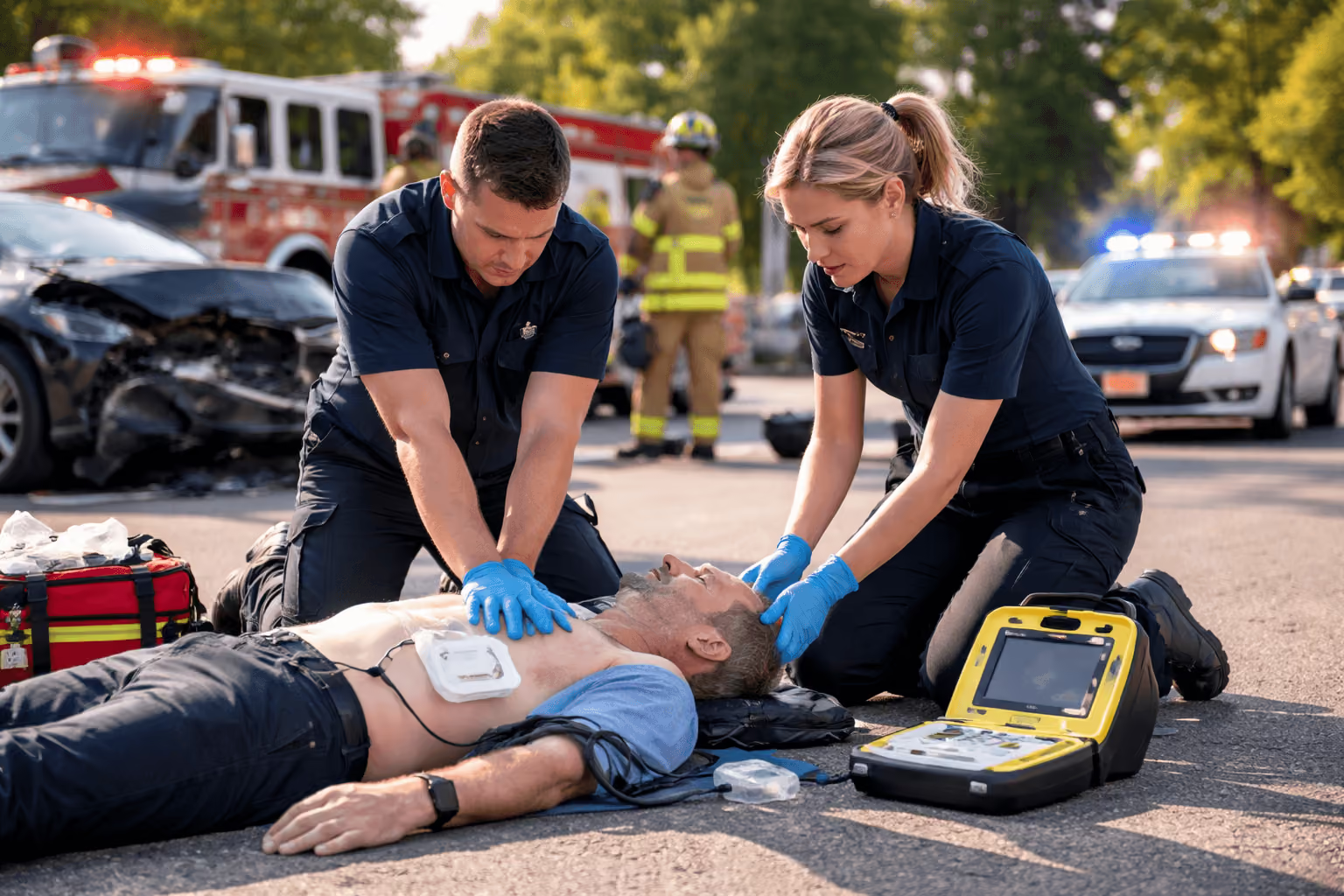
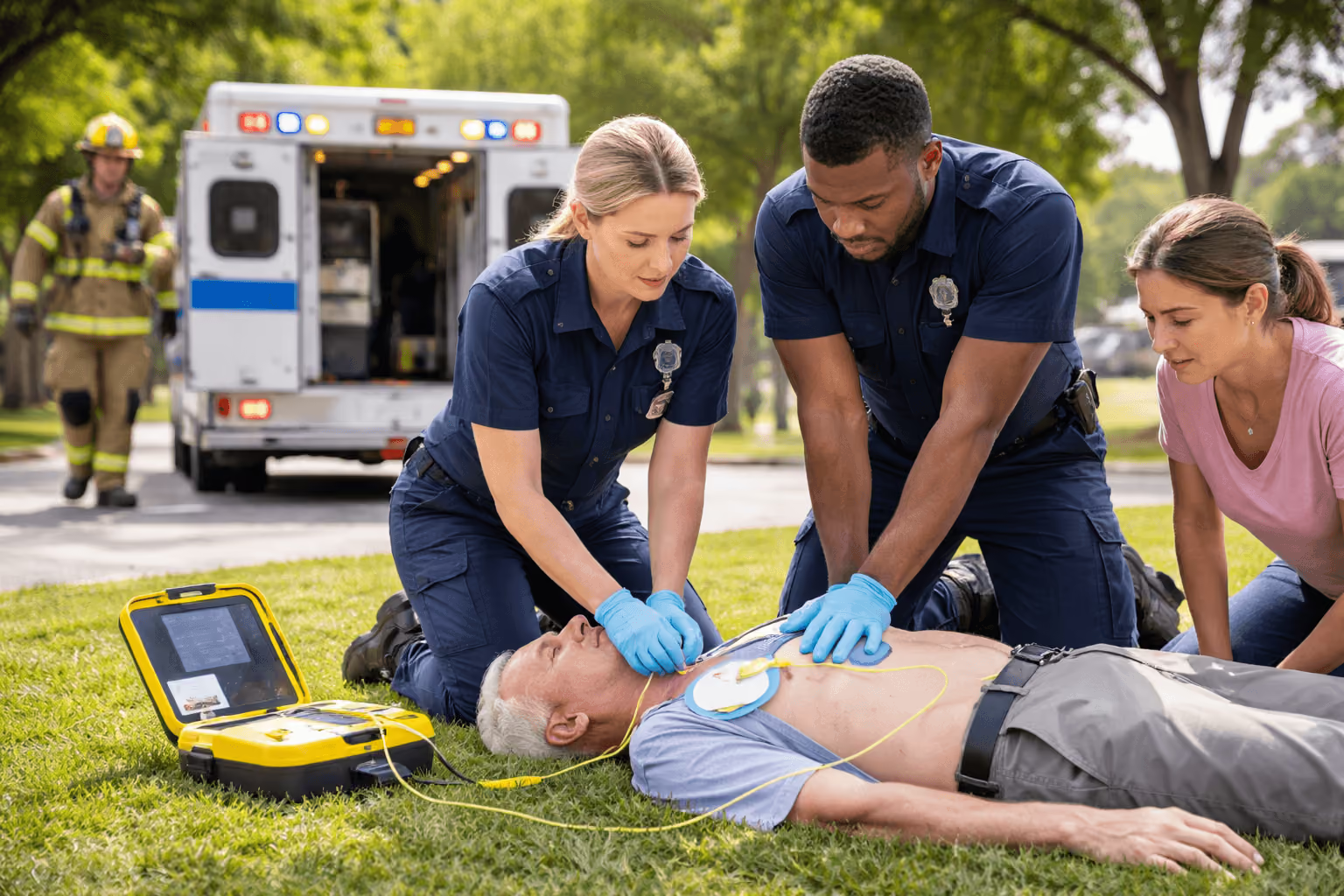
Cardiac arrest is not the same as a heart attack. If someone is unresponsive and not breathing normally, the response should be immediate: call 911, begin CPR, send someone for the AED, and follow the device prompts as soon as it arrives.
First aid knowledge also supports better emergency response because it helps bystanders stay organized and focused. A simple, practiced plan can reduce hesitation, especially in the first few minutes before EMS arrives.
An AED is designed to give voice prompts and visual cues, so it can be used by trained professionals and lay rescuers. The key is not to wait for perfect conditions. In cardiac arrest, teamwork and speed are more important than certainty.
Who should think about AED response in Carrollton
This topic is relevant for many people in and around Carrollton:
- Business owners responsible for workplace safety
- School staff and administrators
- Fitness center teams and members
- Church and community volunteers
- Healthcare professionals who want current CPR and AED skills
- Anyone building an emergency response plan
If your organization already has an AED, it helps to confirm who knows where it is, who can retrieve it quickly, and who is trained to use it during an emergency. Those details can save time when every second matters.
Why training still matters
Technology can improve visibility, but it does not replace action. A connected AED may help with monitoring and accessibility, yet someone still has to recognize the emergency, start CPR, and call 911 right away.
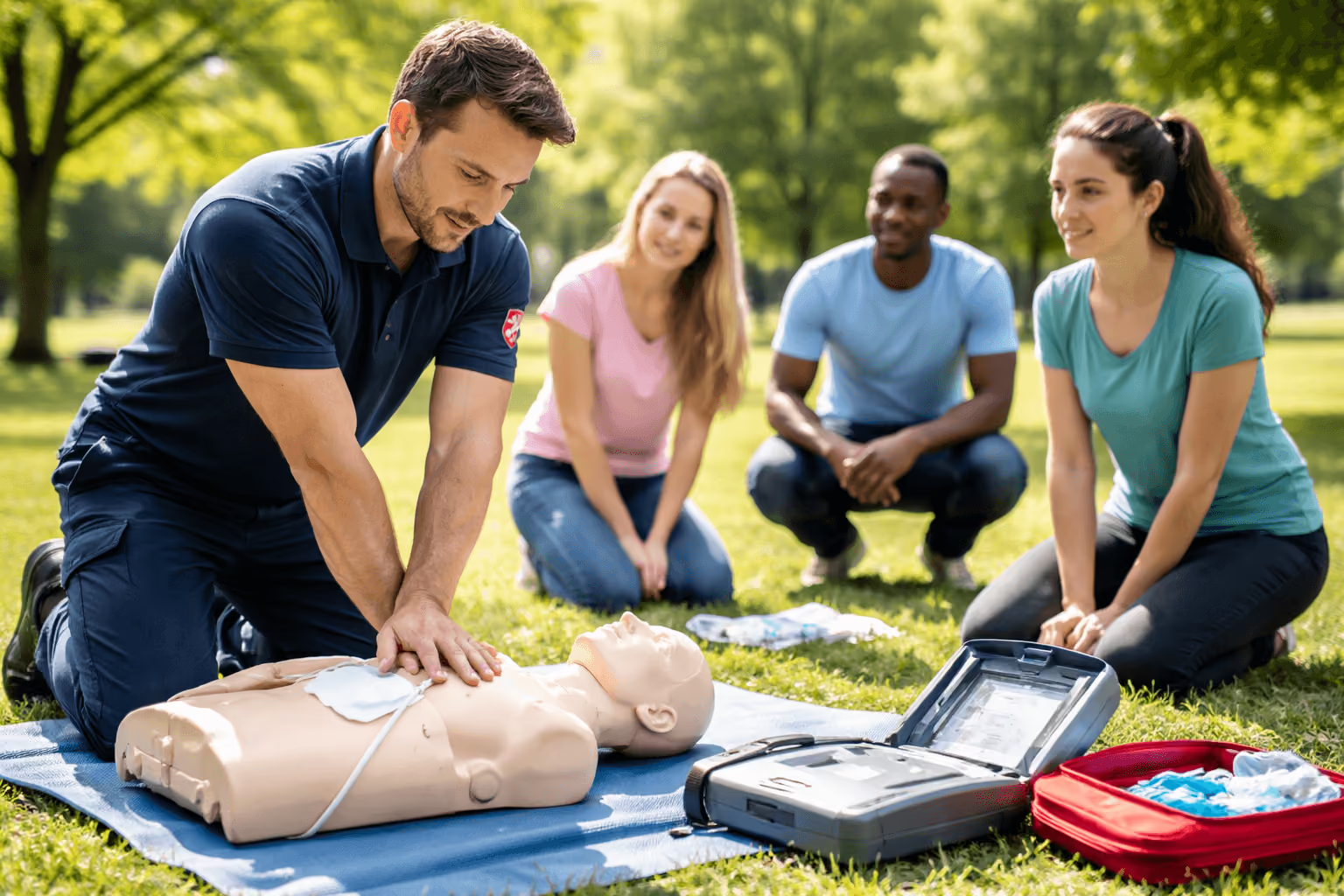
That is why CPR, AED, and first aid training remain essential for schools, workplaces, and community groups. Training helps people respond with a clear sequence instead of freezing under pressure. It also supports better communication so one person can call for help while another gets the AED and another begins compressions.
One source-backed point worth noting: Avive’s release tied its expansion to the low rate of AED use in sudden cardiac arrest events and to the known benefit of early defibrillation in the first few minutes. That is a practical reminder that faster access matters most when response is immediate.
Local Carrollton resources
For Carrollton residents and organizations looking to strengthen CPR and AED readiness, CPR Certification Labs offers local training through the Dallas - Carrollton office at 1406 Halsey Way Suite 110. It is a convenient option for learners who want straightforward instruction and a local schedule that fits busy professional needs.
Training is especially useful for teams that want a shared emergency response plan. If you are reviewing device placement, updating procedures, or preparing staff for cardiac arrest response, local CPR and AED education can help make the plan easier to execute.
To learn more about training options in the area, visit the Dallas - Carrollton office page. You can also review local course options and scheduling details to find the right fit for your team.
This article is for general educational purposes only and is not a substitute for professional medical advice, diagnosis, treatment, or certified CPR training. In an emergency, call 911 immediately.
Nearby community planning may also include checking AED signage, making sure access points stay clear, and confirming that more than one person on site knows the response plan. Those small steps support faster action when cardiac arrest happens without warning.
FAQ
What does AED response in Carrollton mean?
It refers to how quickly a community, workplace, or school can recognize cardiac arrest, call 911, start CPR, and use an AED when needed.
Why are connected AEDs getting more attention?
Connected AEDs may help organizations monitor device readiness and location more effectively, which can support faster emergency response when seconds matter.
Who should take CPR and AED training?
Anyone who may be first on scene, including healthcare professionals, teachers, coaches, business staff, and community volunteers, can benefit from training.
Does first aid training replace CPR training?
No. First aid is helpful, but CPR and AED training are still important for cardiac arrest response.
About our Dallas - Carrollton office
- Address: 1406 Halsey Way Suite 110
- Phone: (972) 440-0527
- Email: carrollton@cprcertificationlabs.com
- Hours:
Monday – Sunday: 7am - 8pm