AED rescue story: a football game reminder about quick action
An AED rescue story can stay with a community for years because it shows what fast CPR, AED access, and steady emergency response can mean in real life. This football-game story centers on Matt Nader, whose life was once saved with an AED during a game and who later returned the favor when someone else needed help. It is the kind of event that reminds coaches, parents, players, and healthcare professionals that readiness matters long before an emergency starts.
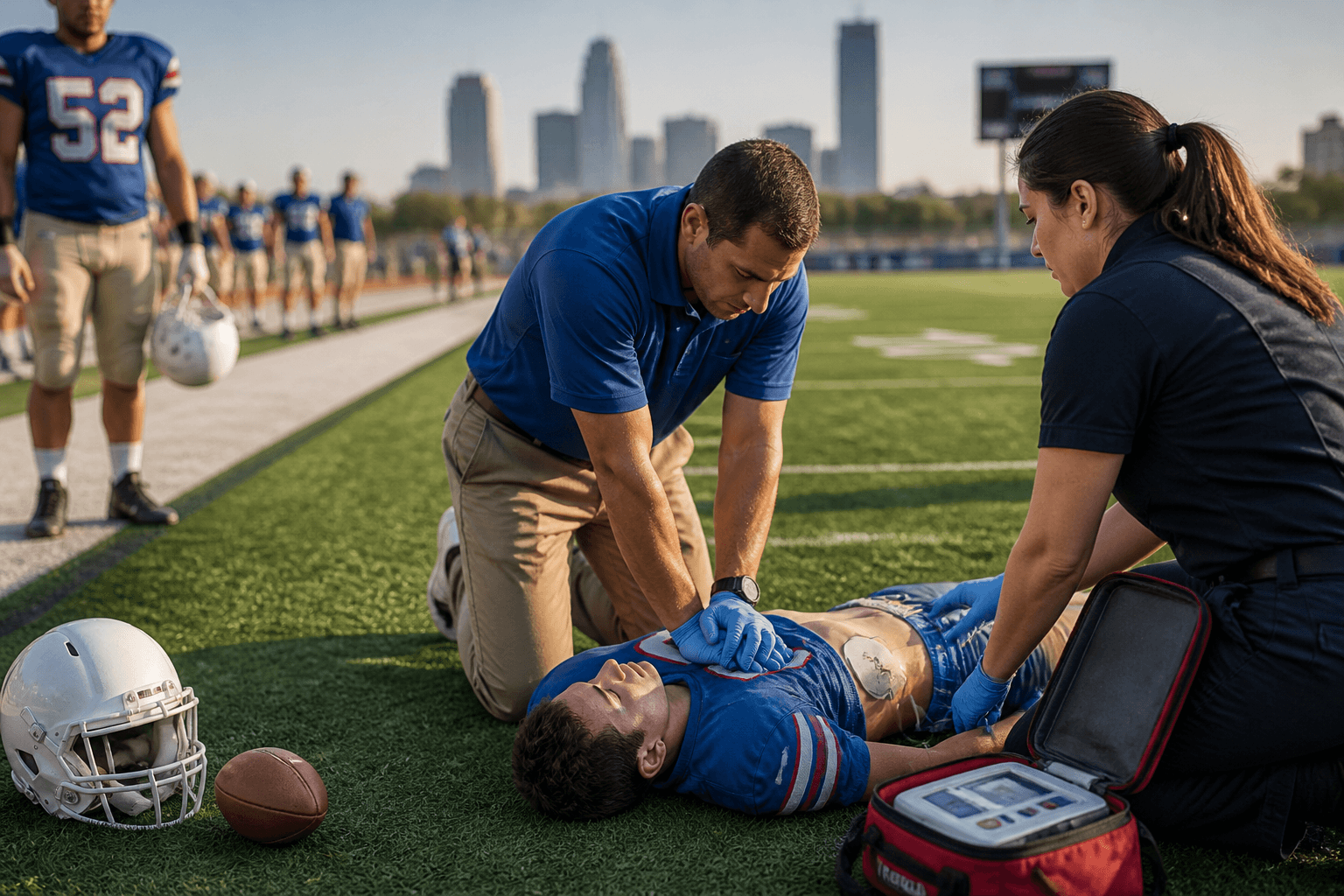
In a setting like a high school football game, people expect competition, noise, and energy. They do not expect a sudden collapse or a medical emergency. Yet cardiac arrest can happen in public places without warning. When it does, the response has to be immediate: recognize the emergency, call 911, start CPR if needed, and get an AED to the scene as quickly as possible.
What happened in this AED rescue story
According to the story that drew attention in Oklahoma and beyond, Matt Nader experienced a life-saving AED rescue years ago during a game. That earlier moment created a powerful connection to emergency preparedness and the value of having the right equipment nearby. Years later, he was in a position to help someone else during another urgent football-game situation, showing how lifesaving training and access can come full circle.
The most important part of this story is not only the emotional twist. It is the chain of action behind it. Someone recognized danger, responders acted, and an AED was available when time mattered most. That is what turns a frightening collapse into a real chance for survival.
What this football-game rescue teaches
This Matt Nader story is a practical lesson for any school or community that gathers around athletics. A football field is not just a place for sports; it is also a place where emergency response may be needed without warning. The key lesson is that bystanders do not have to be perfect. They just have to act quickly, stay calm, and use the tools available.
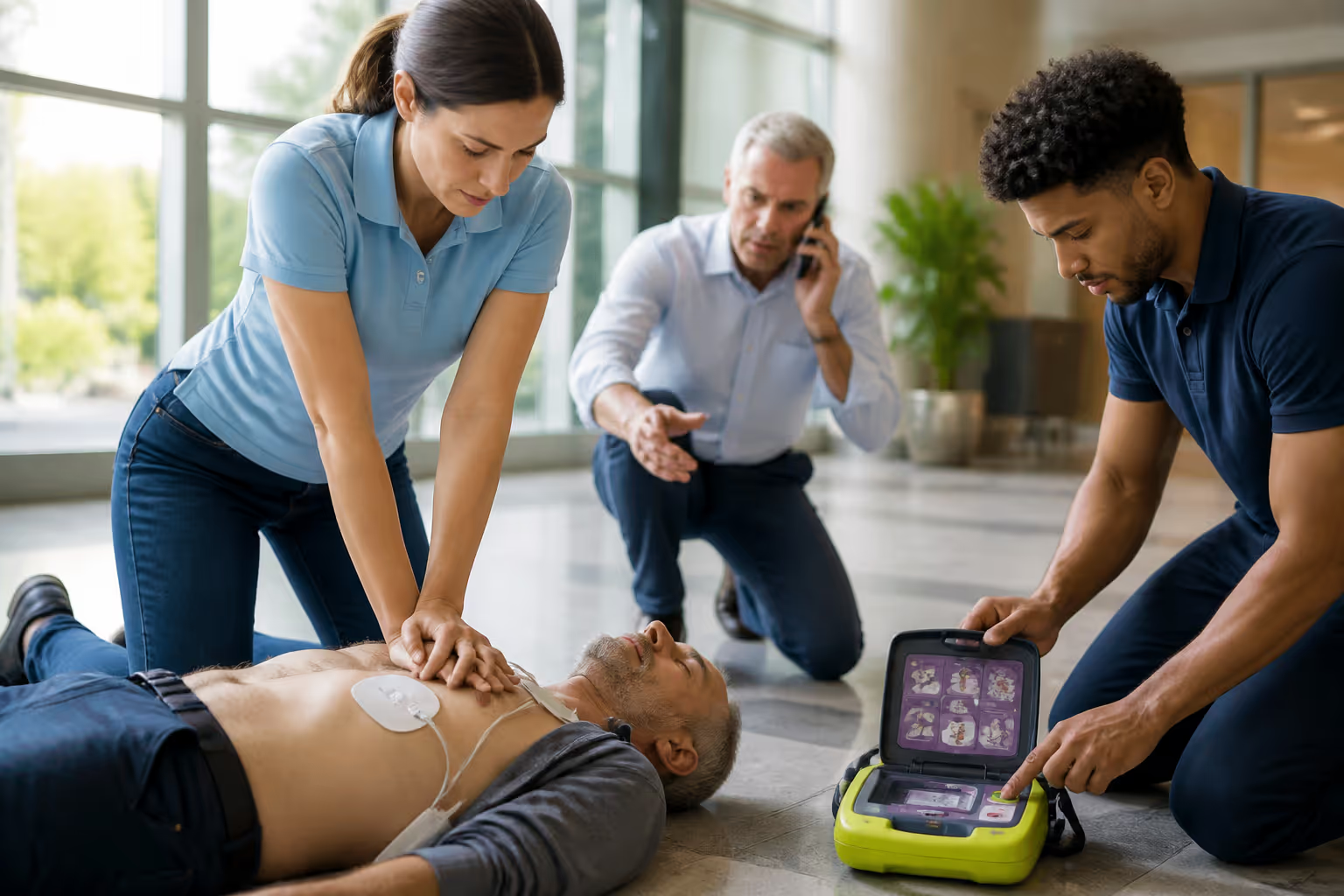
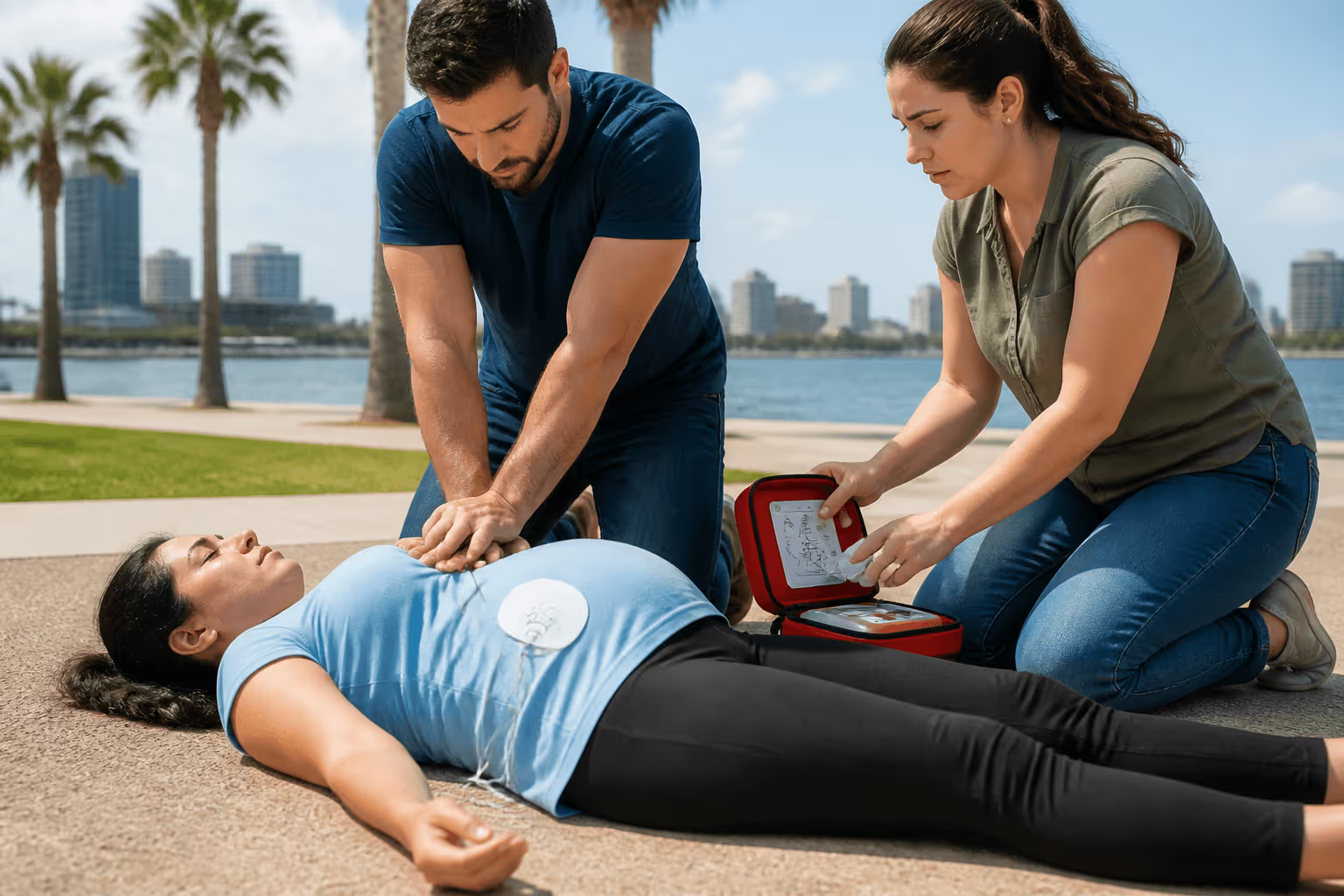
If someone suddenly becomes unresponsive and is not breathing normally, the next steps are clear. Get help. Call 911. Send someone to locate the AED. Begin CPR if the person needs it. Follow the AED prompts as soon as the device is brought to the scene. Those simple actions can support the person until professional responders arrive.
For readers who want the broader public-health context, the American Heart Association explains why immediate CPR and AED use are central to cardiac arrest survival. You can review those general recommendations here: American Heart Association. For the original local reporting on this football-game rescue, see the Austin American-Statesman.
CPR, AED use, and first aid basics for emergencies
Cardiac arrest is different from a heart attack. A heart attack is a circulation problem; cardiac arrest is when the heart stops pumping effectively and the person may collapse, stop responding, or stop breathing normally. In that moment, first aid knowledge and emergency response skills become essential.
- Check the area for safety before approaching.
- Tap and shout to see whether the person responds.
- Call 911 and ask someone nearby to bring the AED.
- Start CPR if the person is not breathing normally.
- Use the AED as soon as it arrives and follow the voice instructions.
AEDs are designed to be straightforward in an emergency. They analyze the heart rhythm and give step-by-step prompts. CPR helps maintain blood flow while the AED is being retrieved or used. Together, they form the core of a strong emergency response.
This article is for general educational purposes only and is not a substitute for professional medical advice, diagnosis, treatment, or certified CPR training. In an emergency, call 911 immediately.
Who this AED rescue story is for
This story matters to anyone responsible for people in active or crowded settings. That includes athletic staff, school employees, coaches, teachers, parents, volunteers, and healthcare professionals. It also matters to community members who want to be ready if a neighbor, teammate, student, or friend suddenly needs help.
The more people who know where the AED is kept and how to respond, the more likely an emergency scene will be organized instead of chaotic. Training builds confidence, and confidence helps people take action faster. That is true in a gym, on a sideline, in a clinic waiting room, or at a school event.
Why CPR training still matters in Oklahoma City
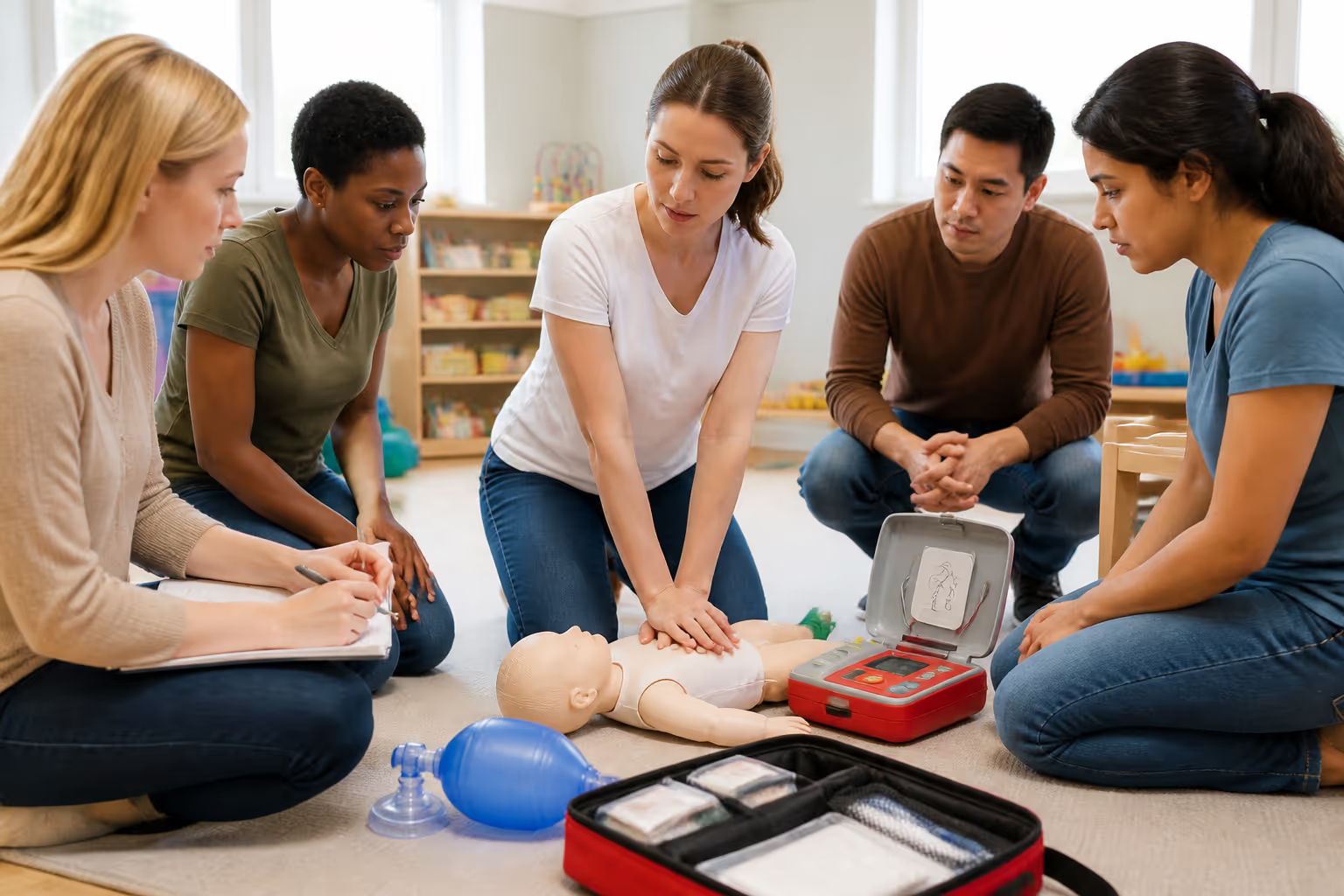
In Oklahoma City, local CPR and AED training can be a practical step for people who work or volunteer around children, athletes, patients, and the public. The Oklahoma City North office at 9012 N Kelley Avenue offers a nearby option for learners who want direct, local instruction in CPR, AED use, and first aid basics.
For those comparing options or planning ahead, nearby training can make it easier to fit a class into a work schedule and stay prepared for the unexpected. If you want to connect this article to a local training resource, visit Oklahoma City North.
Nearby settings where preparedness matters
Football games are only one example of why emergency readiness matters. The same skills apply in schools, clinics, workplaces, churches, recreation centers, and community gatherings. Any place where people come together can become the scene of a sudden collapse or other urgent health issue.
Knowing how to recognize cardiac arrest and how to respond before EMS arrives is part of keeping a community safer. That is why AED placement, CPR training, and clear emergency roles should be taken seriously wherever people gather.
Simple takeaways from the Matt Nader story
- An AED rescue story can show the value of preparation in a real emergency.
- Call 911 right away when someone collapses and is not breathing normally.
- CPR and AED use work together during cardiac arrest.
- Training helps people respond with confidence at school games and other public events.
- Local CPR and first aid classes can support better emergency response in everyday life.
If you want to build practical readiness for the next emergency response situation, CPR Certification Labs offers local training that can help you learn the skills before you need them.
About our Oklahoma City North office
- Address: 9012 N Kelley Avenue
- Phone: (572) 384-8189
- Email: oklahomacity@cprcertificationlabs.com
- Hours:
Monday to Thursday: 8:30am - 4:30pm
Friday: 12pm - 4:30pm