AED placement in Dallas and why location matters
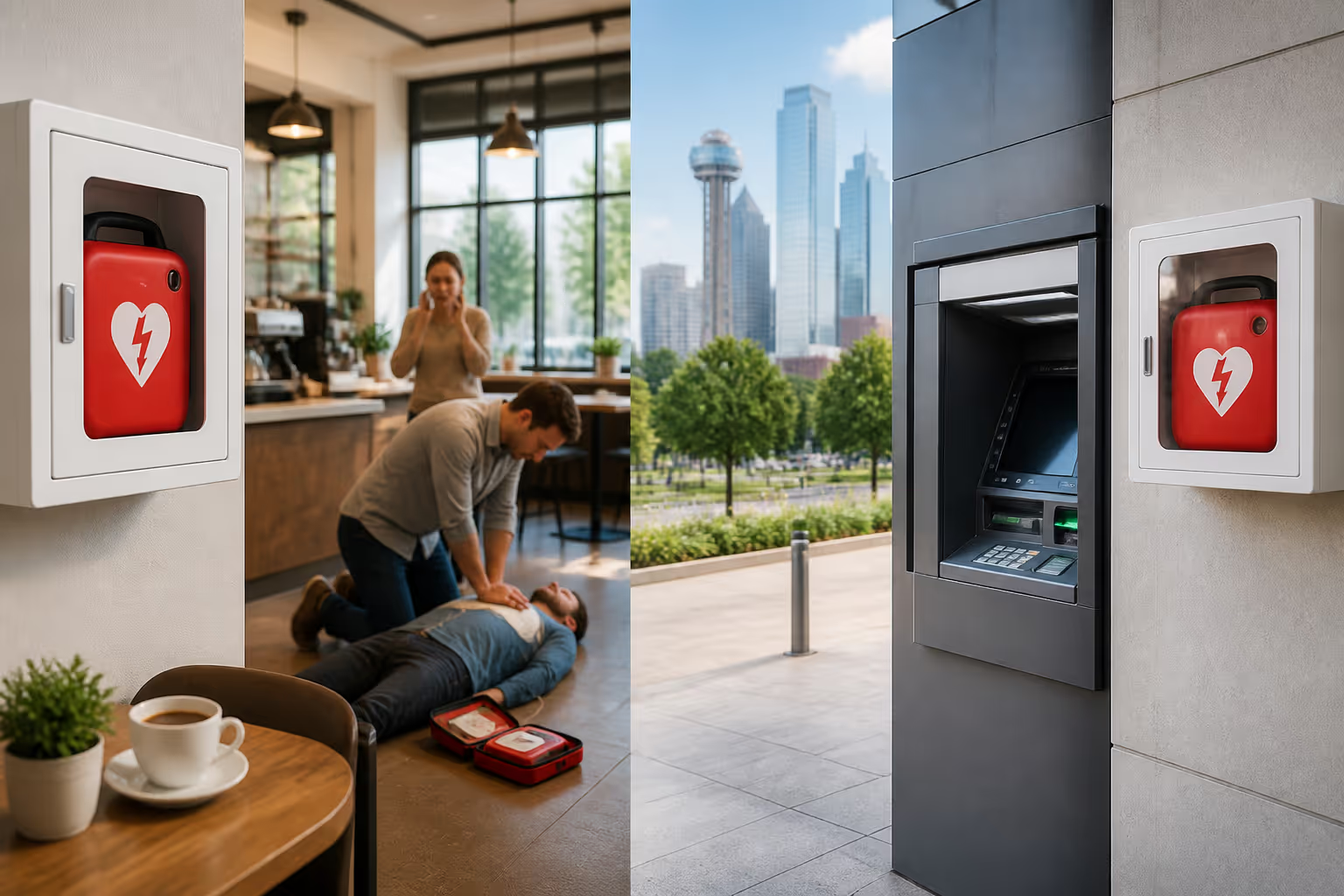
AED placement in Dallas is a practical public safety issue because sudden cardiac arrest can happen anywhere, including a coffee shop, office lobby, or transit stop. When an AED is visible, reachable, and paired with people who know CPR, the first minutes of emergency response become much more effective.
American Heart Association research has helped shift attention toward everyday locations where people naturally gather. Coffee shops and ATMs are part of that discussion because they are familiar, publicly accessible, and often placed in busy areas where a quick response may matter.
This article is for general educational purposes only and is not a substitute for professional medical advice, diagnosis, treatment, or certified CPR training. In an emergency, call 911 immediately.
What the research suggests about public AED access
The core lesson is simple: a public AED helps most when people can find it fast and use it without delay. Researchers have looked at where out-of-hospital cardiac arrest events tend to occur and whether nearby public locations could realistically hold a device that bystanders can reach in time.
That is why coffee shops and ATMs are often discussed. They are common, easy to recognize, and frequently located in places with steady traffic. The research does not mean every site is automatically ideal. It means communities should think about visibility, access, and how much time it takes to retrieve the AED during an emergency response.
For readers who want to review the broader evidence, the American Heart Association summary of this research can be found here: American Heart Association AED location research.
AED placement in Dallas should reflect real Dallas patterns
Dallas is a large city with dense commercial corridors, neighborhood gathering spots, and a mix of office, retail, and transit spaces. AED placement in Dallas should be guided by where people actually spend time and where a bystander could reach a device quickly.
That makes local context important. In areas such as Deep Ellum, where foot traffic can stay high, or around DART stations, where commuters move through shared spaces throughout the day, AED placement should be evaluated with accessibility in mind. The same is true in business districts, medical office areas, and other public-facing spaces where emergency response may depend on fast action.
Dallas organizations that manage public spaces should also consider how clearly an AED is marked, whether staff can point to it immediately, and whether the device stays accessible during business hours. A good location is one that does not create confusion when seconds matter.
Some communities use AED registries or mobile response tools to help people locate devices faster. Cities and workplace teams may also benefit from pulse-point style apps or other notification systems that help trained responders coordinate during a cardiac arrest event. The key is to make the device easier to find before an emergency happens.
How AEDs support CPR, first aid, and emergency response
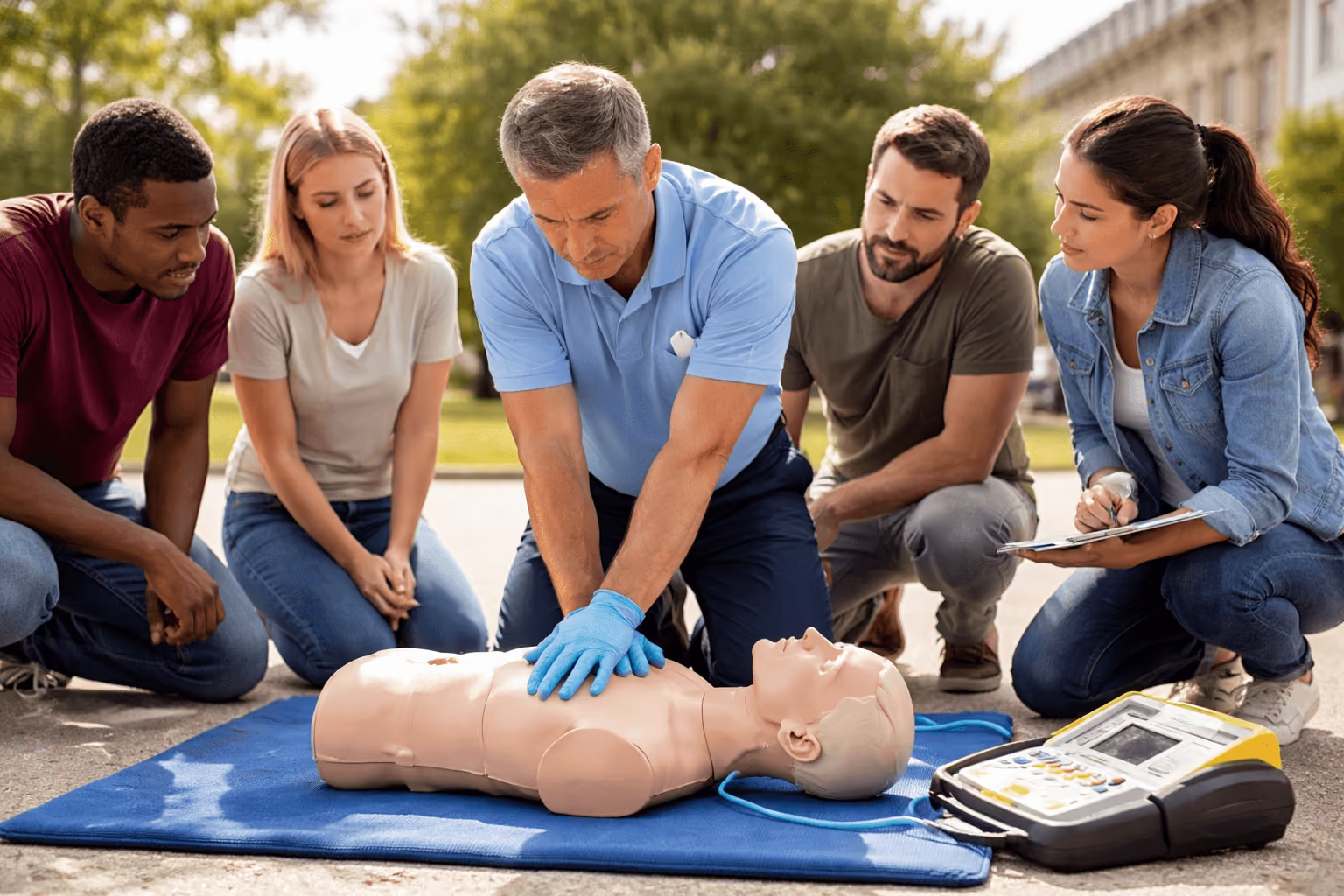
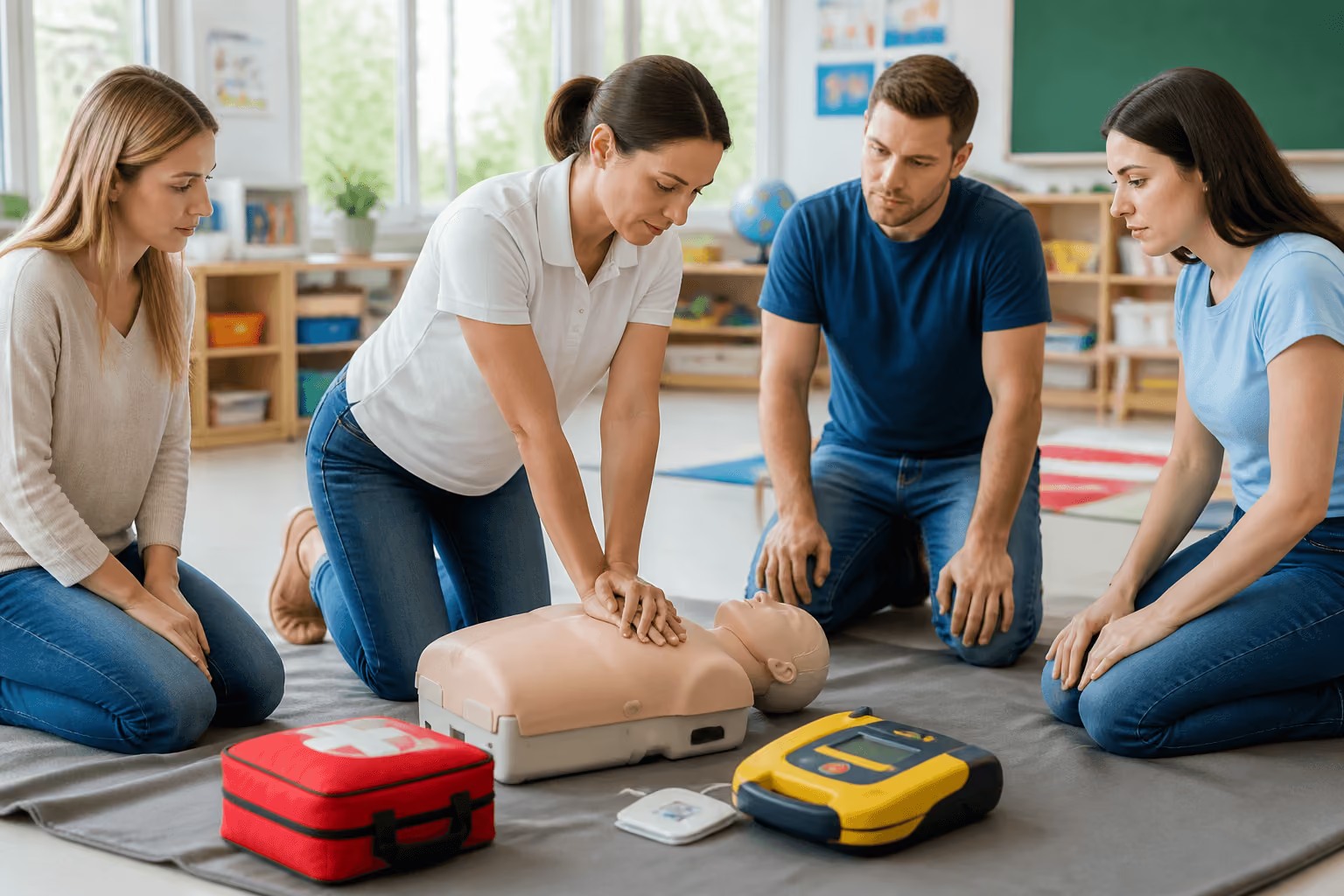
An AED is designed to analyze a person’s heart rhythm and provide voice prompts that guide the rescuer. It is not a replacement for CPR. Instead, it works with CPR and rapid emergency response to improve the chance that help arrives in time.
In a suspected cardiac arrest, the priorities are straightforward: recognize the collapse, call 911, begin CPR if the person is not breathing normally, send someone to get the AED, and follow the device instructions as soon as it arrives. Clear roles help reduce delay and keep the response focused.
First aid training is also useful because not every emergency starts as a cardiac arrest. A trained team can better recognize distress, communicate with dispatchers, and prepare the scene for EMS arrival. That preparation matters in workplaces, schools, gyms, and public businesses across Dallas.
Simple emergency response priorities
- Check for responsiveness and normal breathing.
- Call 911 right away or direct someone else to do it.
- Send another person to bring the nearest AED.
- Start CPR if the person is not breathing normally.
- Use the AED as soon as it is available and follow the prompts.
Who should care about AED access in Dallas
Business owners, property managers, healthcare professionals, office teams, educators, fitness staff, and community leaders all play a role in stronger emergency response. If you oversee a public location, it is worth asking whether visitors could find an AED quickly and whether staff know where it is stored.
This topic also matters to families, commuters, and anyone who spends time in shared public spaces. The more people who understand CPR, AED use, and basic first aid, the more likely it is that someone can step in during the critical first minutes of a cardiac emergency.
In Dallas, that readiness can be especially valuable in high-traffic settings such as entertainment areas, transit connections, and busy commercial streets. The goal is not only to own an AED, but to place it where a trained responder can actually use it without delay.
Benefits of choosing CPR Certification Labs
CPR Certification Labs provides practical training that supports CPR, AED, and first aid readiness for people who work around the public. Our training focuses on simple steps, clear decision-making, and the confidence to act during emergency response situations.
Healthcare professionals and workplace responders often need more than general awareness. They need hands-on understanding of how to move fast, assign roles, and use an AED with confidence. Training helps reinforce those skills in a way that can be applied in real settings.
We also help local teams think through placement, visibility, and response planning so AED access is part of everyday preparedness rather than an afterthought.
Local training support and office access
For scheduling and local support, you can visit our office page to see class options and contact details.
Our San Antonio Medical Center office is located at 8554 Huebner Road, Building 2, San Antonio, TX, and the office hours are 6am - 12am - 7 Days a Week. If your team serves multiple Texas locations, training can help create a consistent emergency response plan across sites.
Nearby facilities and everyday places that may guide planning
When communities evaluate AED placement in Dallas, the most useful locations are often the ones people already use regularly. Coffee shops, ATMs, office lobbies, retail spaces, and transit-facing properties are worth reviewing because they can be easy to locate and may stay busy throughout the day.
Dallas planners can also learn from the city’s own daily movement patterns. Spaces near downtown corridors, neighborhood commercial blocks, and DART-connected areas may deserve special attention because they connect different groups of people at different times of day.
The practical question is always the same: if someone collapses here, how quickly can a bystander get to an AED, call 911, and start CPR? If the answer is not immediate, the location may need better placement or clearer signage.
Why this matters now
Cardiac arrest response depends on speed, clarity, and preparation. Research on public AED locations supports a straightforward lesson: the right device in the right place can make it easier for bystanders to help before professional rescuers arrive.
That lesson applies in Dallas as much as anywhere else. Communities that pair thoughtful AED placement with CPR training and first aid education are better prepared for real emergencies. Awareness, access, and practice work together.
Whether the setting is a coffee shop, an ATM area, a DART-adjacent property, or a busy neighborhood business, the best time to plan for cardiac arrest is before it happens. The next best time is now.
FAQ
Where should an AED be placed in a public business?
Place it where staff and visitors can find it quickly, ideally in a central, visible, clearly marked spot that does not require special access during normal hours.
Do I still need CPR if an AED is available?
Yes. CPR and AED use work together. Chest compressions help maintain circulation while the AED analyzes the heart rhythm and gives prompts.
What should I do first in a suspected cardiac arrest?
Call 911, get the AED, and begin CPR if the person is not breathing normally. Follow the AED instructions as soon as the device arrives.
Why does local placement matter so much?
Because the closer and easier the AED is to reach, the less time is lost during emergency response. In a cardiac arrest, every minute matters.
For CPR, AED, and first aid training that supports stronger emergency response, connect with CPR Certification Labs and prepare your team before an emergency happens.
About our San Antonio Medical Center office
- Address: 8554 Huebner Road, Building 2
- Phone: (726) 224-7200
- Email: sanantonio@cprcertificationlabs.com
- Hours:
6am - 12am - 7 Days a Week!